


|
|
|
|
by Editor Jane Lyons
Edited and published by Yvette Depaepe, the 18th of September 2026
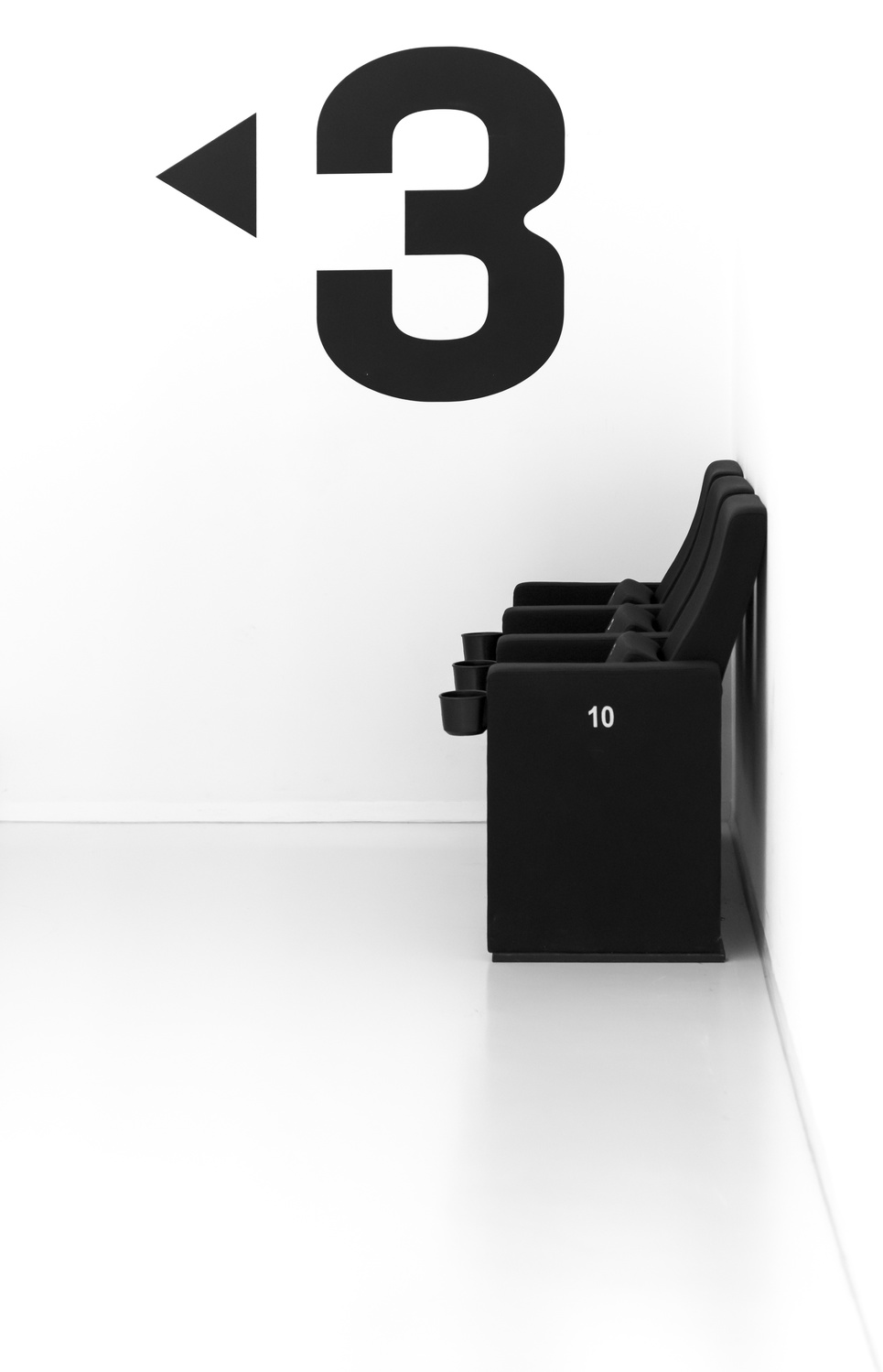
“Choose a number” by Greetje van Son
One of the first things photographers learn is the 'rule of thirds' and the 'rule of odd numbers'.
We are told that three figures fit comfortably into a standard compositional grid and that an odd number of objects prevents the viewer's eye from splitting its focus between two items. Three points can form a triangle, which guides the viewer's gaze around the frame. Three objects can be enough to tell a story without cluttering the image.
The 'rule of odds' is a powerful compositional tool. It is said to tap into the brain’s natural tendency to create order. We instinctively form pairs, but when faced with three — or any odd number — we have a group that cannot be so easily organized. This encourages the viewer to spend more time looking at the image, moving their gaze from one element to another, even when one element is clearly dominant.
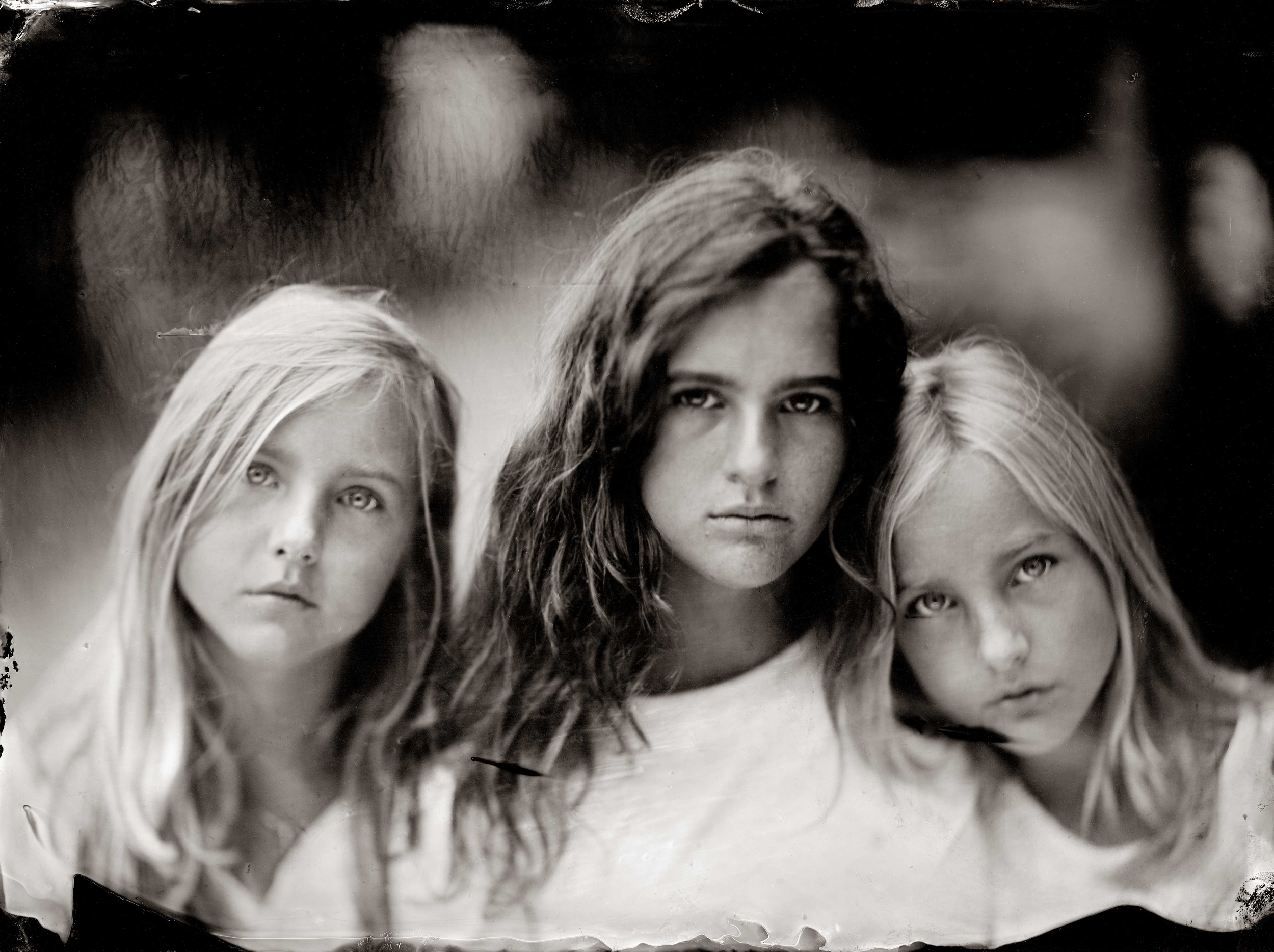
“three sisters” by Peter van Hal
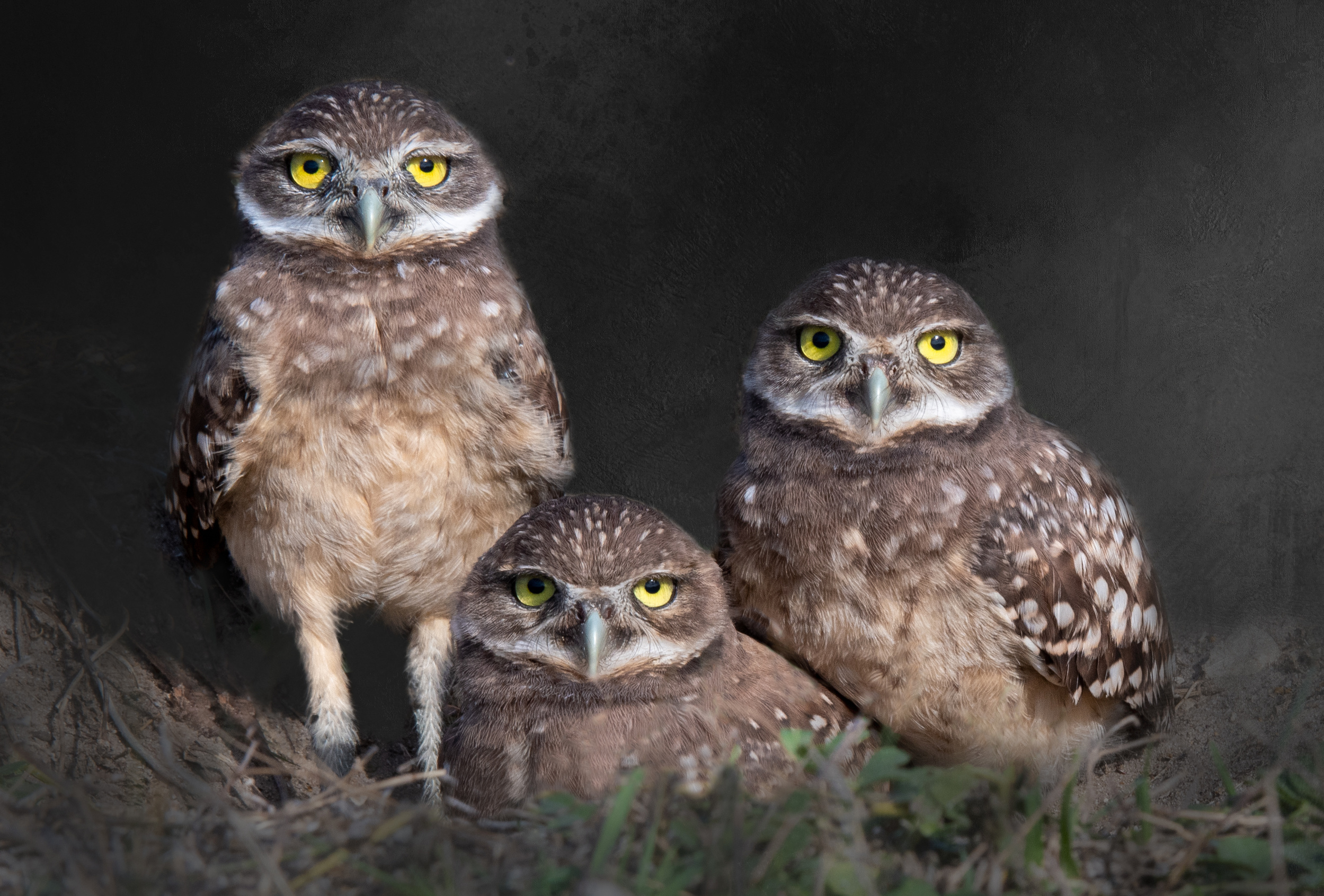
“Three is Company” by Susan Beausang
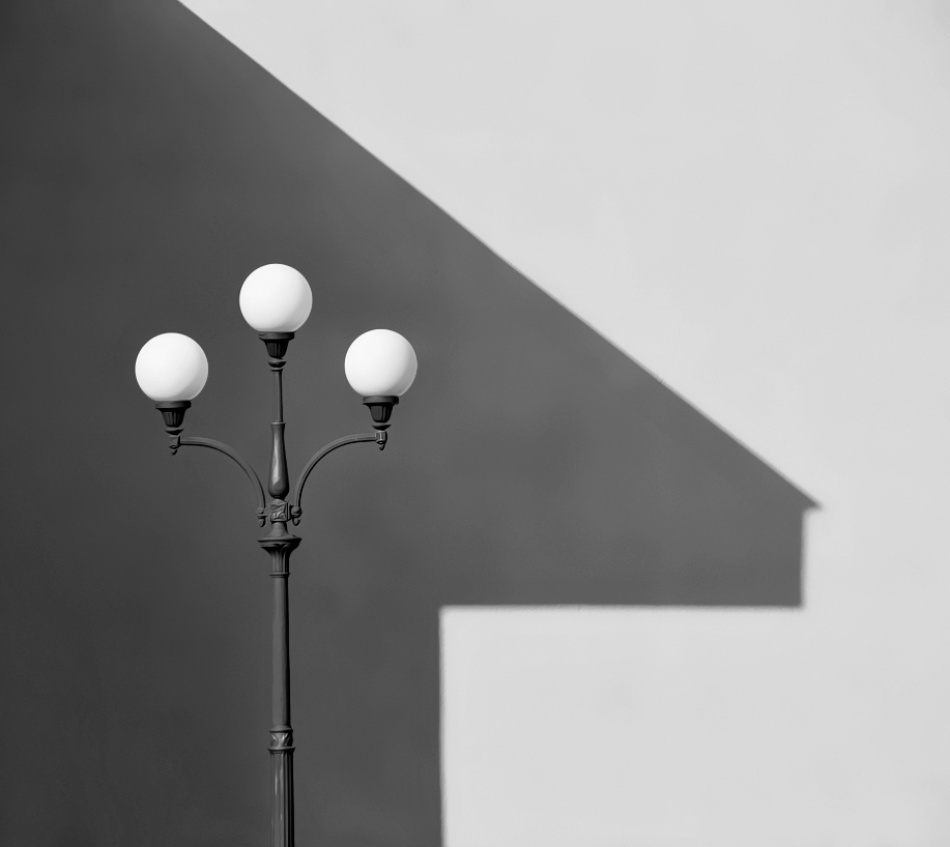
“Soul of the house” by Ralitsa Byalkova
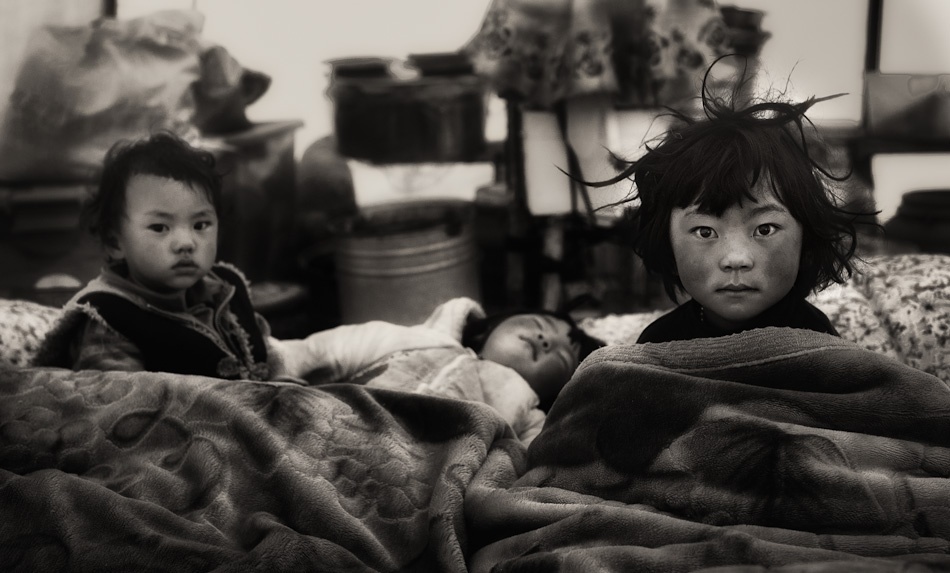
“Awakening” by Nicolas Marino
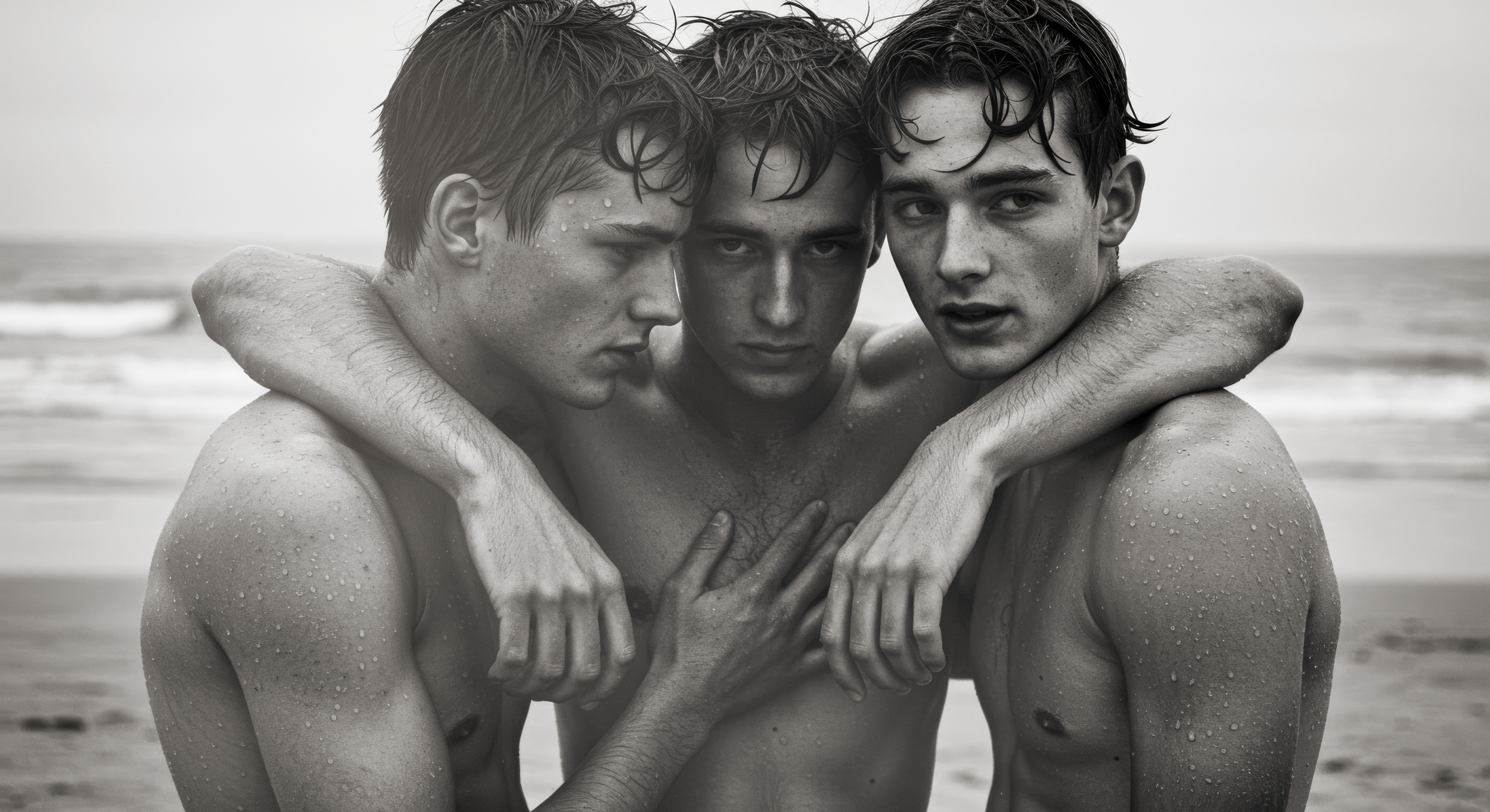
“Invincible” by Roberto Corinaldesi
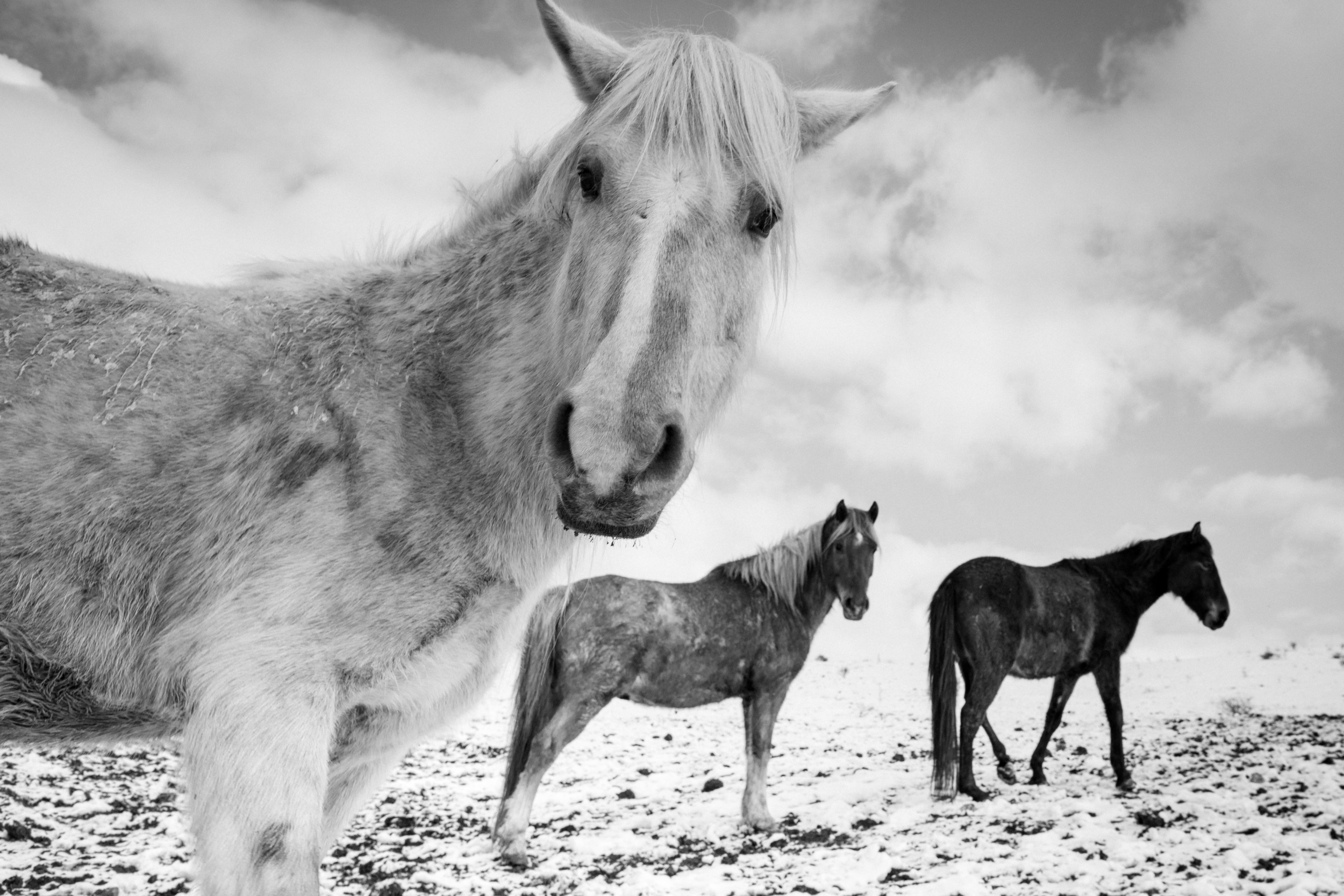
“He, the horse” by Ivelina Berova
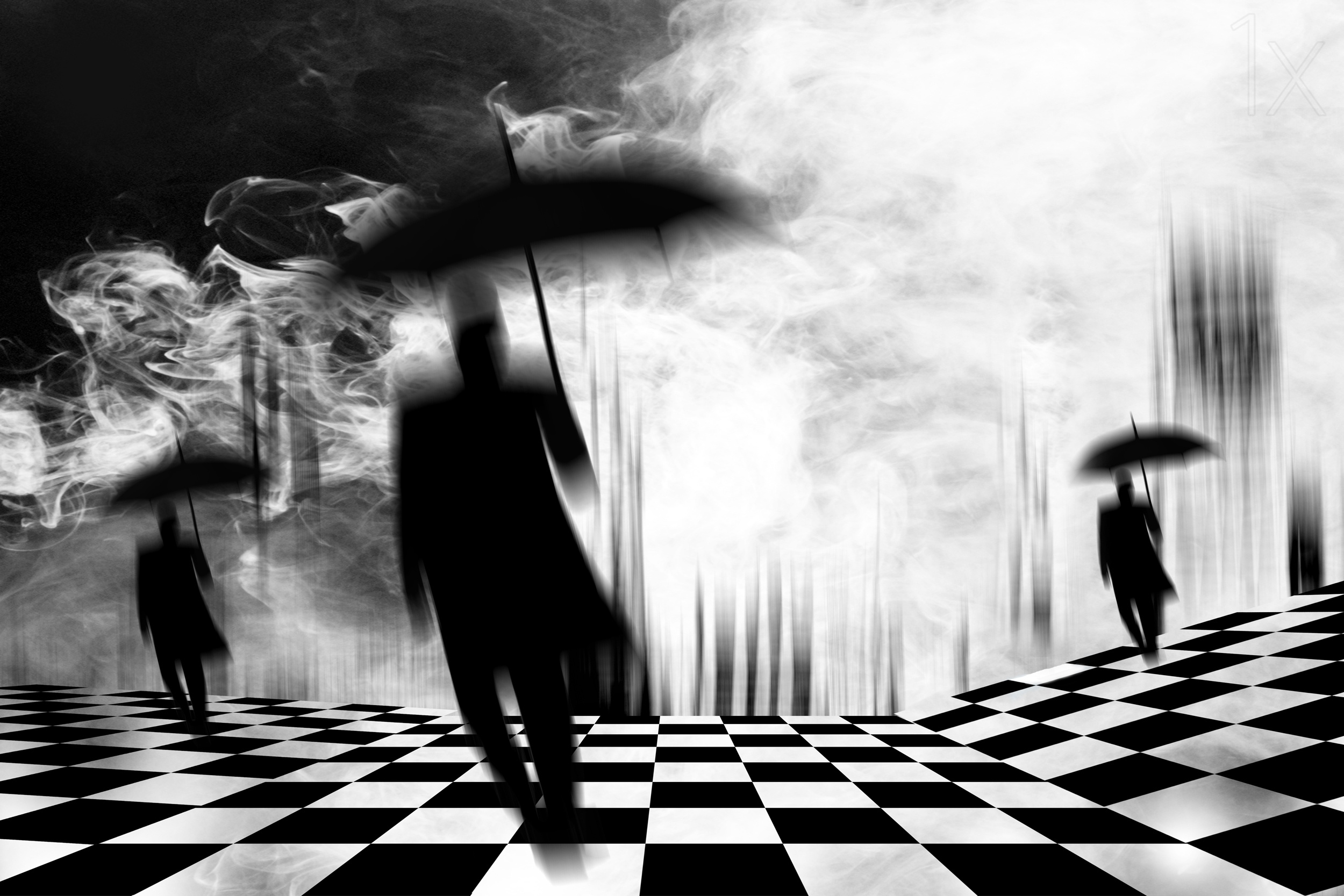
“Nebula” by Stefan Eisele
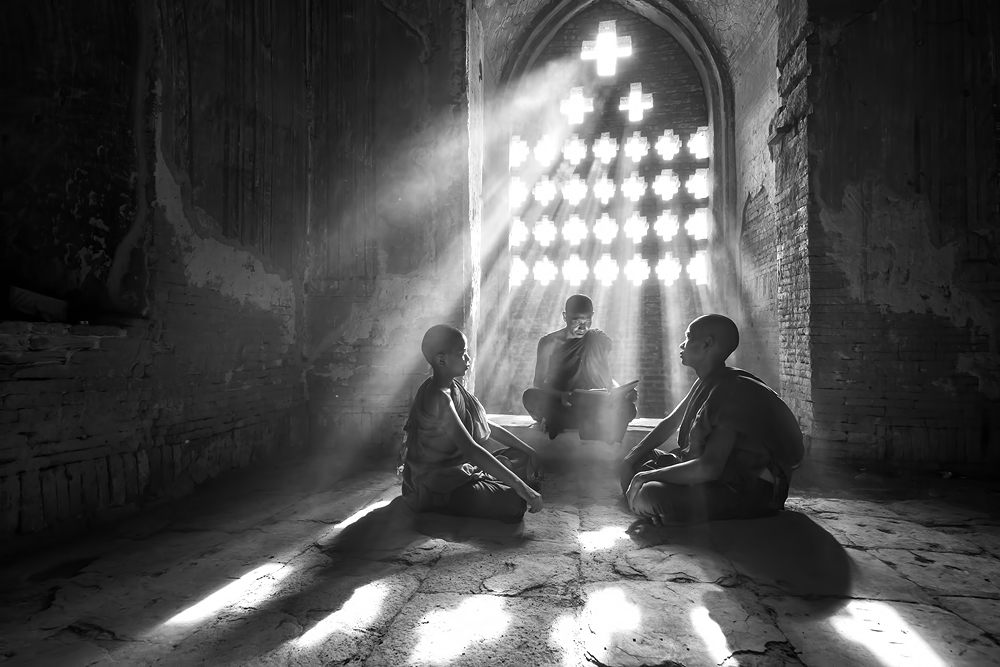
“Learning with the master” by Gunarto Song
Having three subjects allows for more complex visual relationships than having one or two. They can form a triangle that draws the viewer's gaze further into the scene. They can also create lines that converge towards a single point. Three similar objects in a row can establish a pattern that naturally draws the eye in. In today's vernacular, it's all about more screen time and longer looks.
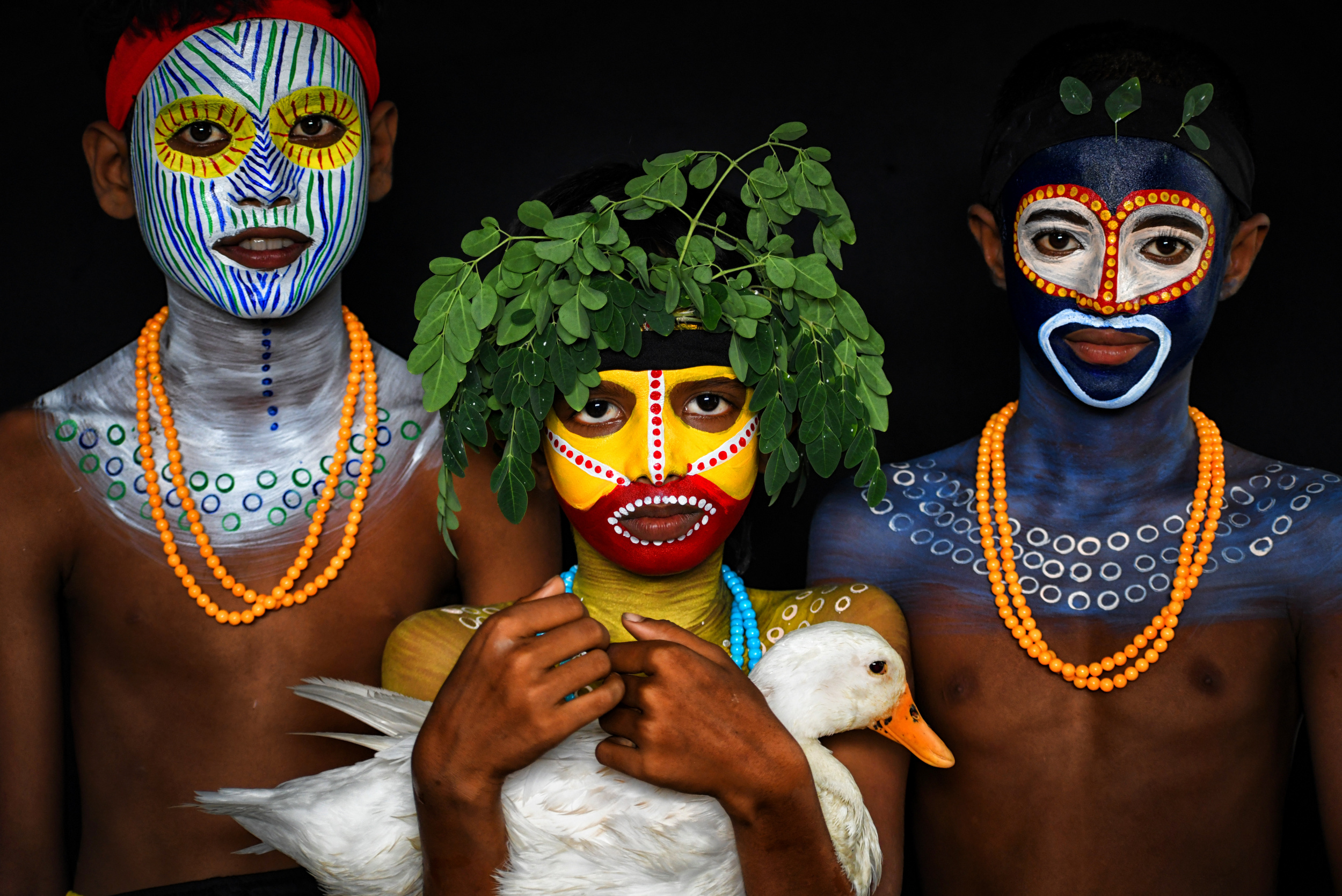
“Tribal Portrait 2” by Avishek Das
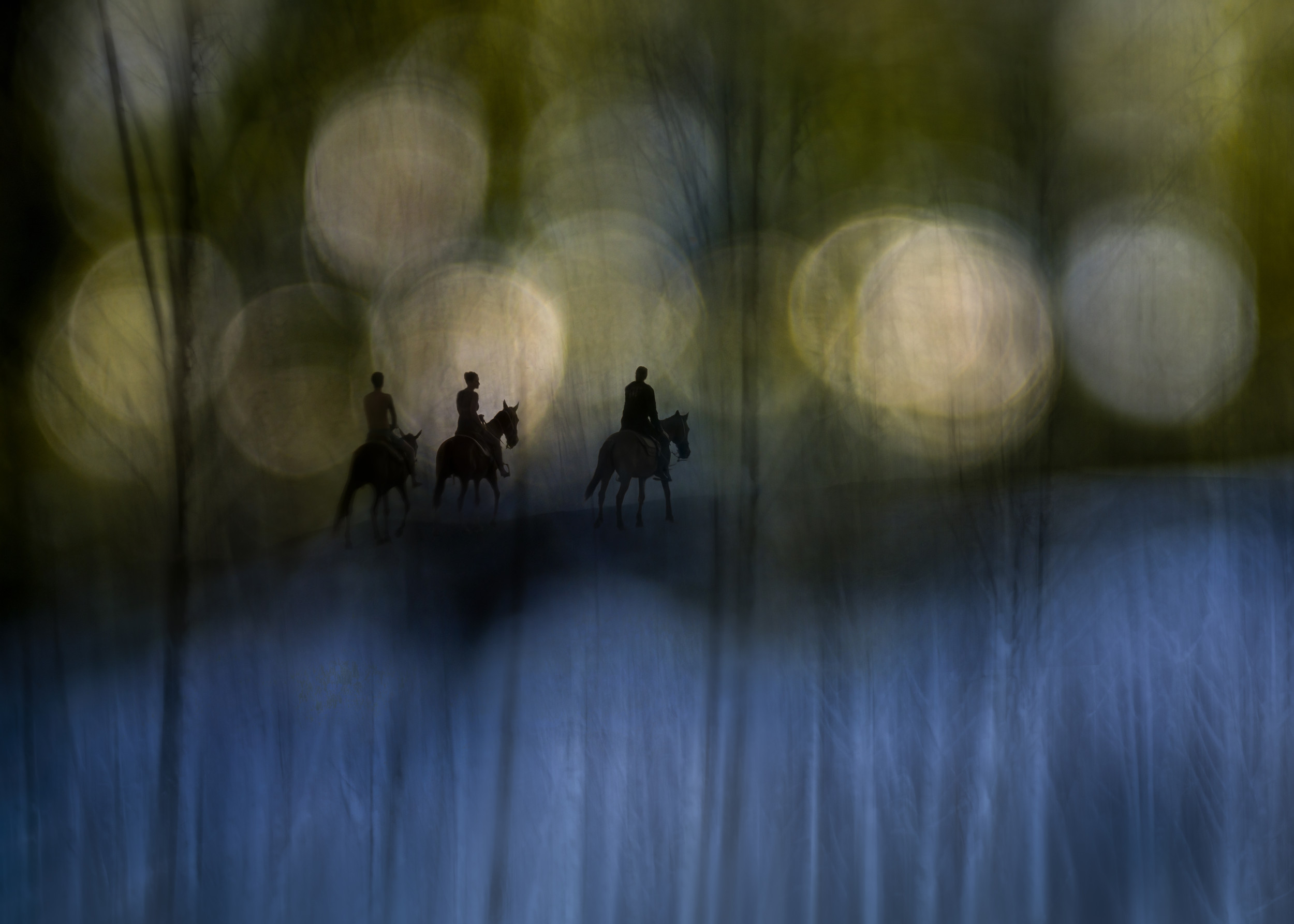
“Three Riders” by Shenshen Dou
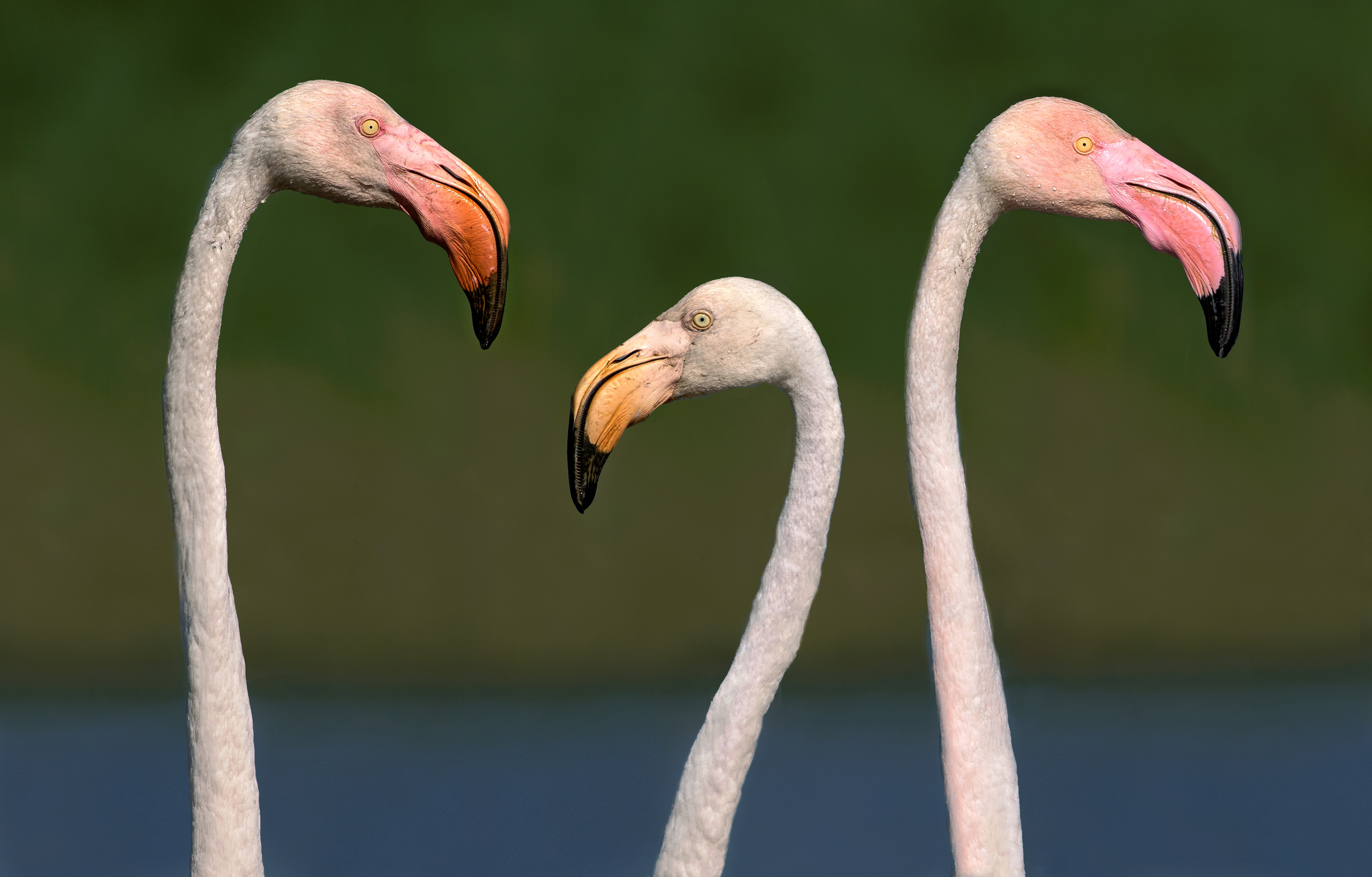
“Three Colors” by Xavier Ortega
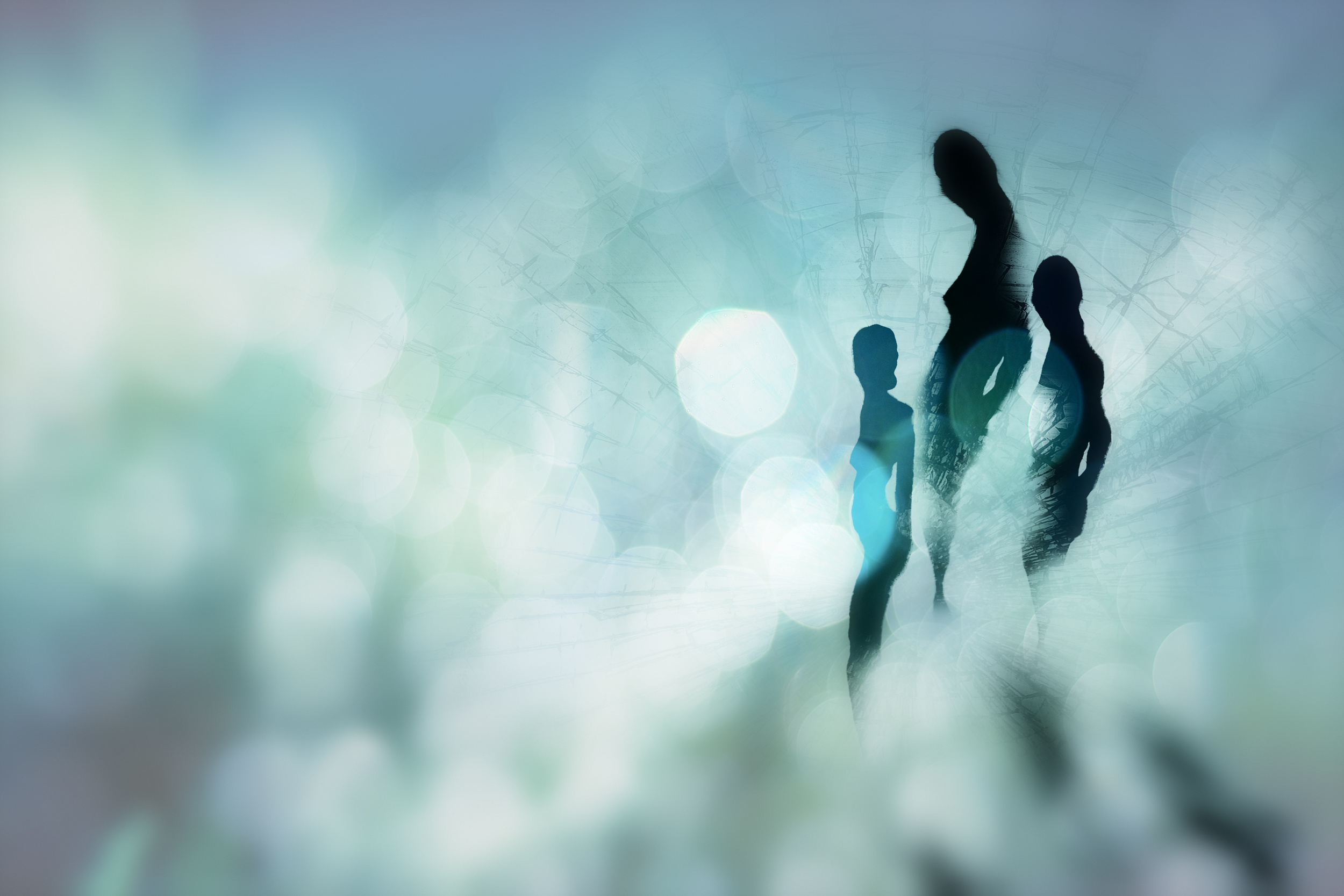
“Trio” by Stefan Eisele
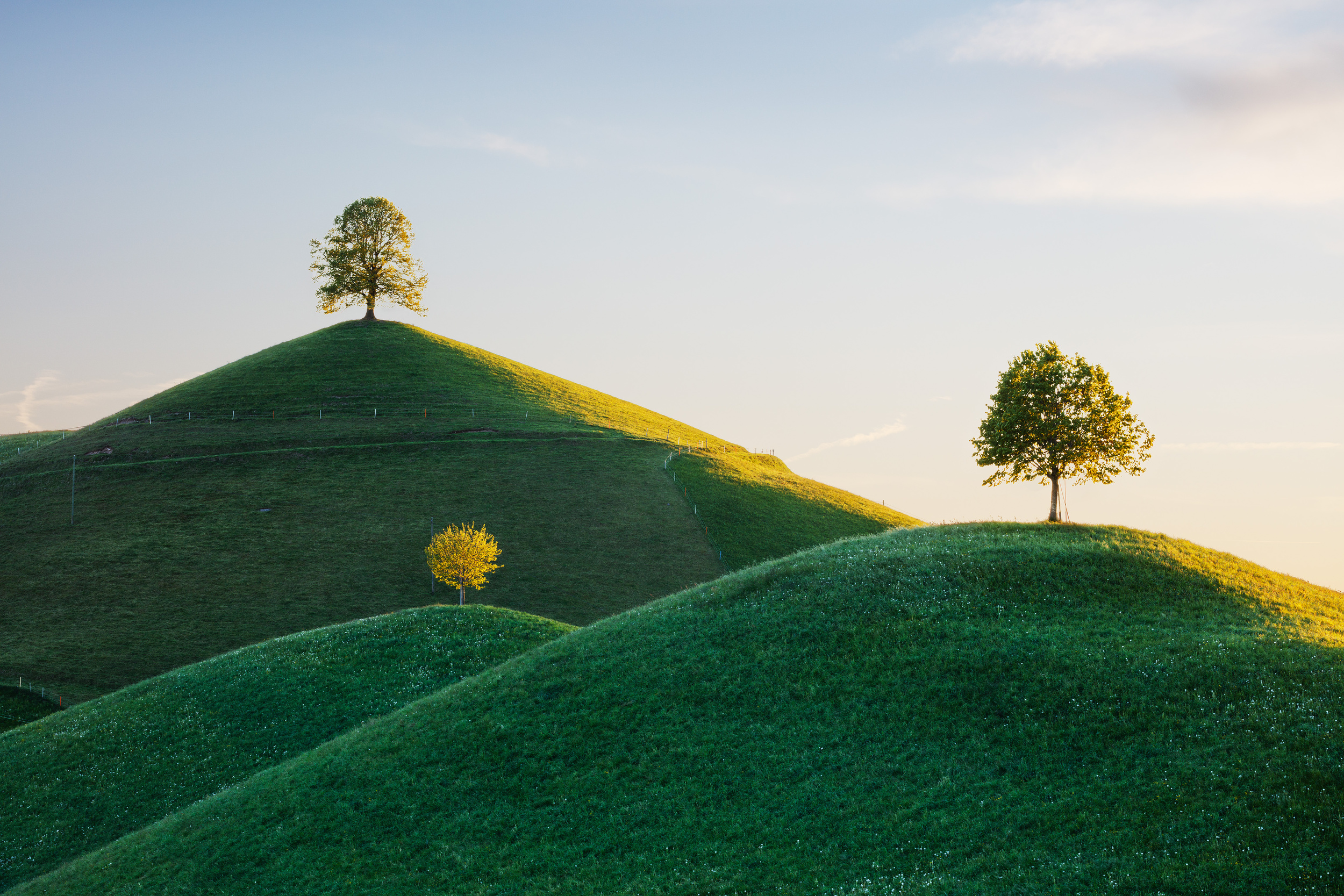
“Three Trees” by Martin Rak
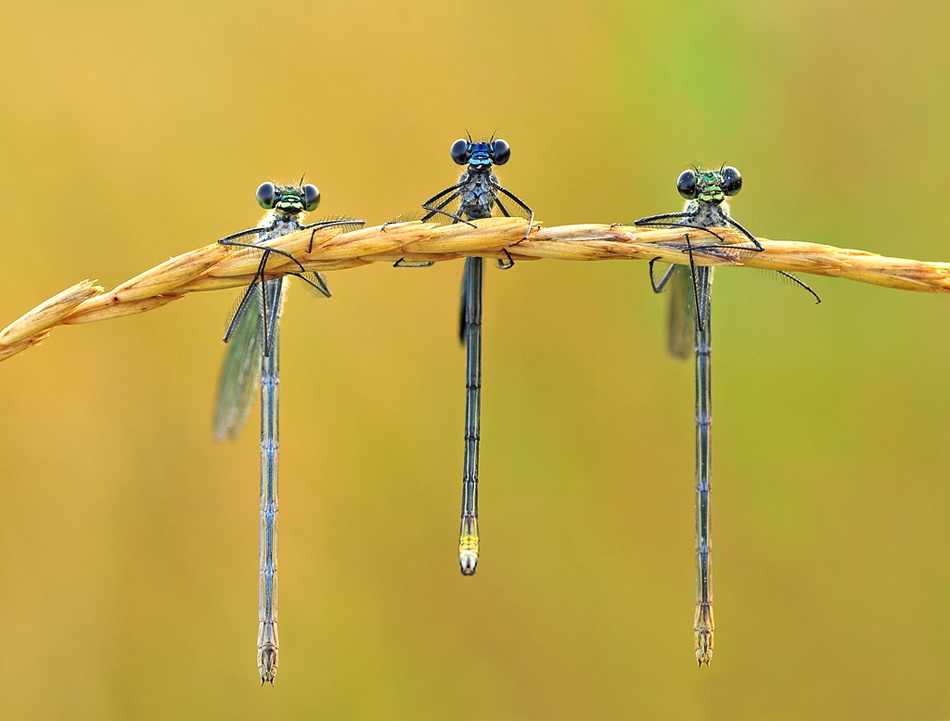
“Three: by Aliona Shevtova
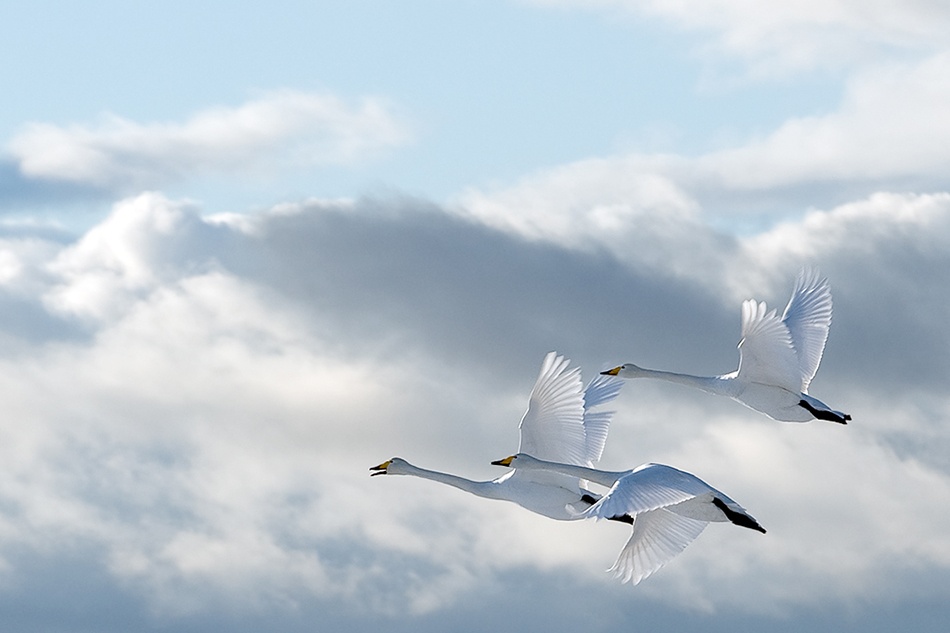
“Swans in the sky” by Anne Ueland
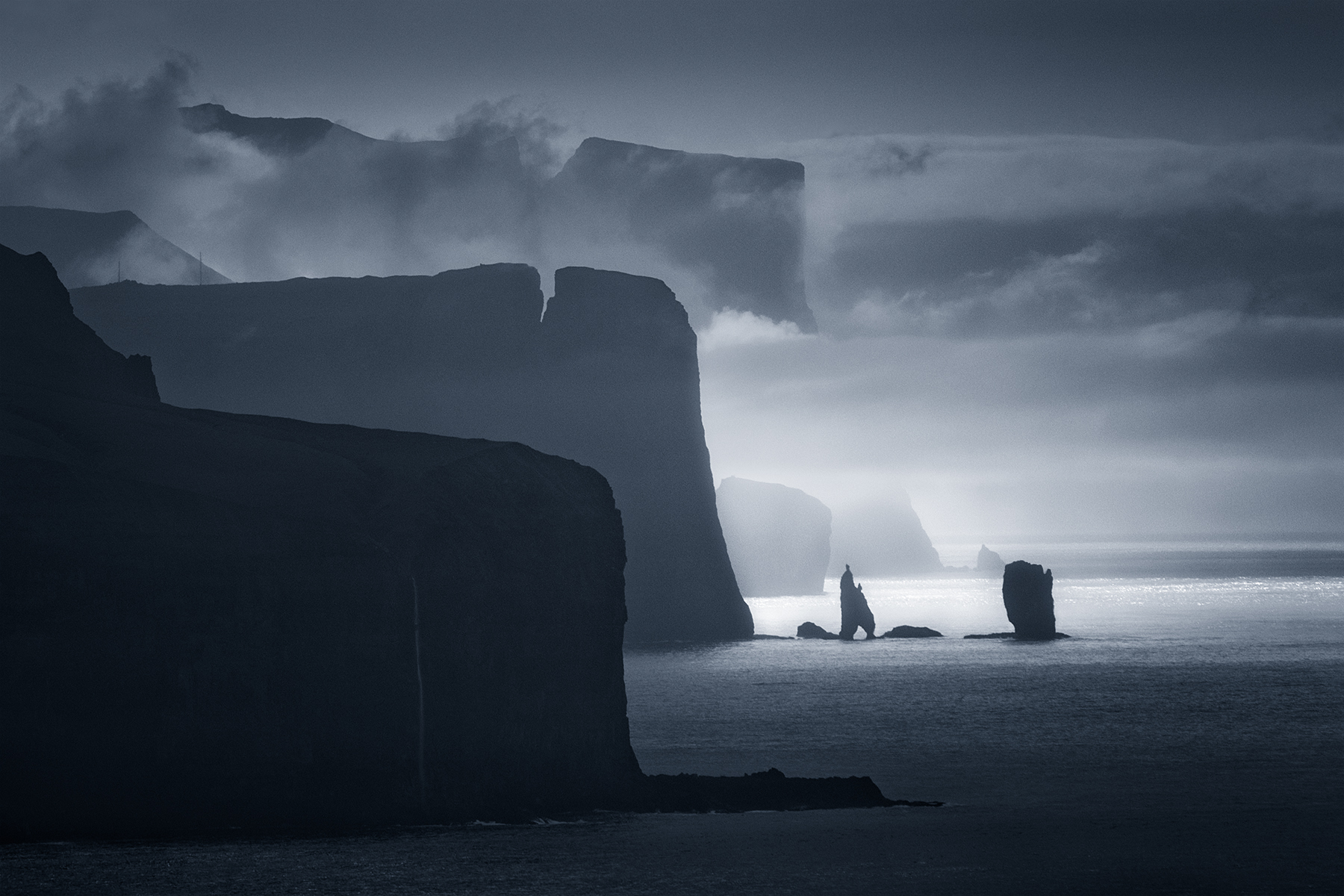
“Three layers” by Huibo Hou
For those who have followed this series — The Power of One and The Power of Two — it will already be clear that, however logical and revered these theories may be, photographers often break them — with spectacular results. While it is good to know the rules, it is even better when breaking them produces something unexpected, compelling and memorable. The 1x archives have proven this time and time again.
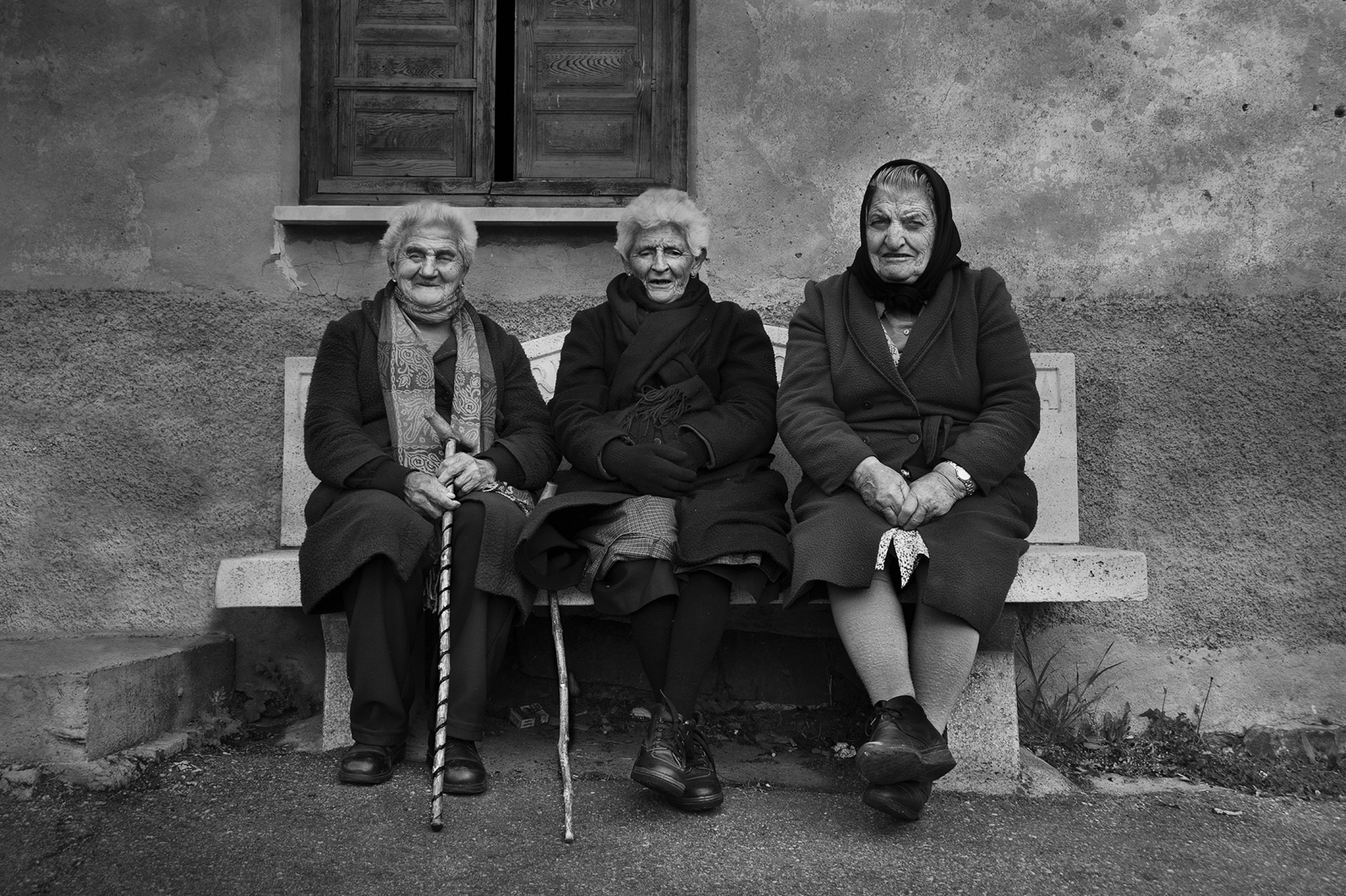
“Three charming old women” by Jose C. Lobato
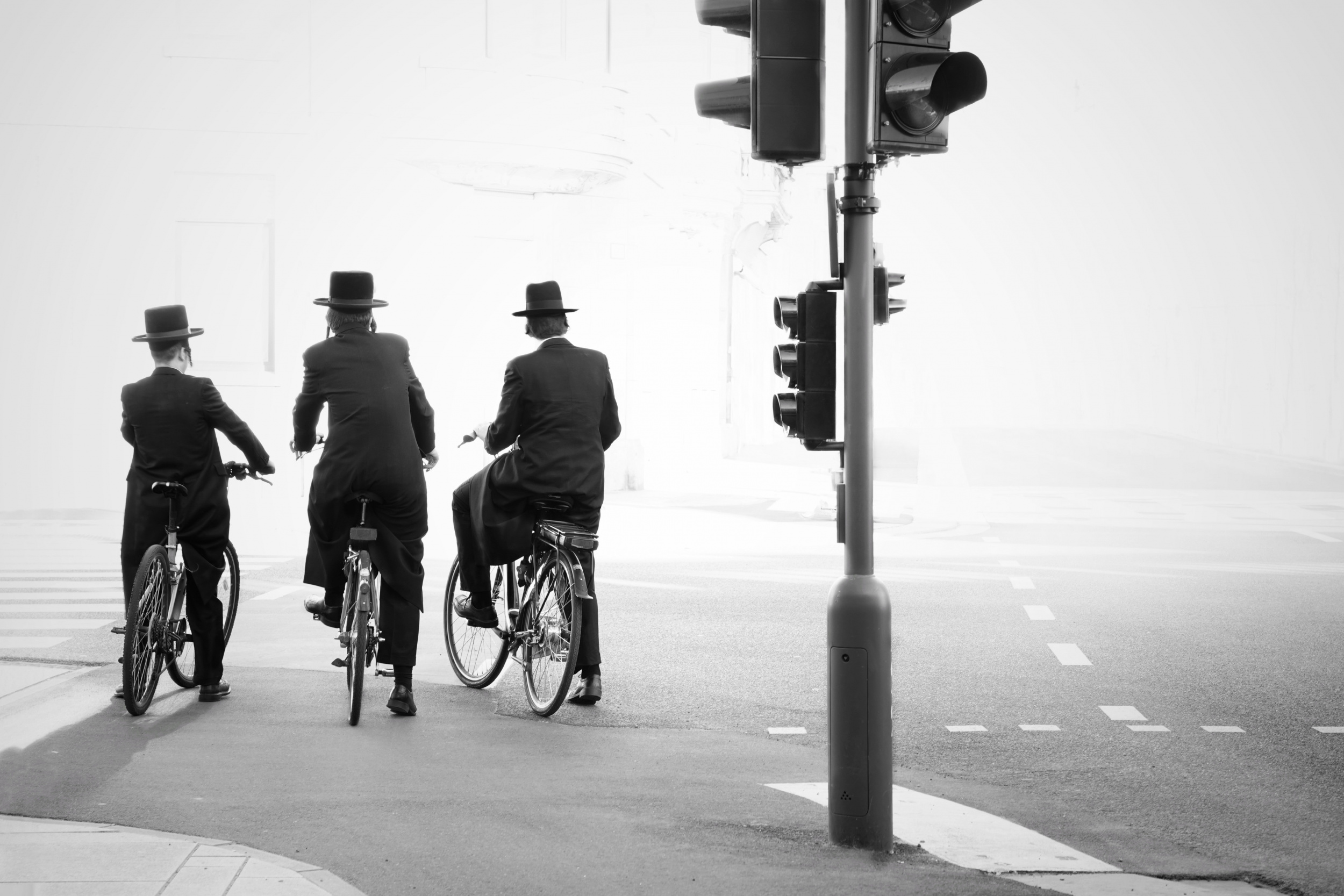
“Three gentleman” by Mania De Praeter
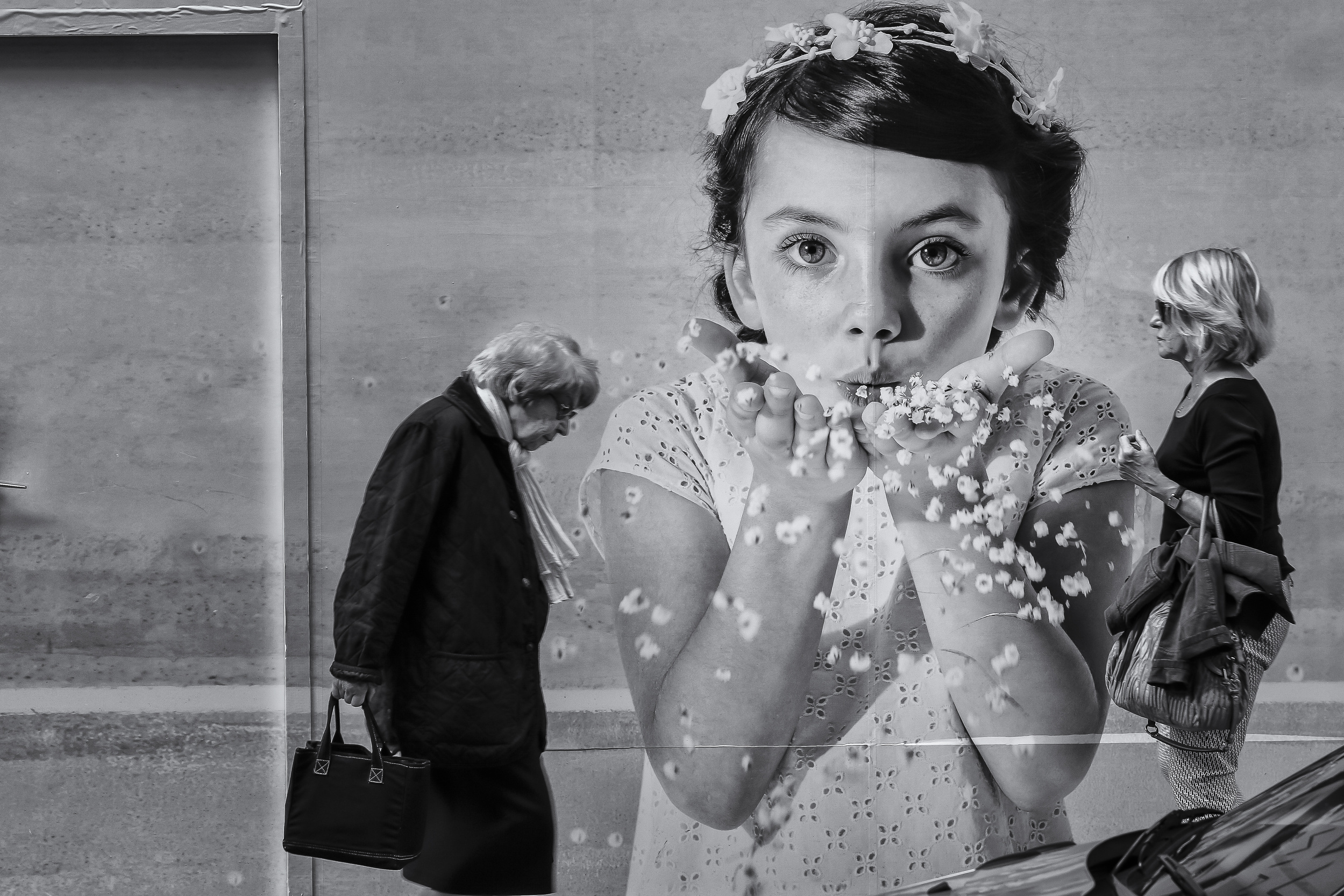
“Three generations” by Jean-Louis Viretti
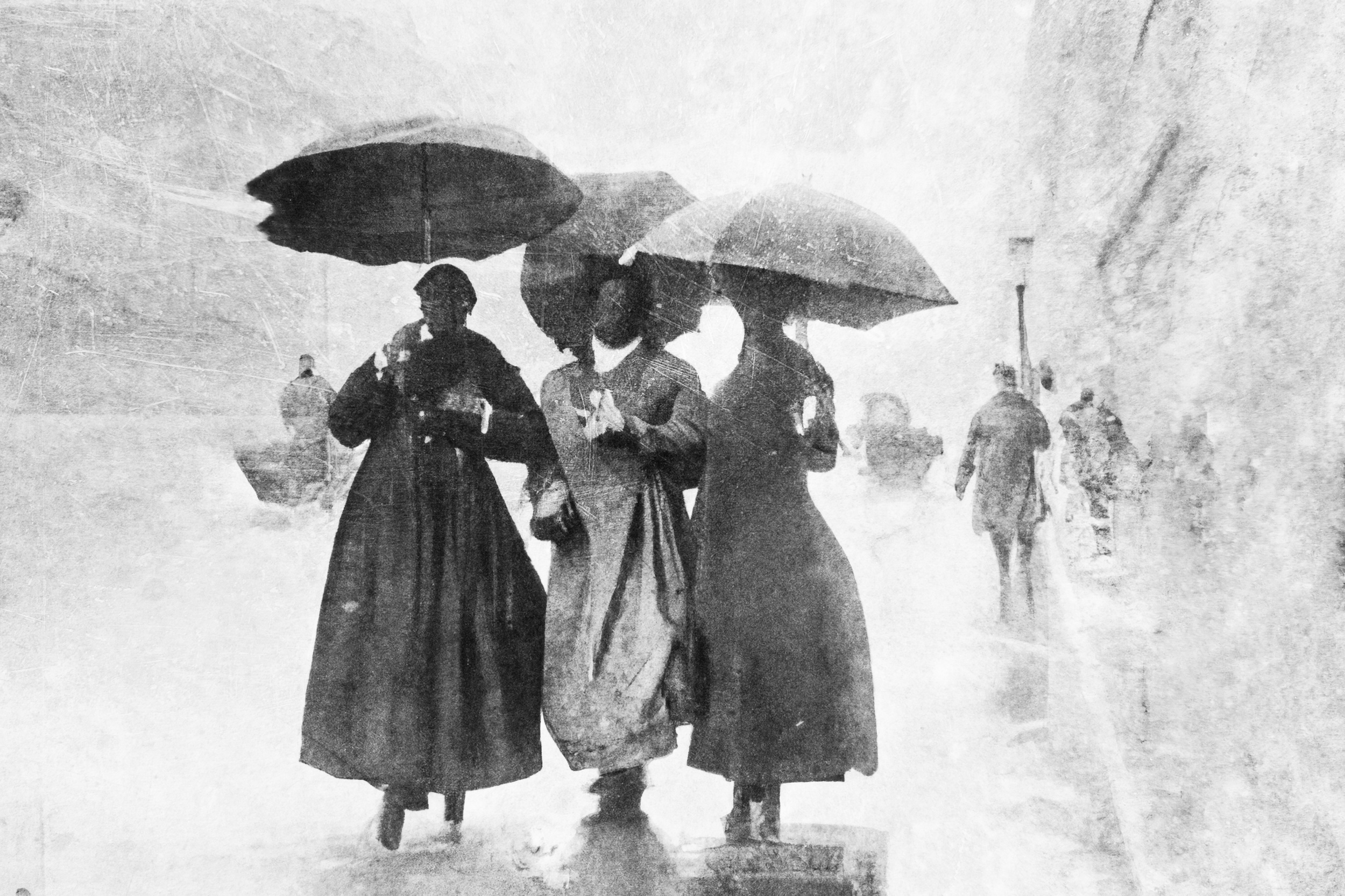
“Some People Stay in Your Heart Forever” by Adam Dauria
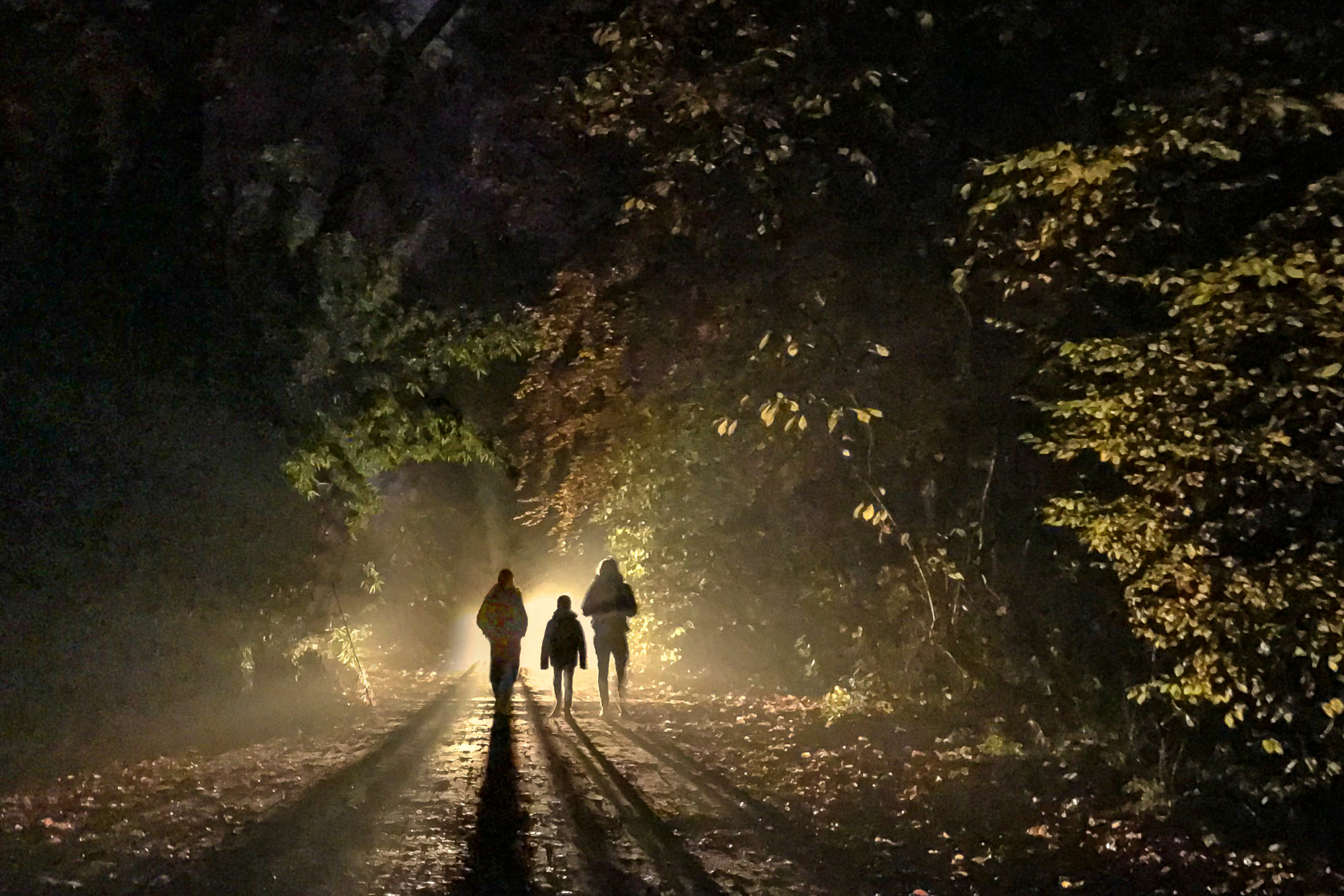
“Welcome to Belgium” by Lus Joosten
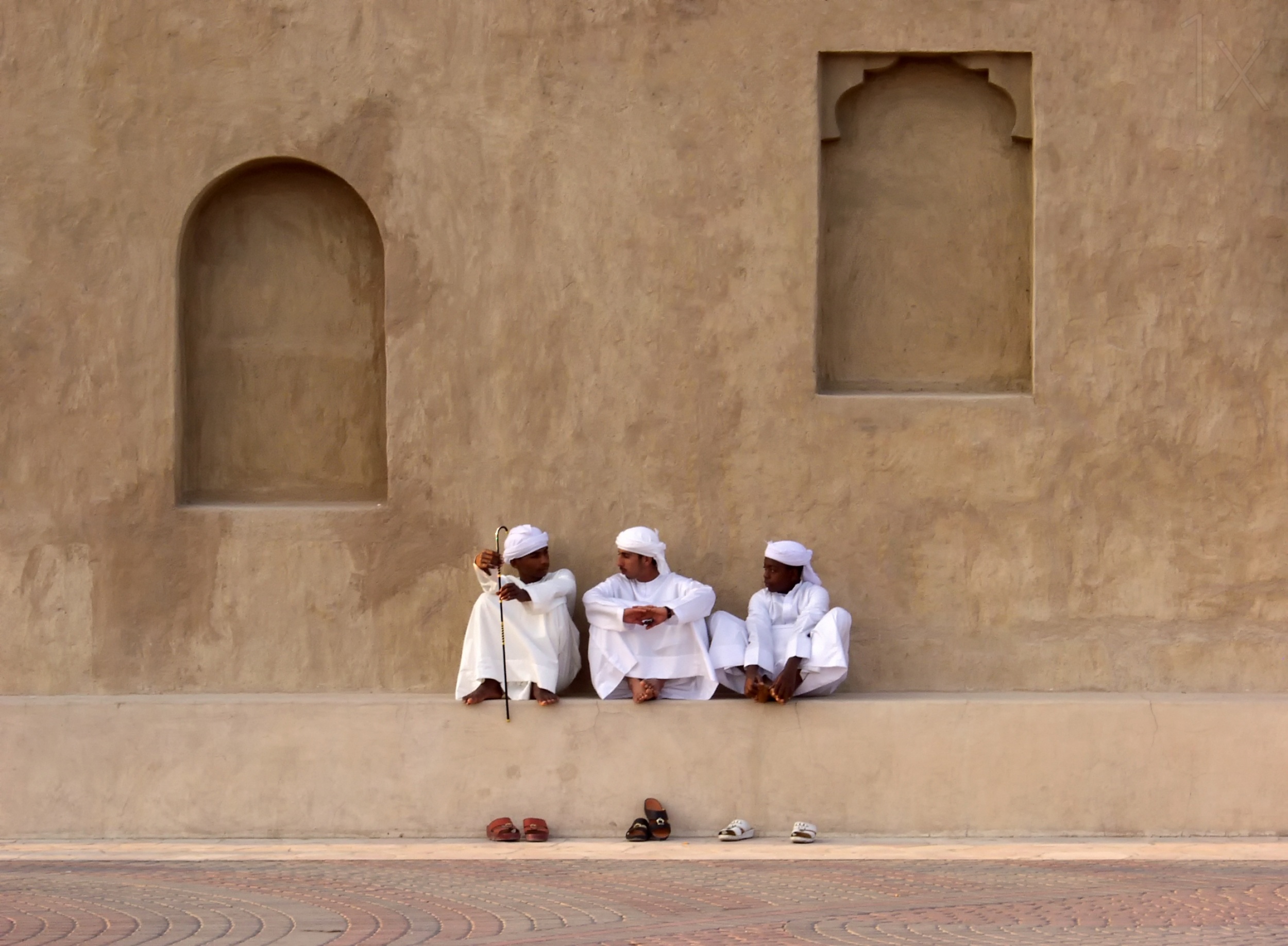
“Dubai” by Hans-Wolfgang Howerkamp
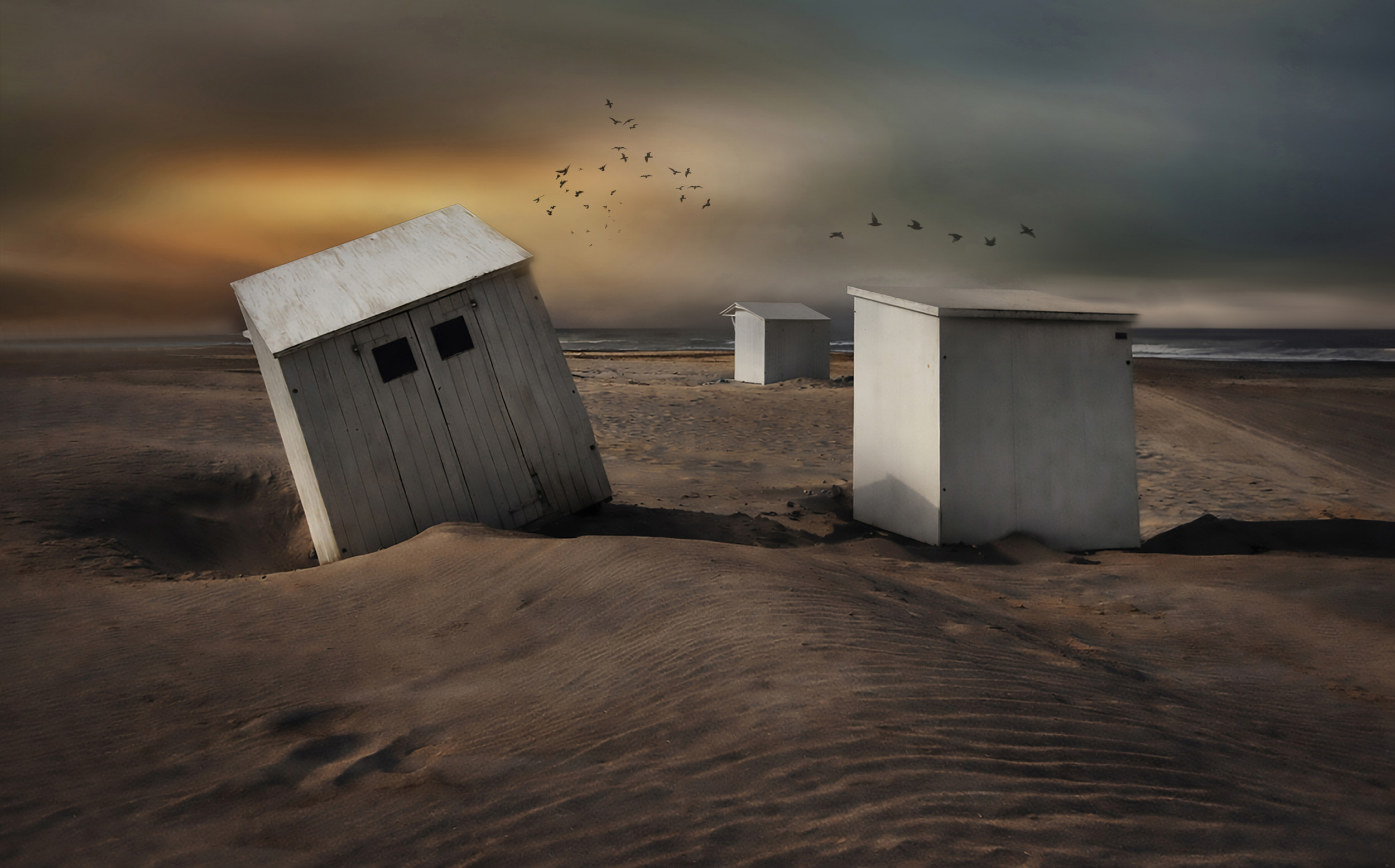
“When the wind has gone” by Yvette Depaepe
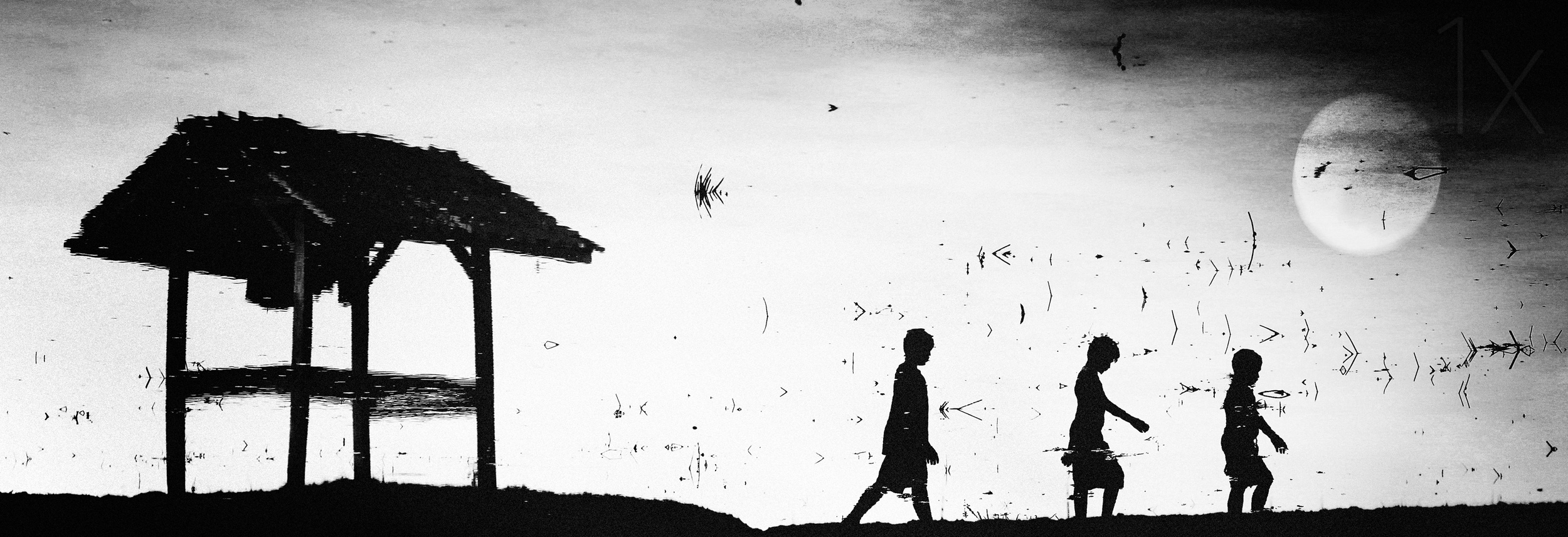
“Back Home” by Jay Satriani
This series was designed to inspire current members, but it has also provided an opportunity to revisit the archives and rediscover some of the brilliant work that has been submitted over the past 19 years. Many of these photographs deserve to be seen again, and I hope that revisiting them will inspire new work for years to come.
 | Write |
 | Jay Satriani PRO Thank you for the opportunity and trust in selecting my work to appear in Power 3 Magazine.
I really enjoyed the articles shared in this issue. I gained a lot of new knowledge and insights, especially about how photographers sometimes break the rules of photography and produce spectacular work. Knowing the rules is important, but the courage to explore and push boundaries can also produce something extraordinary.
A special thank you to the brilliant editor Jane, as well as my good friend Yvette, for their hard work and meticulousness in selecting the works featured in this edition.
Warm regards to all members of 1X. You are all amazing—keep creating, exploring, and telling stories through photography. |
 | Christine Hardcastle PRO This is a wonderful addition to your series! Stunning examples of the Power of Three!! |
 | Lus Joosten PRO Thanks for this selection. |
 | kombizz PRO The main question is why three, and why not two or four? |
 | Jane Lyons CREW Try reading the text. |
by Yvette Depaepe
Published the 16th of September 2026
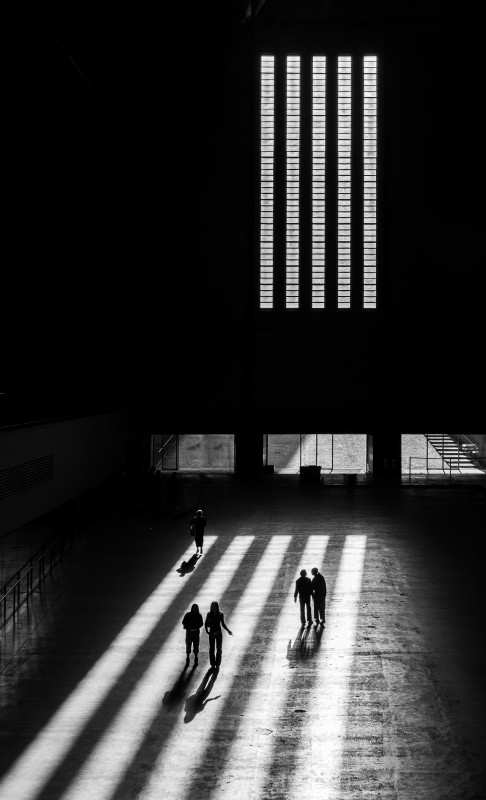
'Silhouette Photography'
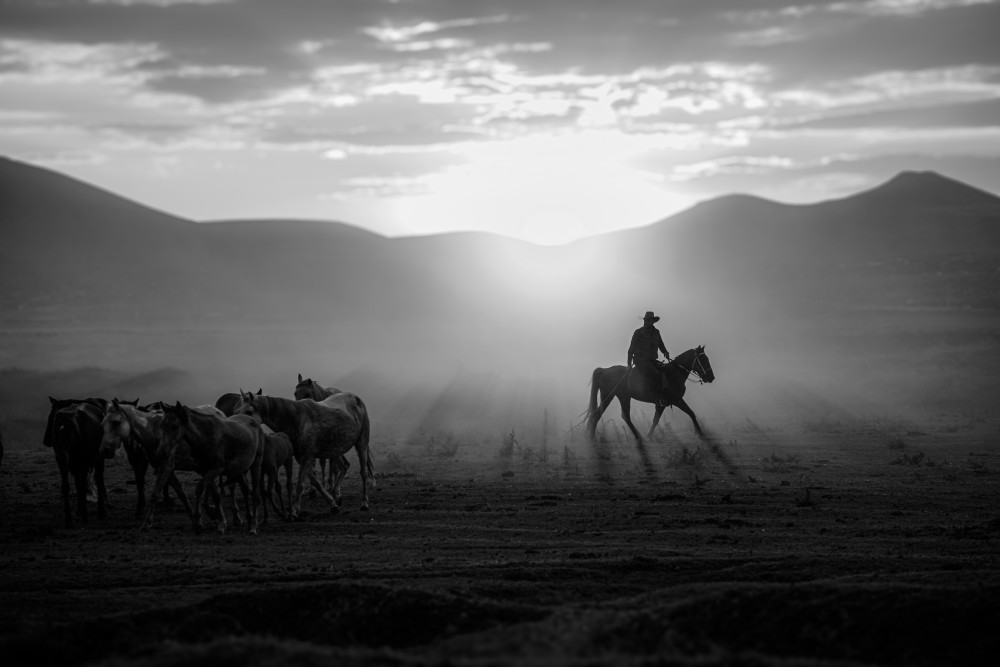
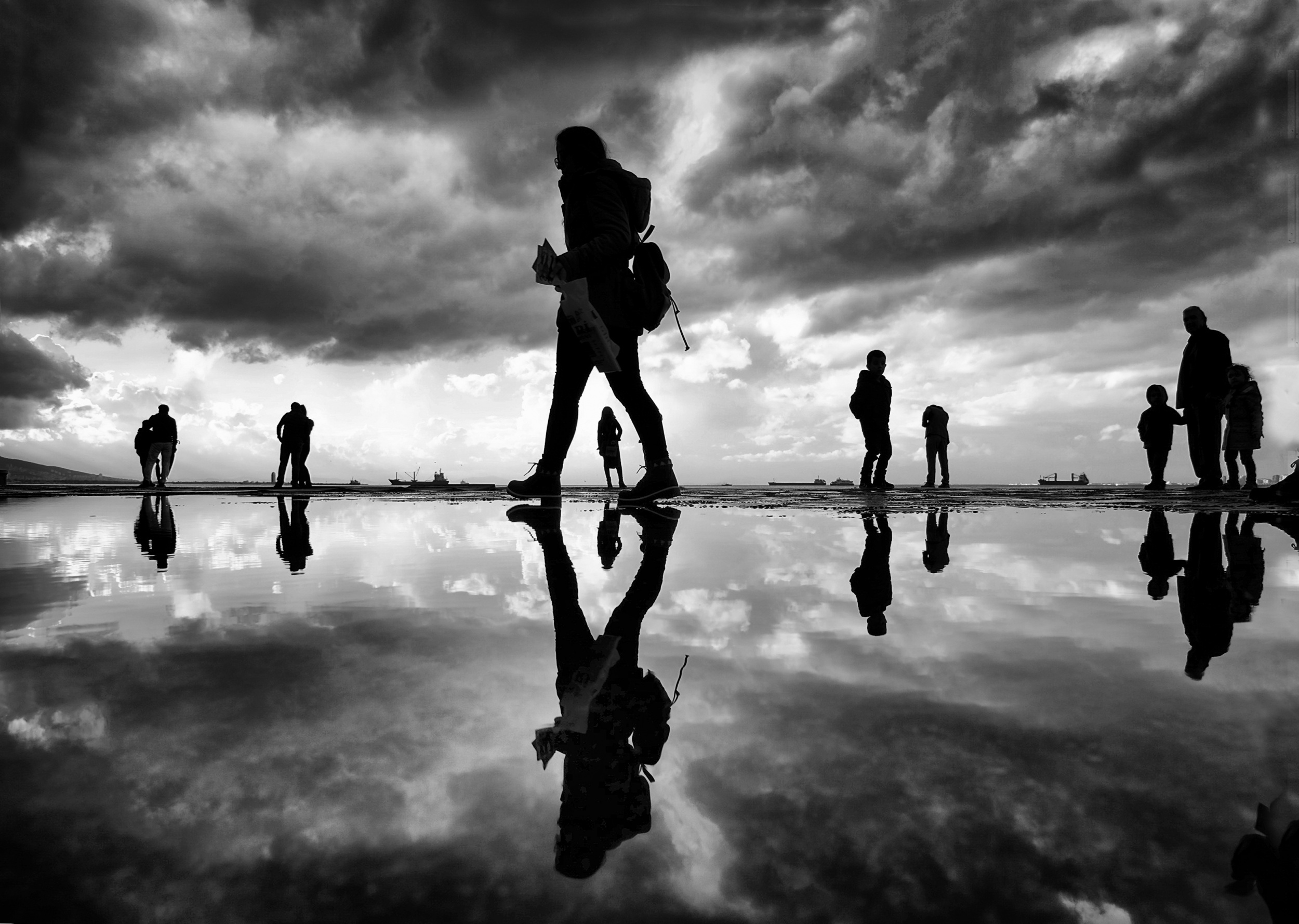
Silhouette photography is all about capturing subjects so that they lack detail. The focus is on creating striking black shapes against a beautifully exposed background. It’s a technique that emphasizes the shape and form of the subject, resulting in minimalistic and graphic effects. Most creative and excellent images, were submitted.
The winners with the most votes are:
1st place : monkichi
2nd place: Marianne Siff Kusk
3rd place : Adolfo Urrutia
Congratulations to the winners and honourable mentions.
Thanks to all the participants in the contest 'Silhouette Photography'
Current contest theme is 'Benches'
Benches are everywhere but most people walk past them without a second thought. They quietly collect stories throughout the day: people waiting, resting, eating lunch, tying shoes, watching sunsets, or just taking a break for a few minutes.
This contest will end on Sunday the 27th of September at midnight.
The sooner you upload your submission the more chance you have to gather the most votes.
If you haven't uploaded your photo yet, click here.
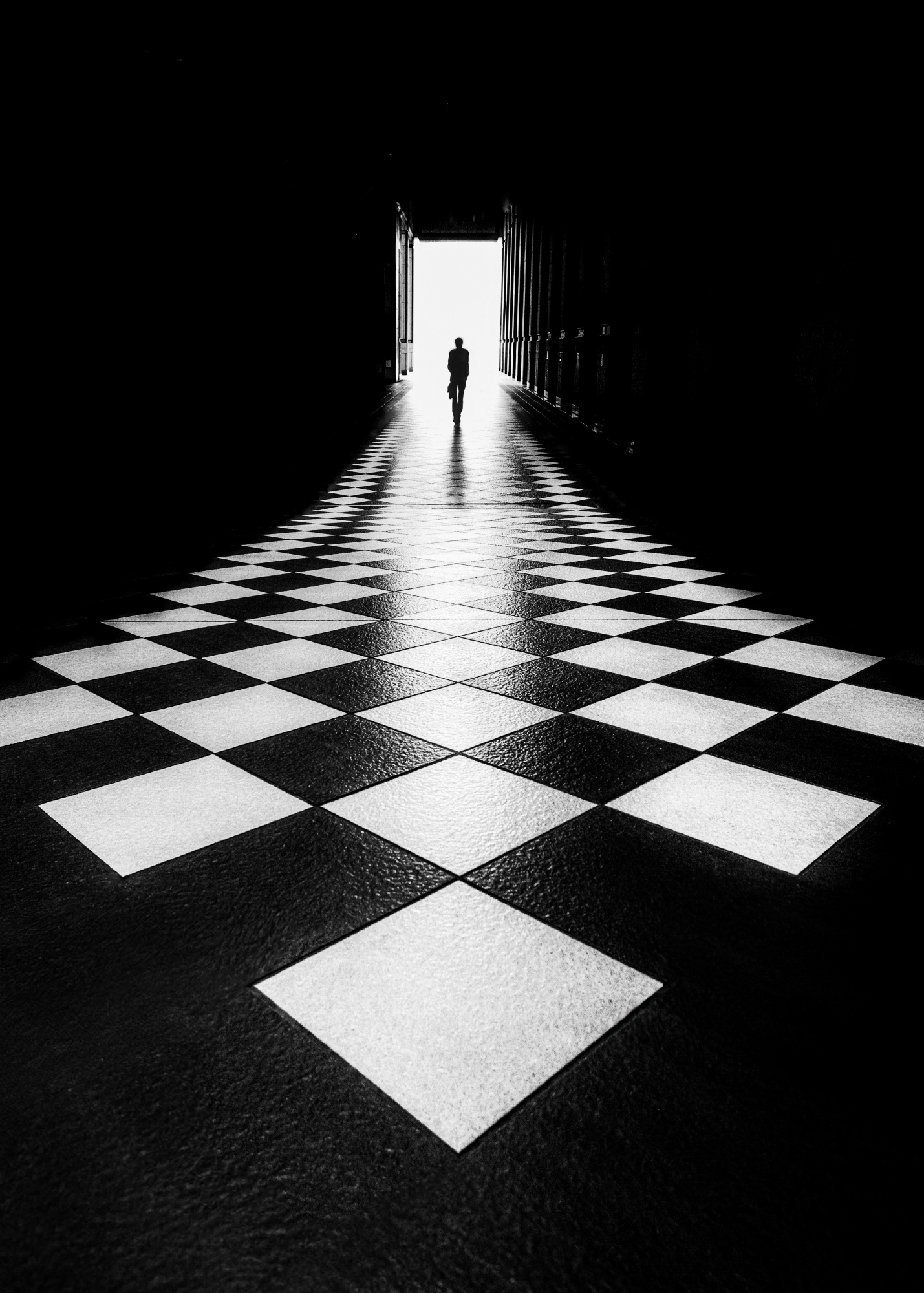 1st place: by monkichi
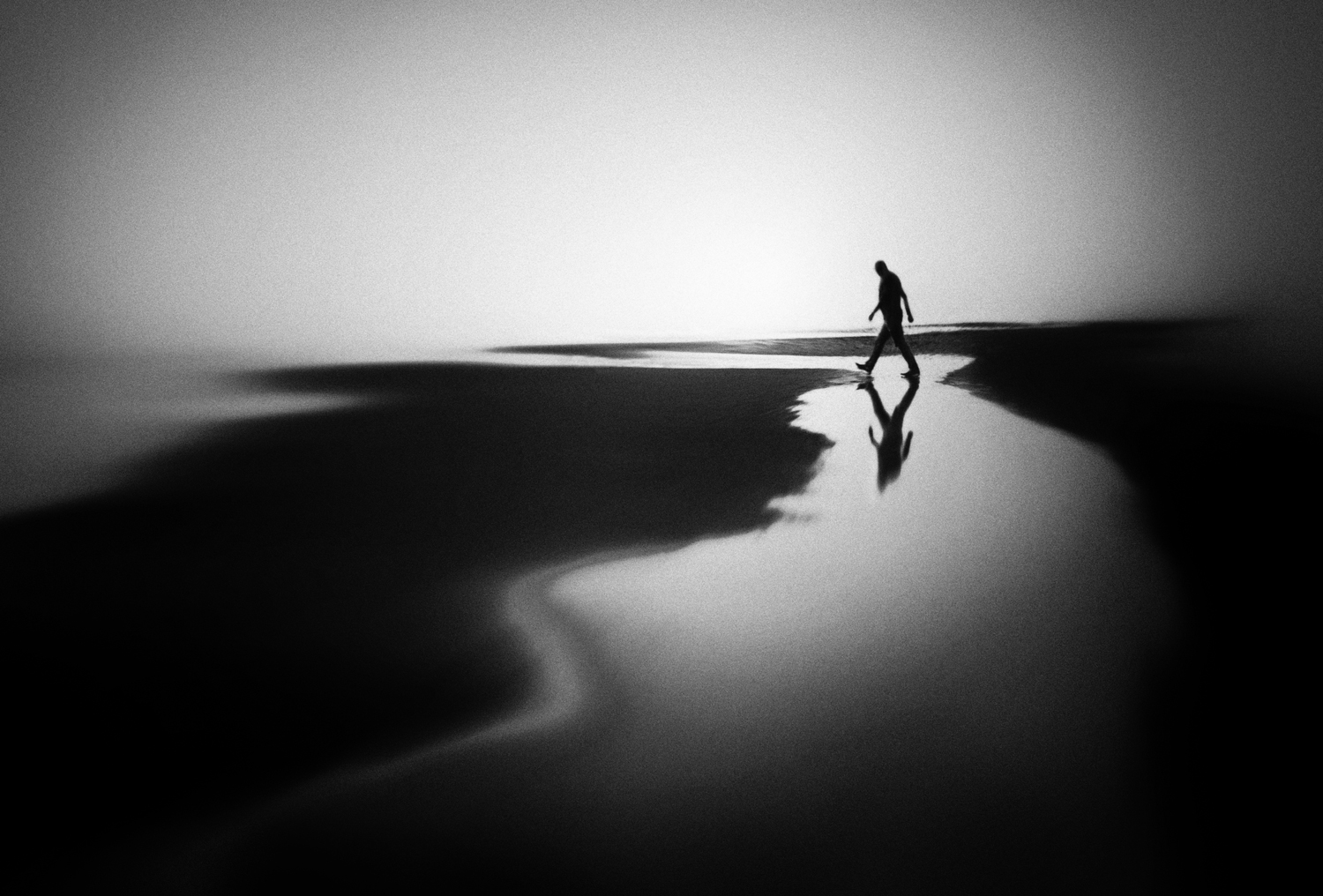
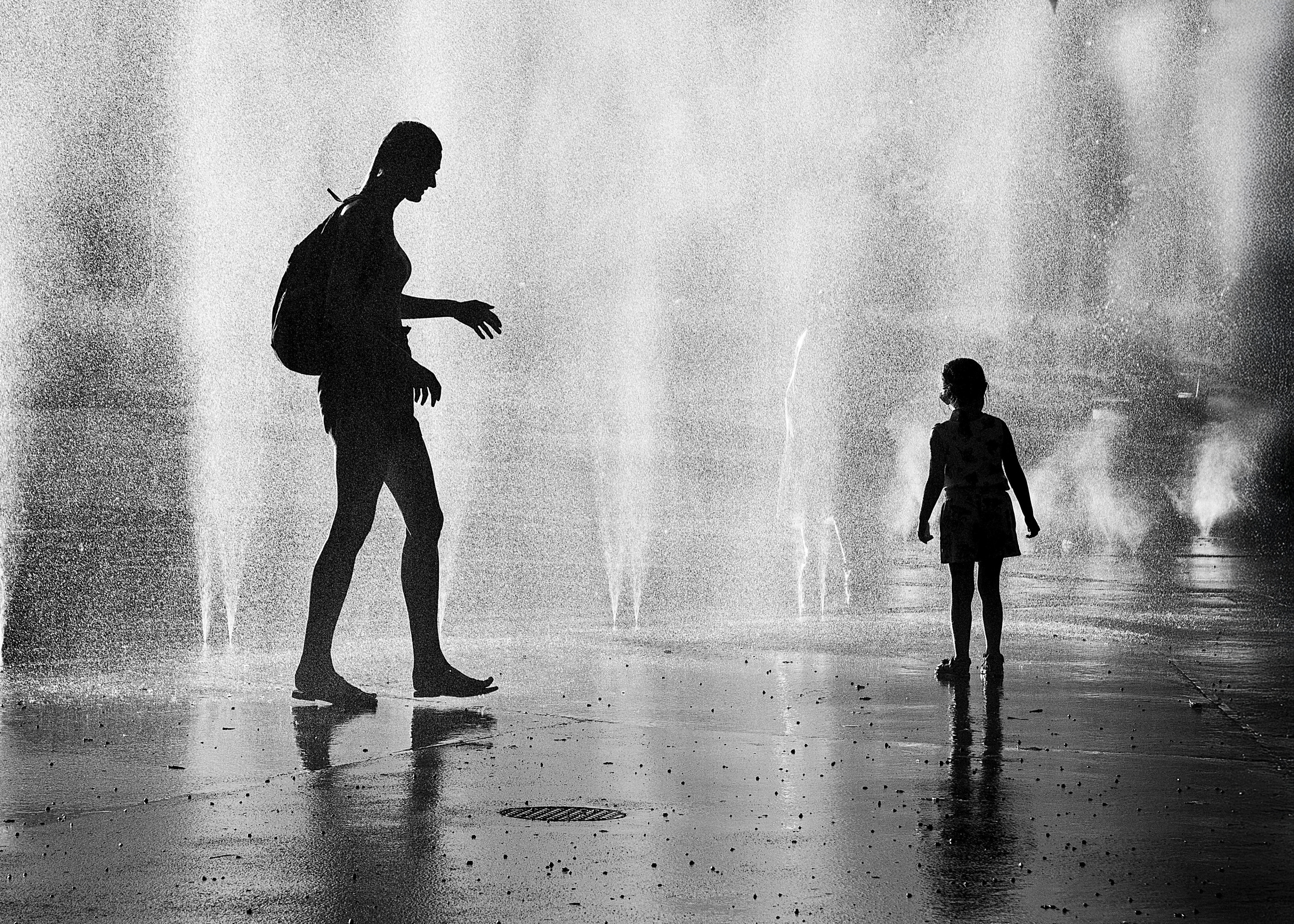 3rd place: by Adolfo Urrutia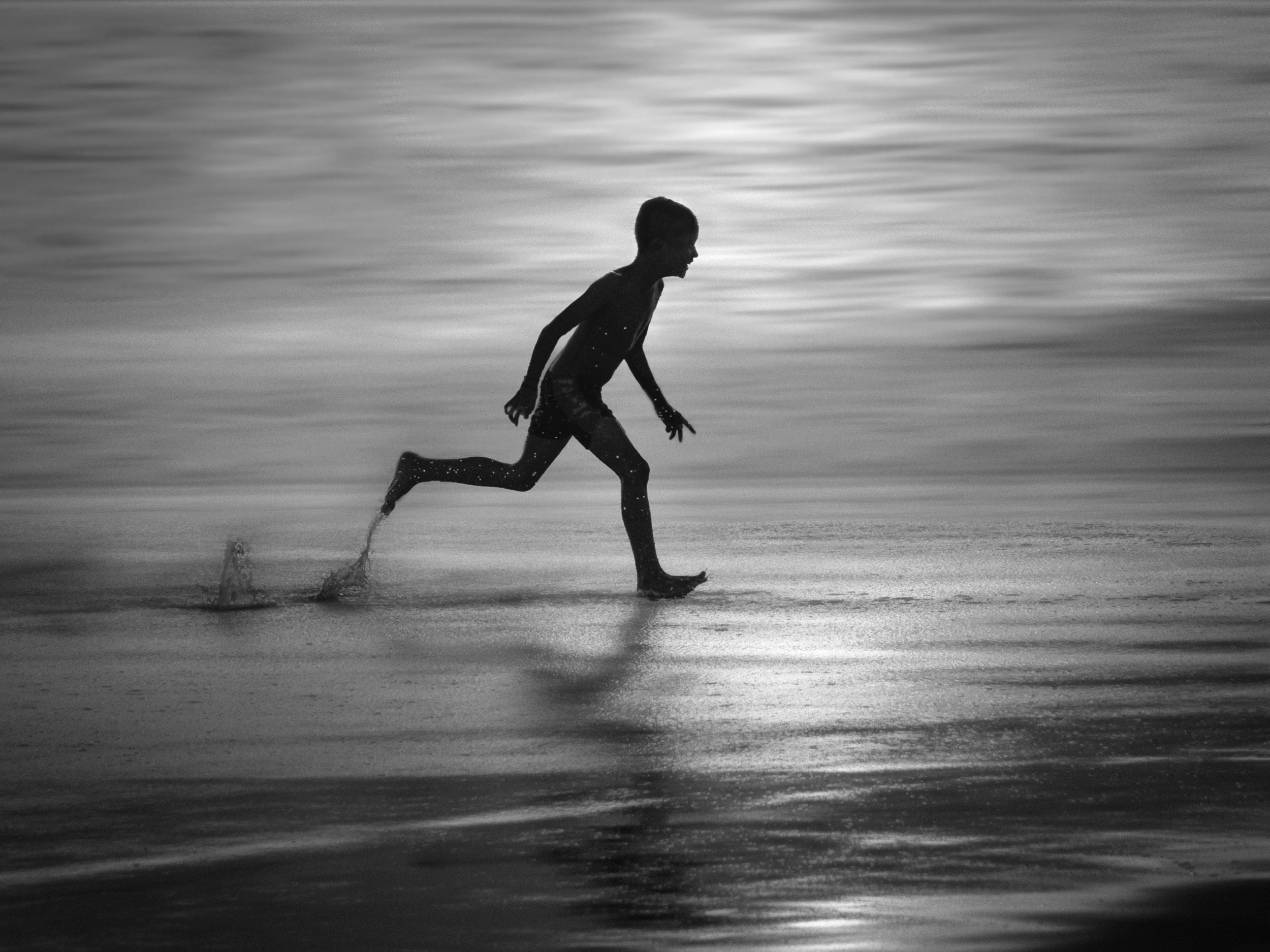
 by Gülay Sween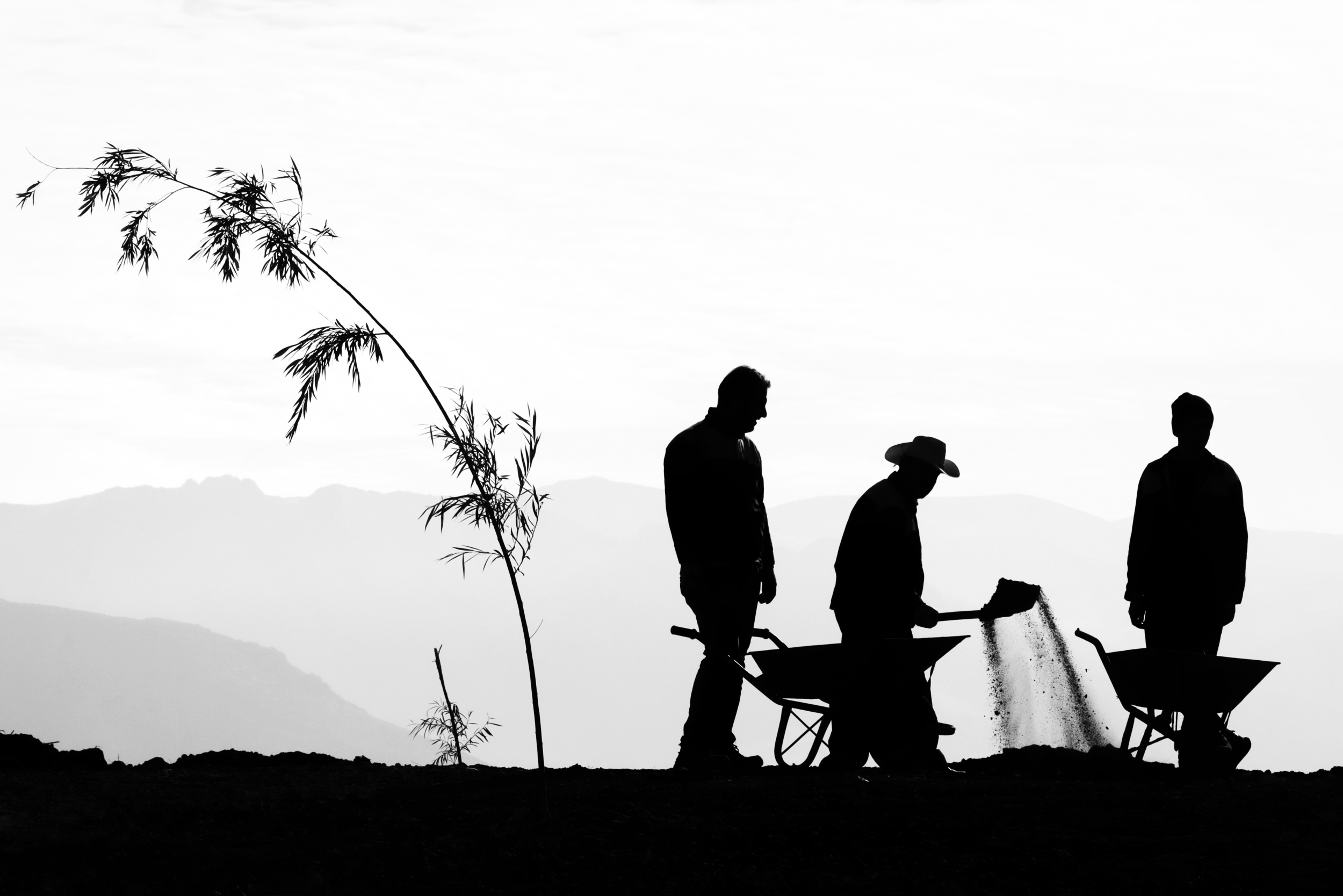
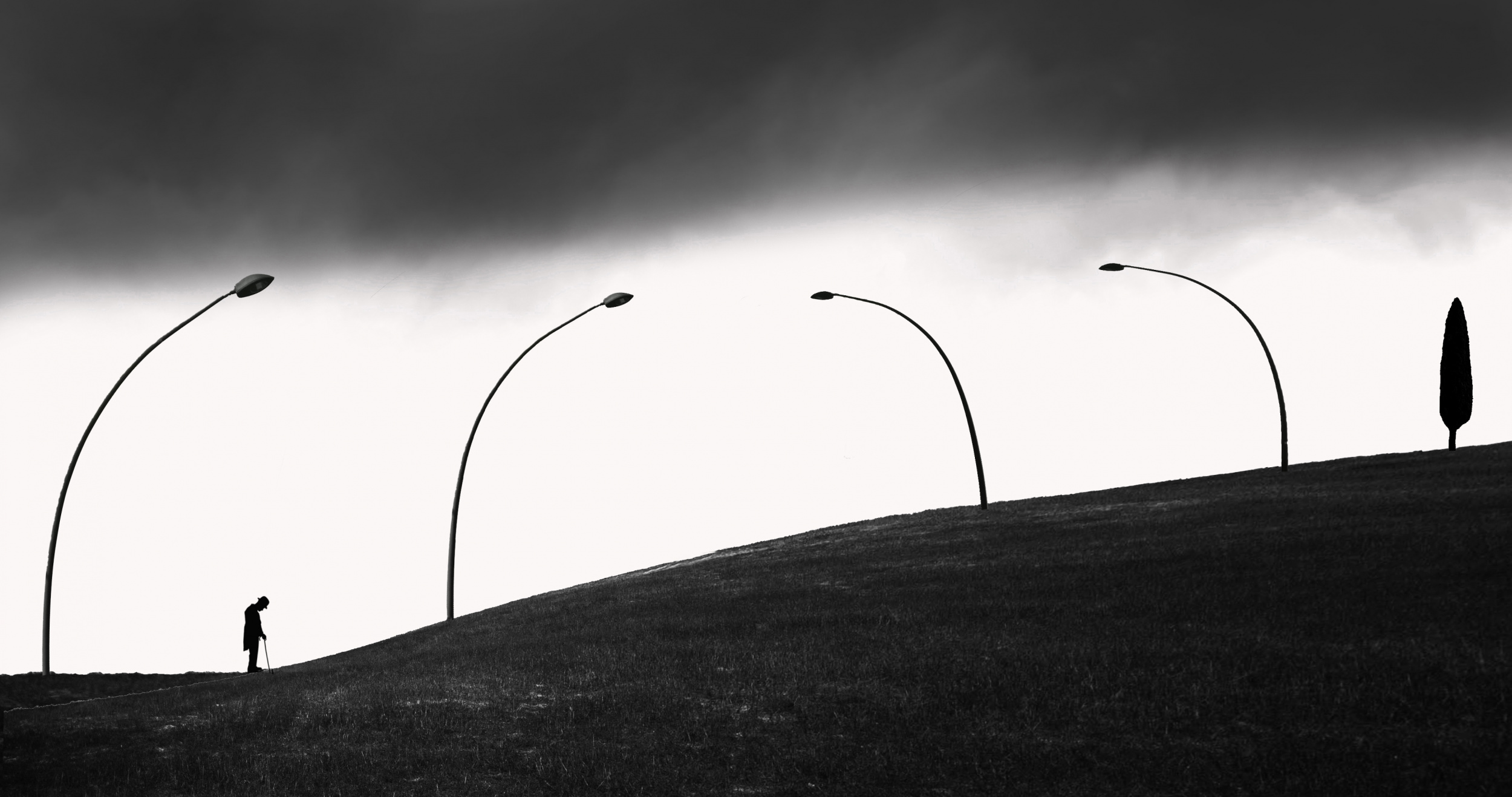
 by Markus Auerbach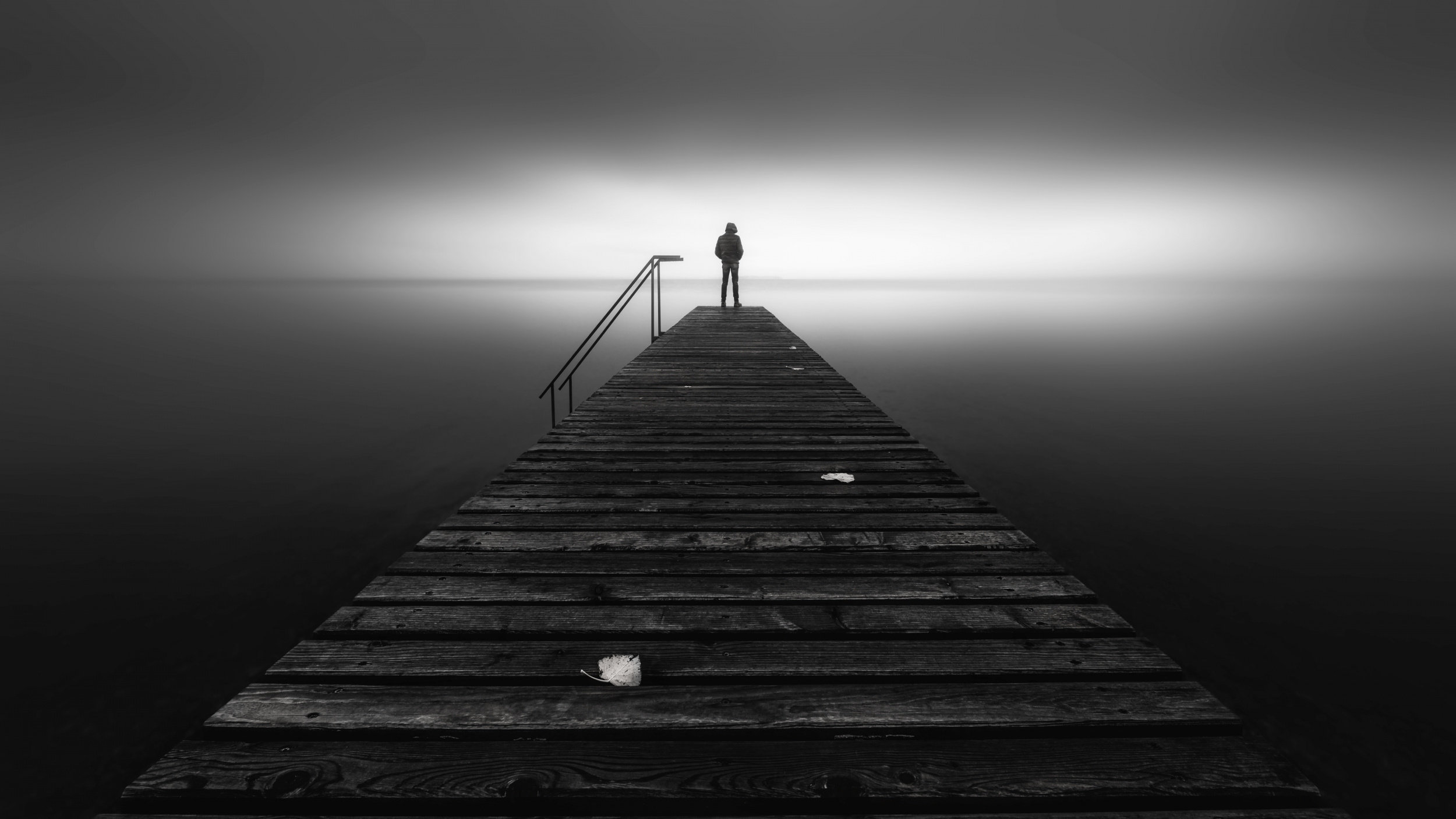
|
| | Jay Satriani PRO These are beautiful silhouette works, rich in meaning and storytelling. Through nothing more than body language and the interplay of light, you have successfully woven every element into a cohesive whole that is incredibly powerful and meaningful.
Congratulations to the winners. Your work proves that a story does not always need a face to speak.Best Regards |
by Yvette Depaepe
Published the 14th of September 2026
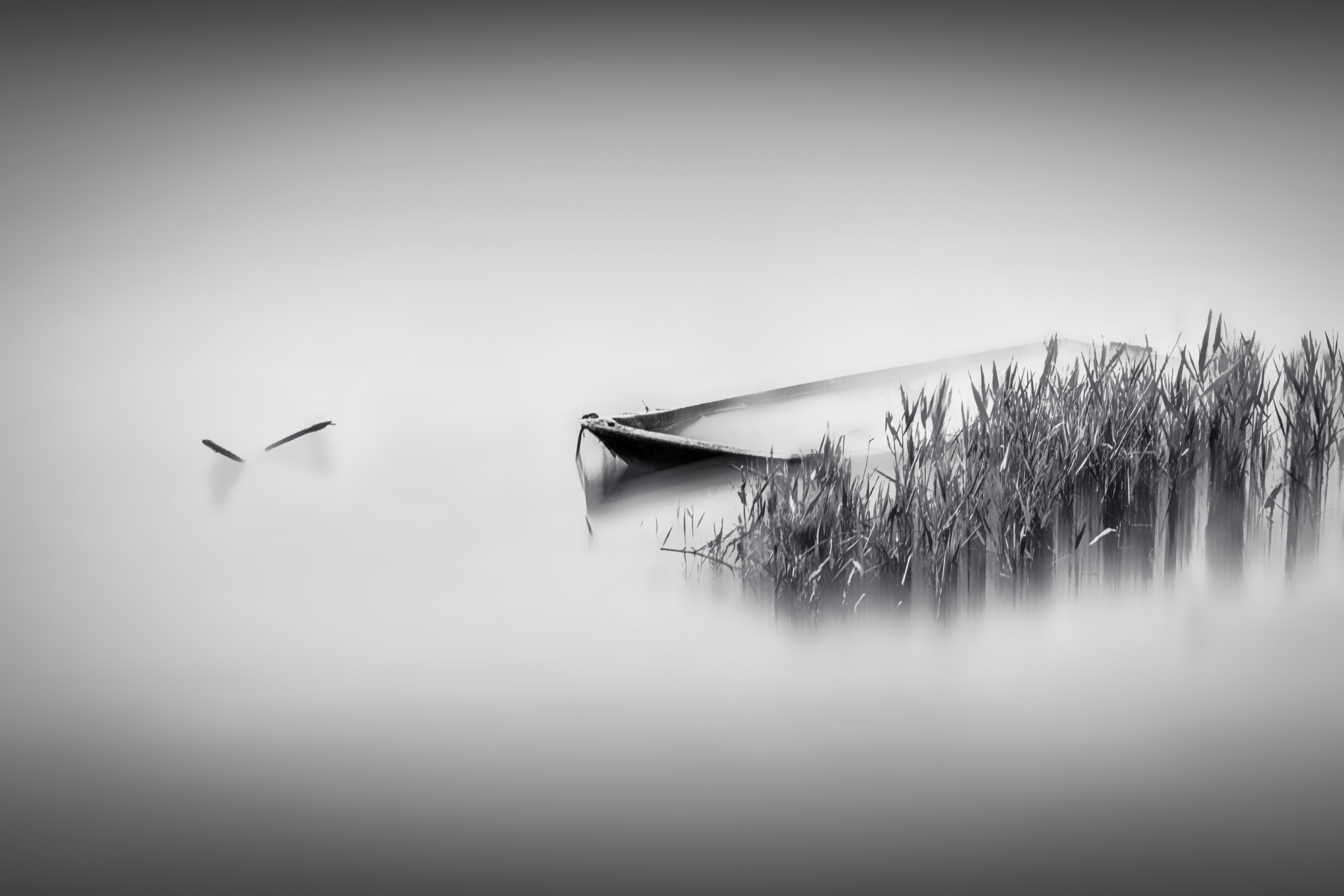
For Yein, photography is about capturing transient landscapes and elevating them to create an ideal, beautiful aesthetic by capturing the 'passage of time' and the essence of nature. He firmly believes that if we cherish every moment of our lives, they will eventually form beautiful memories.
Join me in discovering the atmosphere and narrative that Yein wishes to convey through his rich body of work.
Dear Yein, firstly, I would like to thank you for taking the time to answer this questionnaire.
Could you please start by introducing yourself briefly, telling us about your hobbies, and describing any other projects you are involved in?
My name is Gunmok Lee. I was born in Pyeongtaek, on the shores of the West Sea in South Korea. Watching the ebb and flow of the tides there shaped my artistic identity. Whenever I gaze at the crimson sunset bleeding across the sea, I feel deeply moved, as though the hours of my life are melting into its shimmering light. It was my desire to capture the beauty of the sea and its ever-changing moments forever that led me to pick up a camera. My ongoing project reinterprets the West Sea's dynamic moments, sculpted by its dramatic tidal differences, as the 'passage of time', distilling them into a single minimalist fine art image.
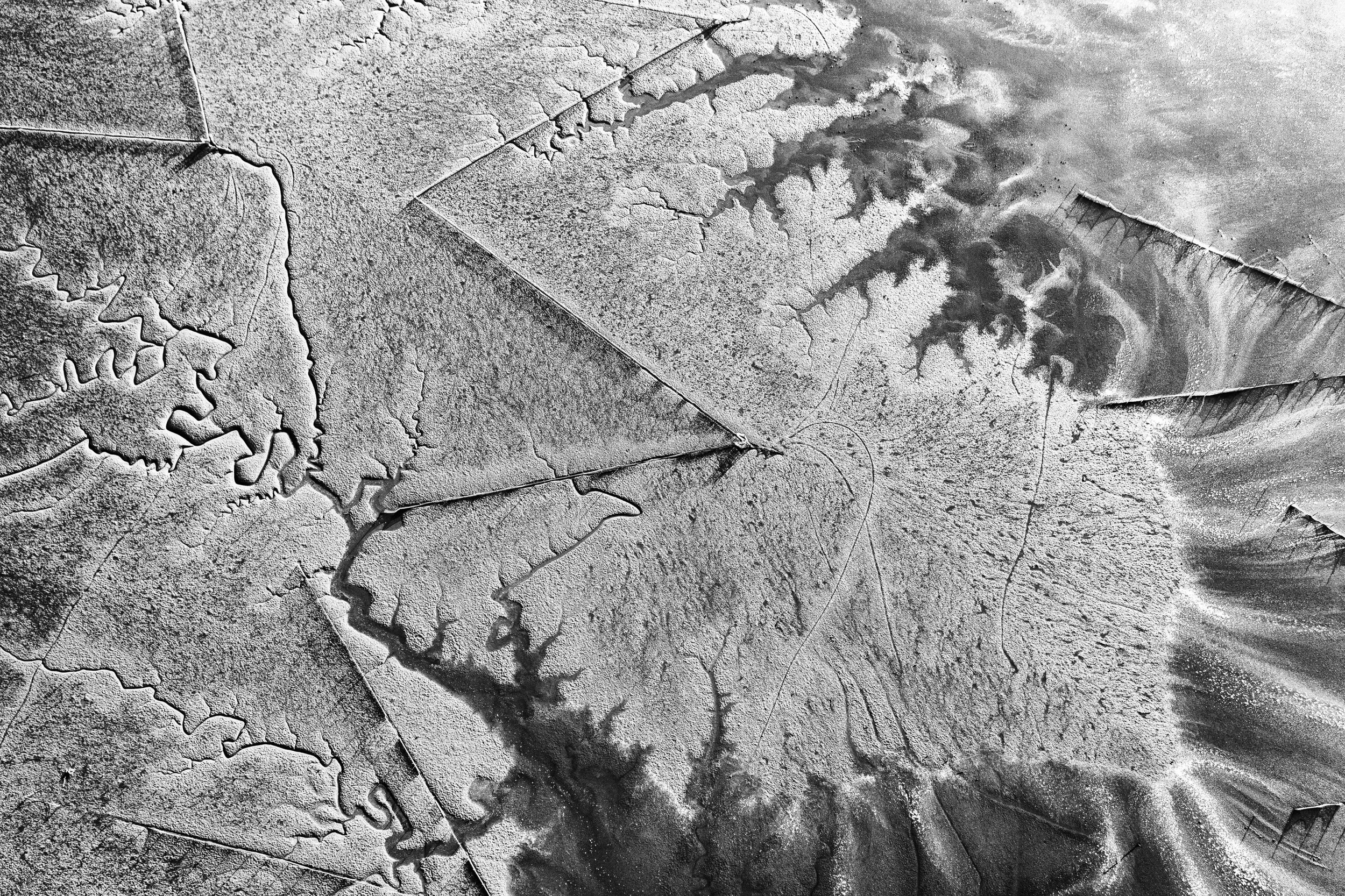
Seen from the sky...
Admire the mysteries of nature created by the waterway
How and when did you start your journey in photography?
It all began when I bought a DSLR camera to capture my children’s precious early years. Despite having no prior knowledge of photography, I taught myself online, mastering the camera's mechanical functions and digital post-processing software such as Photoshop. What started as a hobby of capturing my family's daily life and travels gradually evolved into a passion for exploring and embedding my own aesthetic vision within the frame. In 2015, I became an official member of the Pyeongtaek Chapter of the Photo Artists Association of Korea. Since then, I have been actively engaging with fellow artists and presenting my work at numerous group and solo exhibitions.
A private exhibition: https://blog.naver.com/yein_tree/222667238497
For many of us, photography is a hobby or a way of life. So, how would you describe your relationship with photography?
I have dedicated the past 30 years to the field of interior design following my marriage. My work involves orchestrating every aspect of a space, from its foundational layout to its structural utility, and harmonising the forms and colours of finishing materials to create the perfect space. I then document these spaces in my portfolio. In my view, interior design and photography are complementary disciplines that inspire each other constantly. Just as an interior space is built upon rigorous analysis and design before being realised visually through photography, my photographic work begins with an analysis of the subject's structure, calculation of the tides and location scouting. This ultimately culminates in a flawless portfolio through meticulous post-processing. My interior design brand and my artistic pseudonym as a photographer, ‘yein’ (meaning 'artist' in Korean), encapsulate my life philosophy of crafting spaces and frames into works of art.
Which experience has had the greatest influence on your photographic journey so far?
In the early stages of my career, I immersed myself in conventional landscape photography, capturing sunrises and sunsets. I also worked on video projects that showcased the passage of time using time-lapse techniques. However, the digital era marked a major turning point in my photographic journey. The ultra-long exposure effects that were once only possible with film cameras could now be achieved through digital stacking techniques using software. Captivated by the prospect, I set out to reinterpret the mysterious tidal channels and sunsets of the West Sea — which I had gazed upon since childhood — using this method. Armed with ND filters and exposure stop calculations, I challenged myself endlessly to visualise the flow of time through slow shutter speeds. When I finally witnessed the waterways stained by hours of accumulated light flowing softly through the tidal channels at dusk, I was completely spellbound by the wondrous art of long-exposure photography.
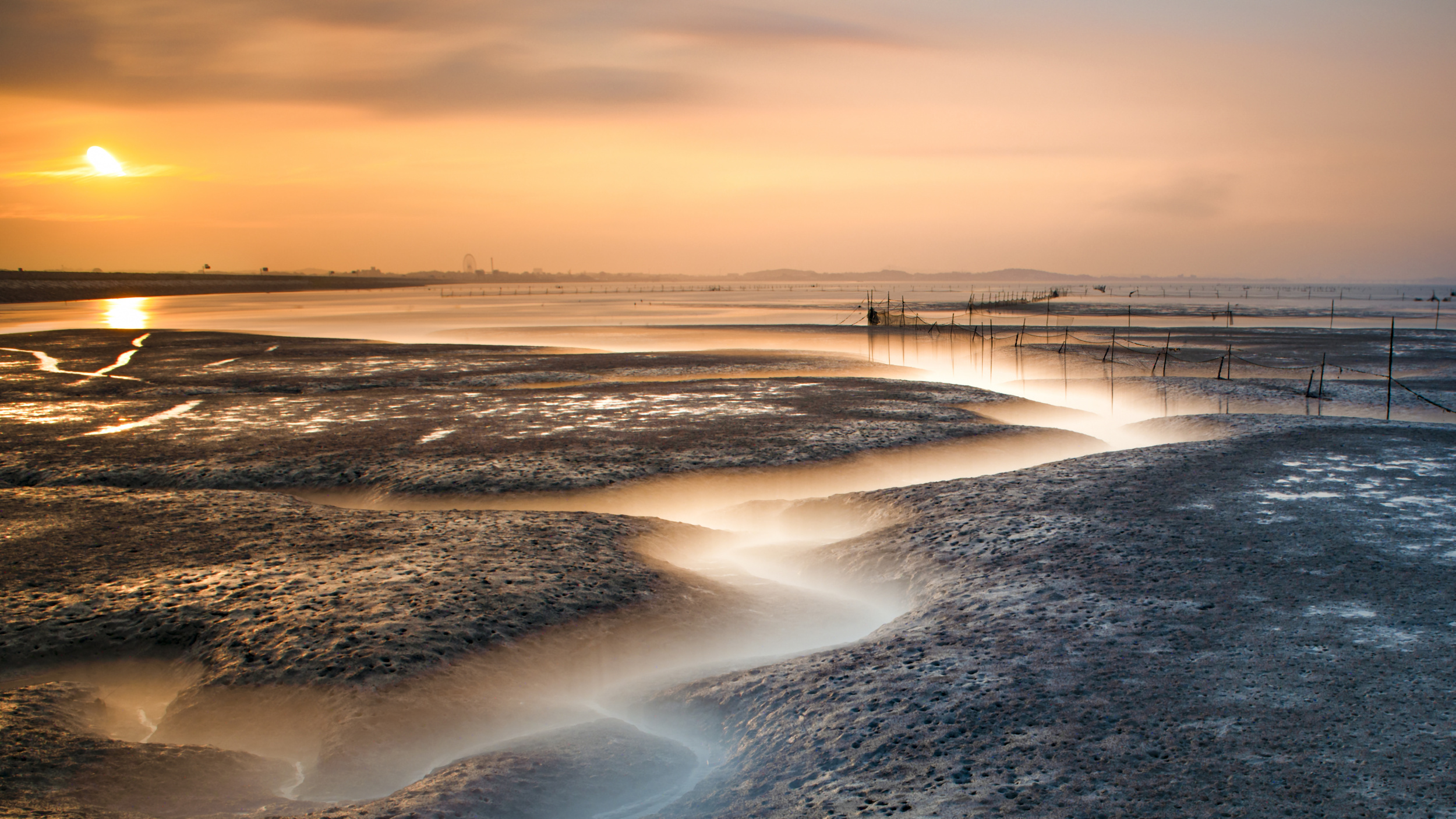
Dyed in the sunset
What kind of appearance will the waterway fill up in the afternoon light...
I erase the time and wait in anticipation of the beautiful scenery.
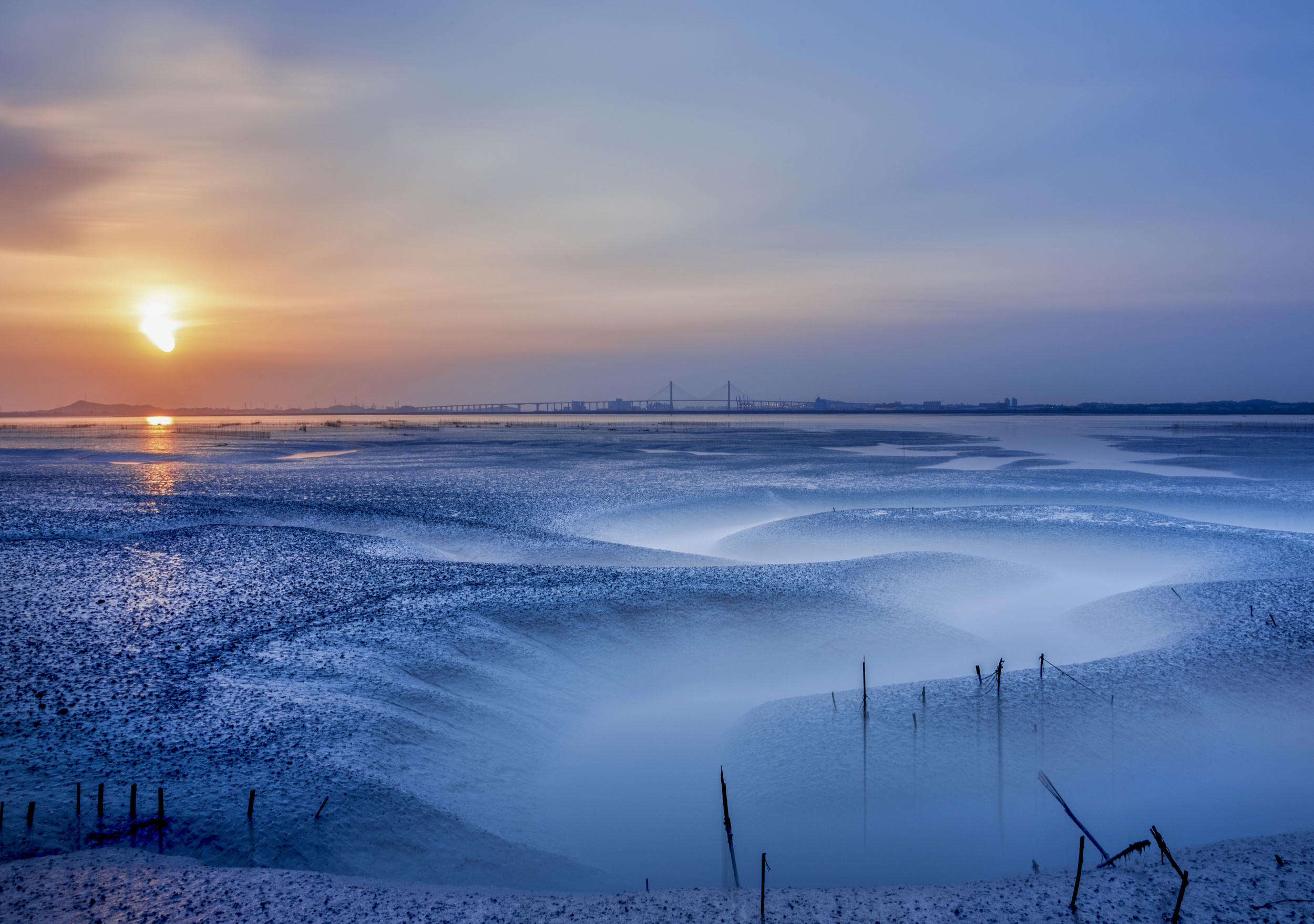
Day...
The moment the day is erased Empty
your mind and look at the setting sun
and the outflowing water Let go of the hard life for a while.
You have a wonderful black and white body of work. I see wonderful landscapes and sublime long exposure images. What draws you to these genres?
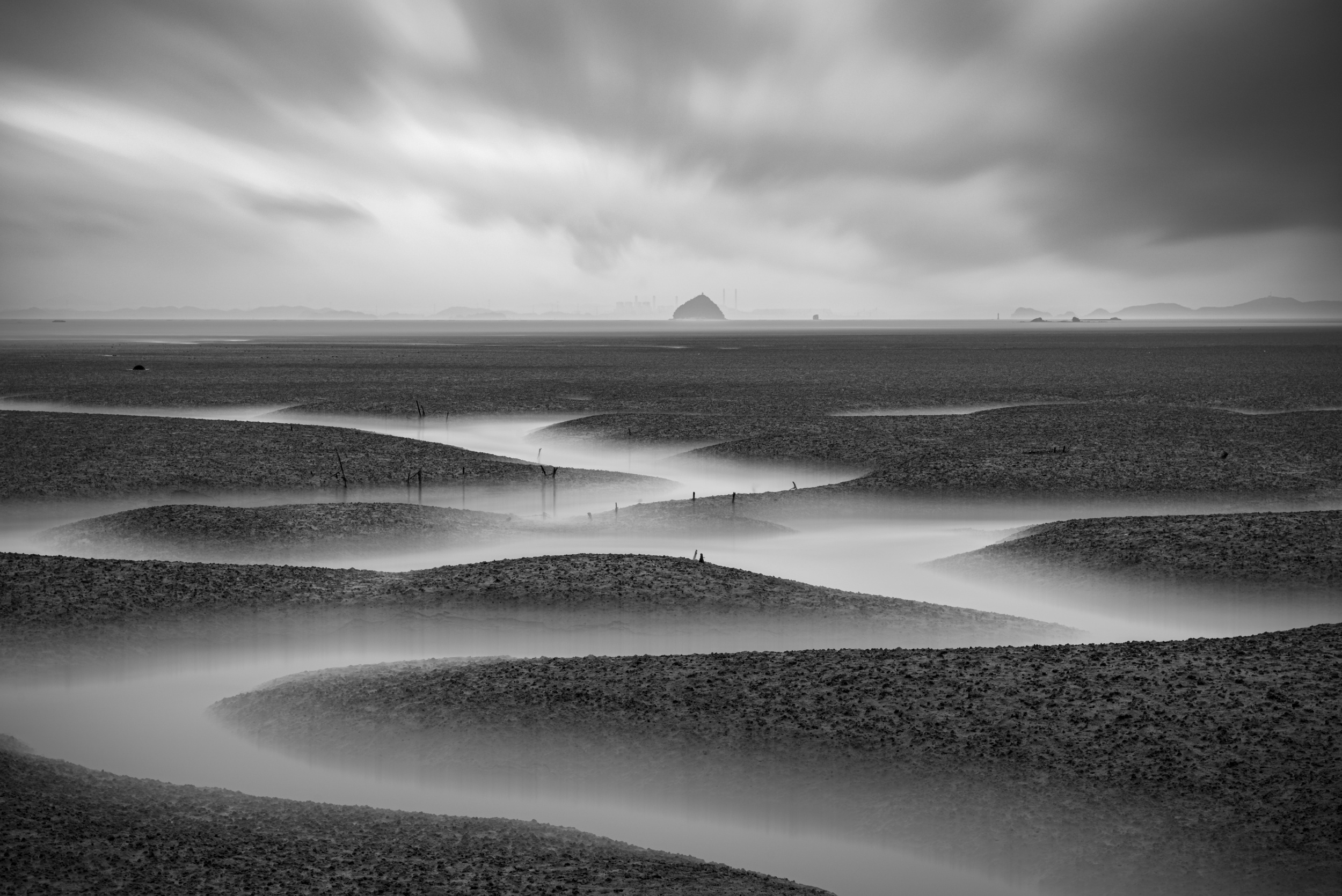
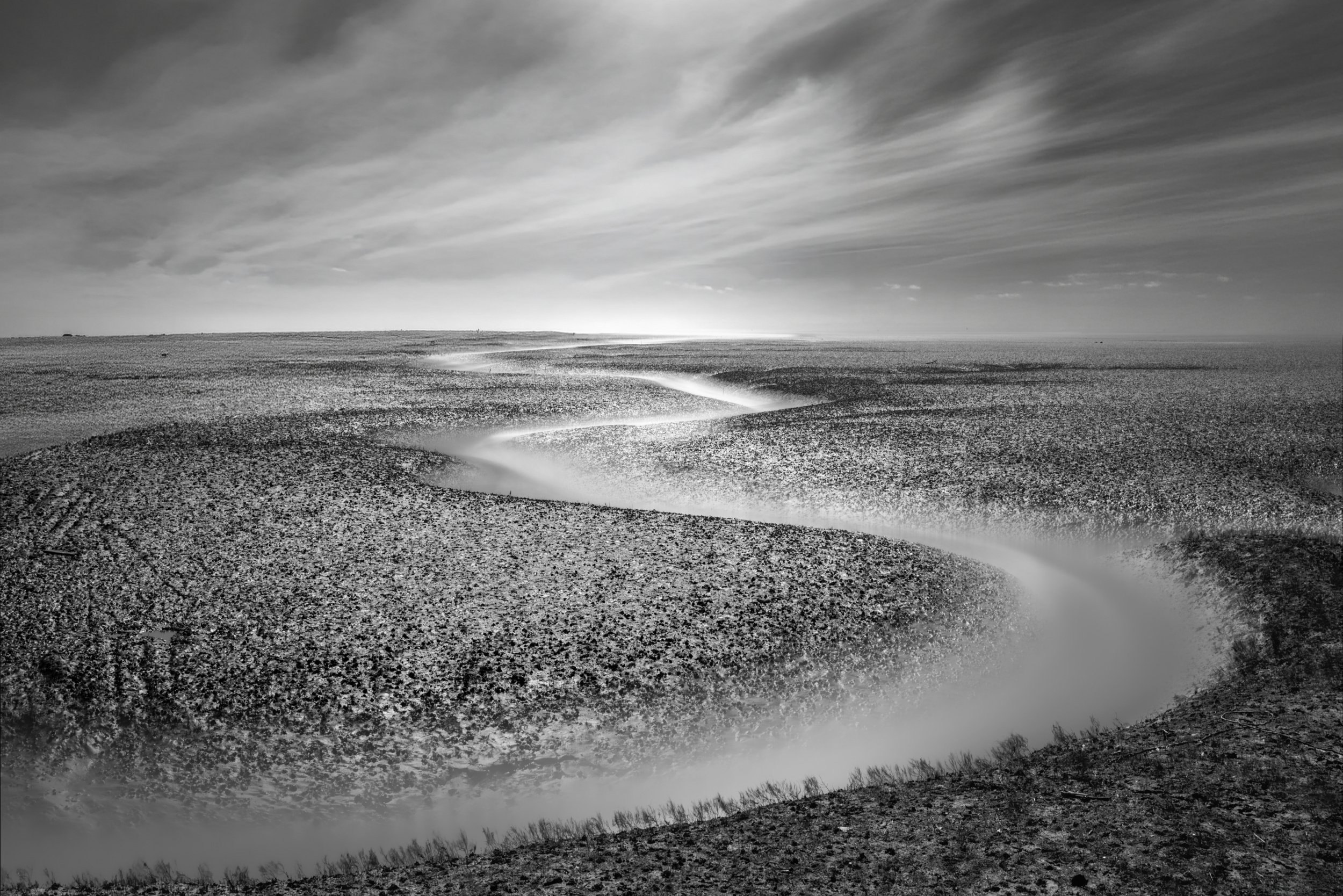
The long, serene hours spent waiting with the shutter open offer an opportunity to reflect on a busy life and find inner tranquillity. After a long wait, the image reveals a surreal world sculpted by the passage of time — a sight invisible to the naked eye. Converting the image to black and white intensifies the lines of the tidal channels and maximises the three-dimensional textures of the rugged rocks and mudflats. The stark contrast between the sharp, static subjects and the soft, mist-like trajectories of the water provides profound aesthetic inspiration that transcends reality.
Gaetbol(meaning 'tidal flats' in korean)
I look at the sea, the past years pass by
Clouds, waves, waterways, tidal valleys, nets, abandoned ships...
It disappears and is reborn with accumulated time.
When waterway seeps into the tidal valley
It leaves traces of the past as much as it accumulates.
When the waterway is stopped,
The stillness clears the mind.
If you pass the waterway one by one, you can see the arms of the tidal valleys again.
Nostalgia builds up where you stay.
Always carry the waterway with you in your arms.
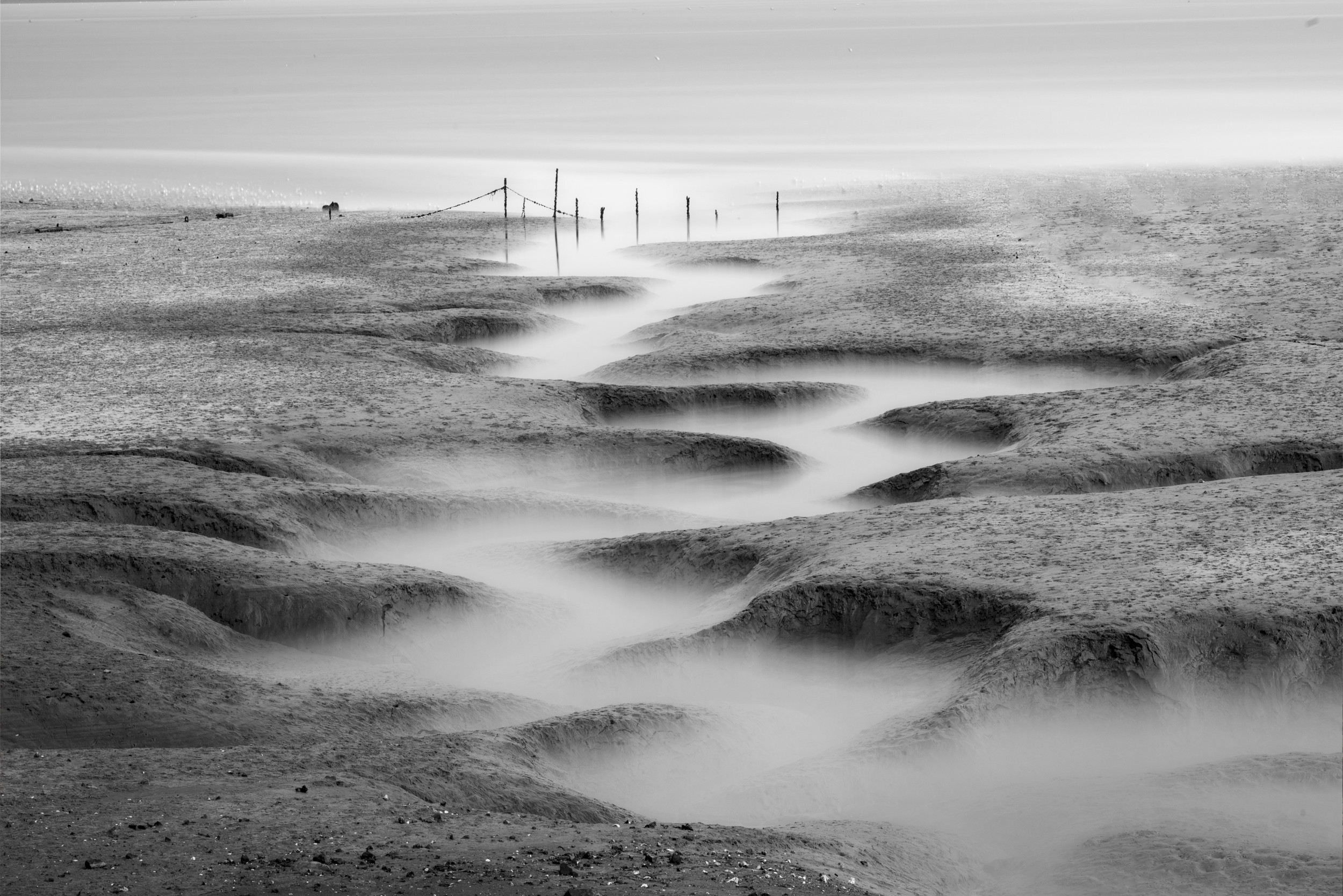
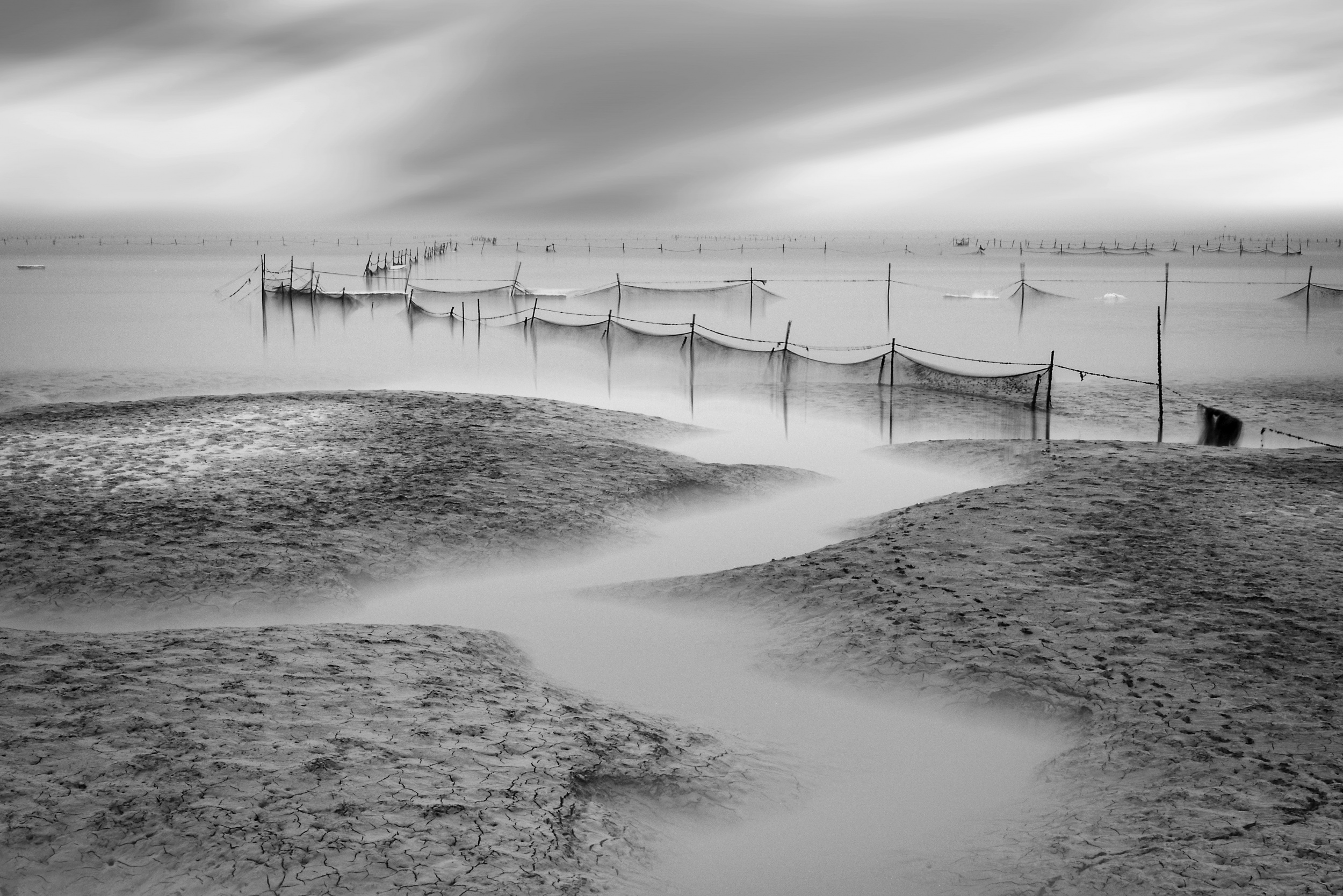
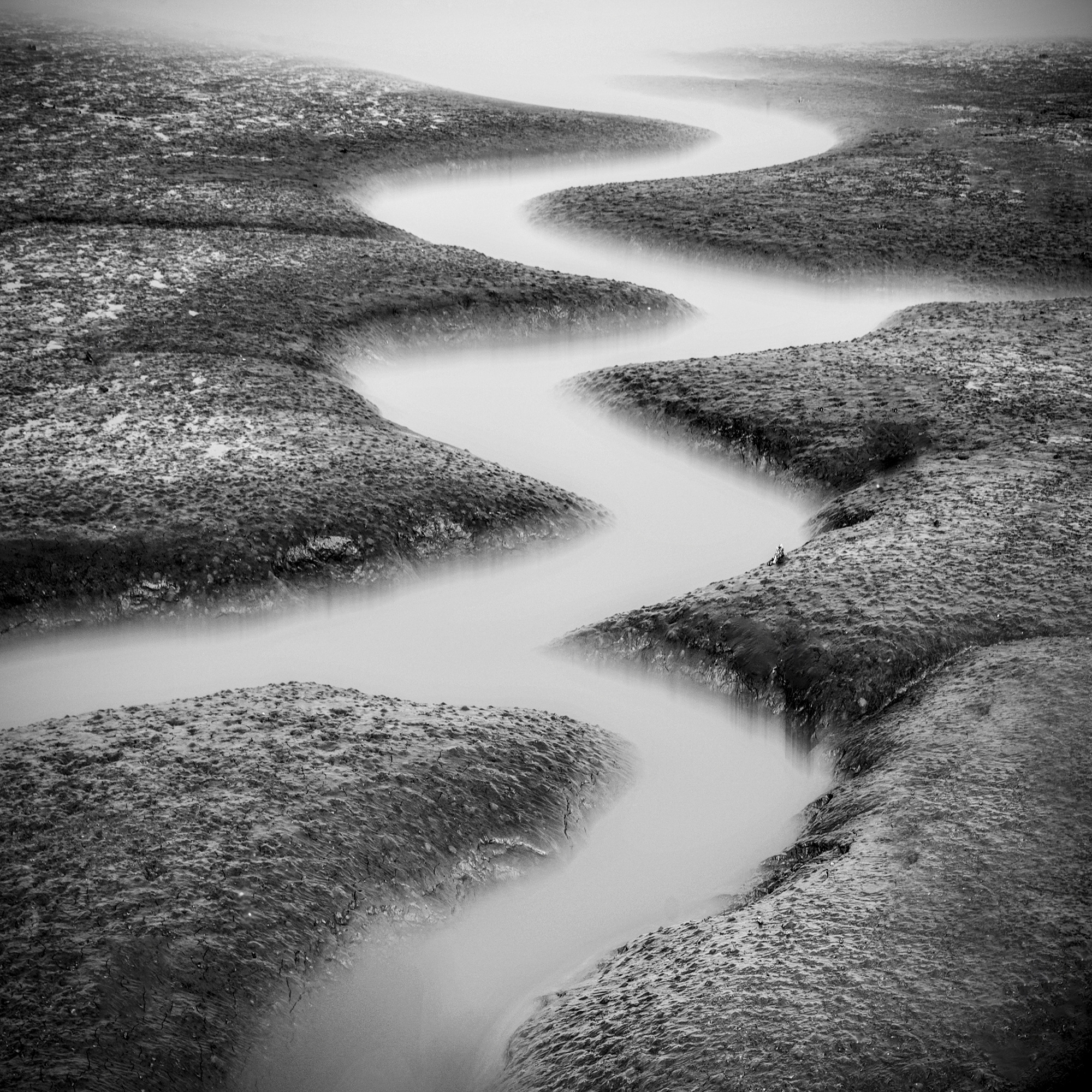
Which is more important to you: the mood or story behind your images, or technical perfection?
Since the sea lies at the heart of my work, I like to compare the relationship between these two elements with that between a fisherman and a chef. Just as a fisherman can only achieve a bountiful catch when they thoroughly understand the habits of the fish and make flawless preparations, a photographer must read the flow of nature completely and possess technical precision in order to capture the ultimate raw image (the A-cut). Similarly, just as a chef takes fresh ingredients and creates an artistic dish with an ingenious recipe, a photographer must process the raw image through digital post-production, infusing it with their own philosophy and narrative to transform it into a creative work of art. Therefore, the atmosphere and narrative that an artist wishes to convey and the technical precision that supports it are equally important and can never be separated.
Do you carefully select the locations at which you intend to take photographs?
The first step and core of my work is selecting the location and conducting rigorous preliminary research. For example, in the case of the 'Net' series, the season in which the nets are installed, their location, shape and colour vary entirely depending on the species of fish, and the nets are usually dismantled after just one to two months. In order to capture these traces of life, I constantly monitor local tidal information and fishing conditions, rushing to the site the moment the nets are cast. Aquatic plants such as Suaeda japonica (sea seepweed), Fucus fulvescens and green laver are also seasonal gifts of nature, which is why I exercise the utmost caution when choosing the timing and location.
Net
The livelihood of coastal fishermen begins with the net.
As the tide enters, captured through a slow shutter,
the turbulent breath of the waves turns calm,
and the nets become essential lines.
Spreading wide across the sea like flapping wings,
they seize the passing traces of the fishermen's years,
recording them into a single, minimalist photograph within memory.
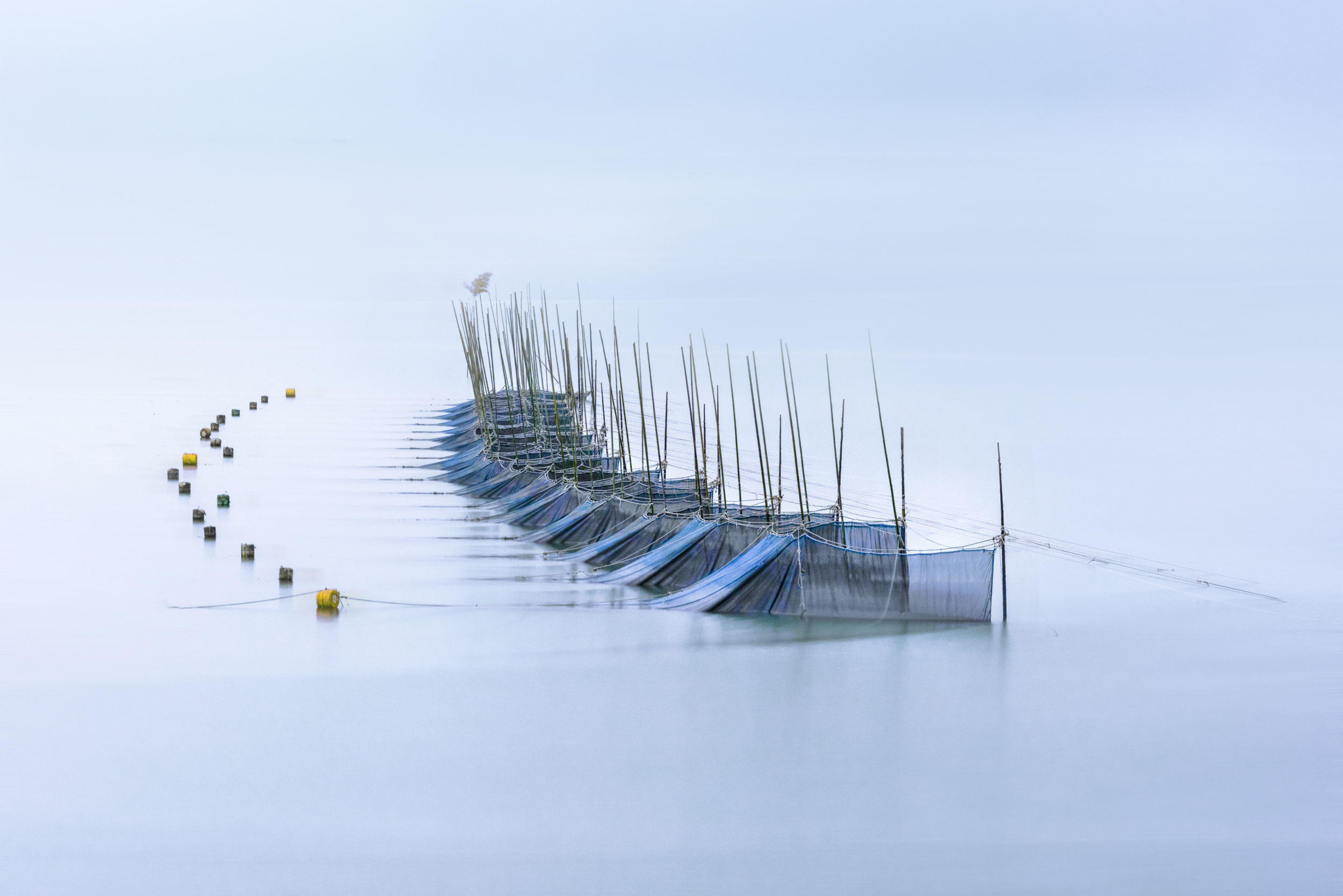
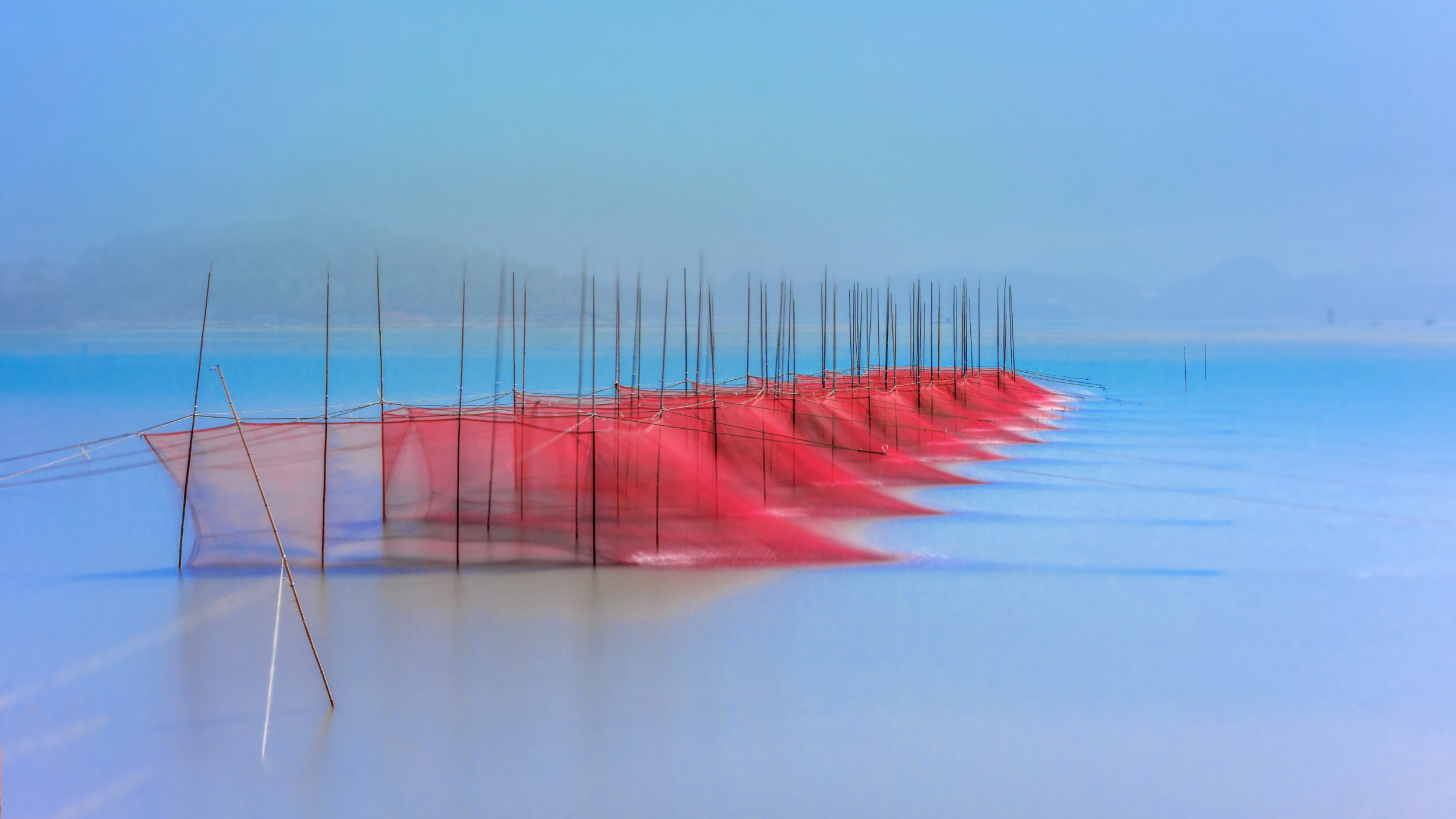
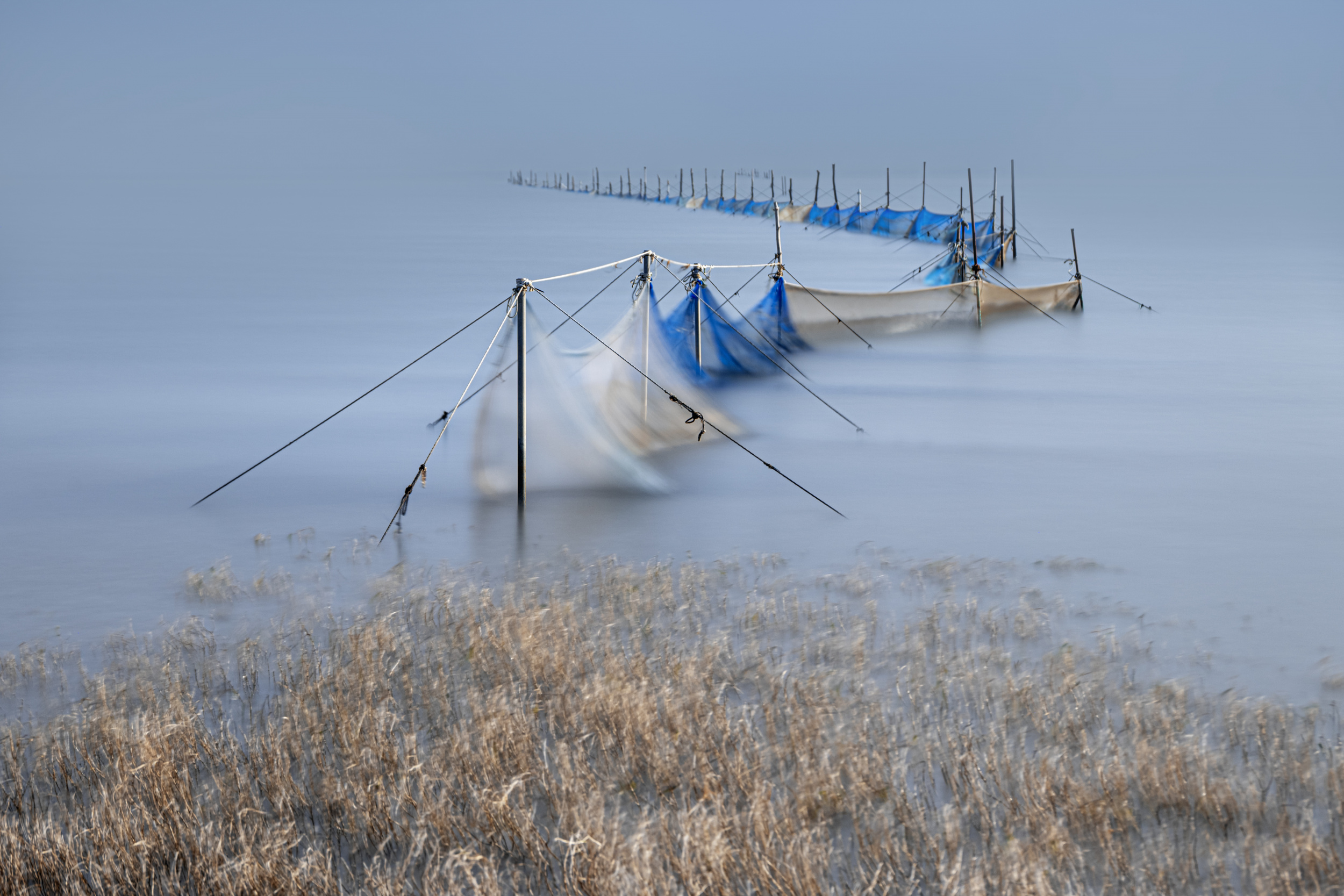
In your opinion, what are the most important qualities for a successful landscape photographer?
It is an attitude of humbly accepting only what nature permits each day and of constantly conversing with and harmonising with nature. Great work does not stem from human greed or intention, but rather from unwavering consistency and patience in submission to the laws of nature. In other words, I believe that 'humility' and 'patience', which connect the artist's inner self with nature, are the most vital qualities of a photographer.
Could you tell us more about your workflow, from the initial idea to the final product?
After precisely analysing the weather conditions and tides, I arrive at a location and establish either an overall composition or a restrained, minimalist composition tailored to the live site conditions. I then proceed with stack shooting using ND filters, usually at 2–4 minute intervals. When I need to perfectly capture topographical features, such as a 'Z-shaped tidal channel', I might spend an entire hour attempting a single long-exposure shot. If the clouds happen to be flowing beautifully at that time, I record a separate 2–4 minute exposure of the movement for the background. Later, during post-processing, I blend the captured shots using the stacking technique to create the most aesthetically pleasing gradations of light and shapes, infusing the work with my own artistic vision. Finally, I tidy up visual noise and unnecessary elements to complete a single piece of fine art that embodies artistic minimalism.
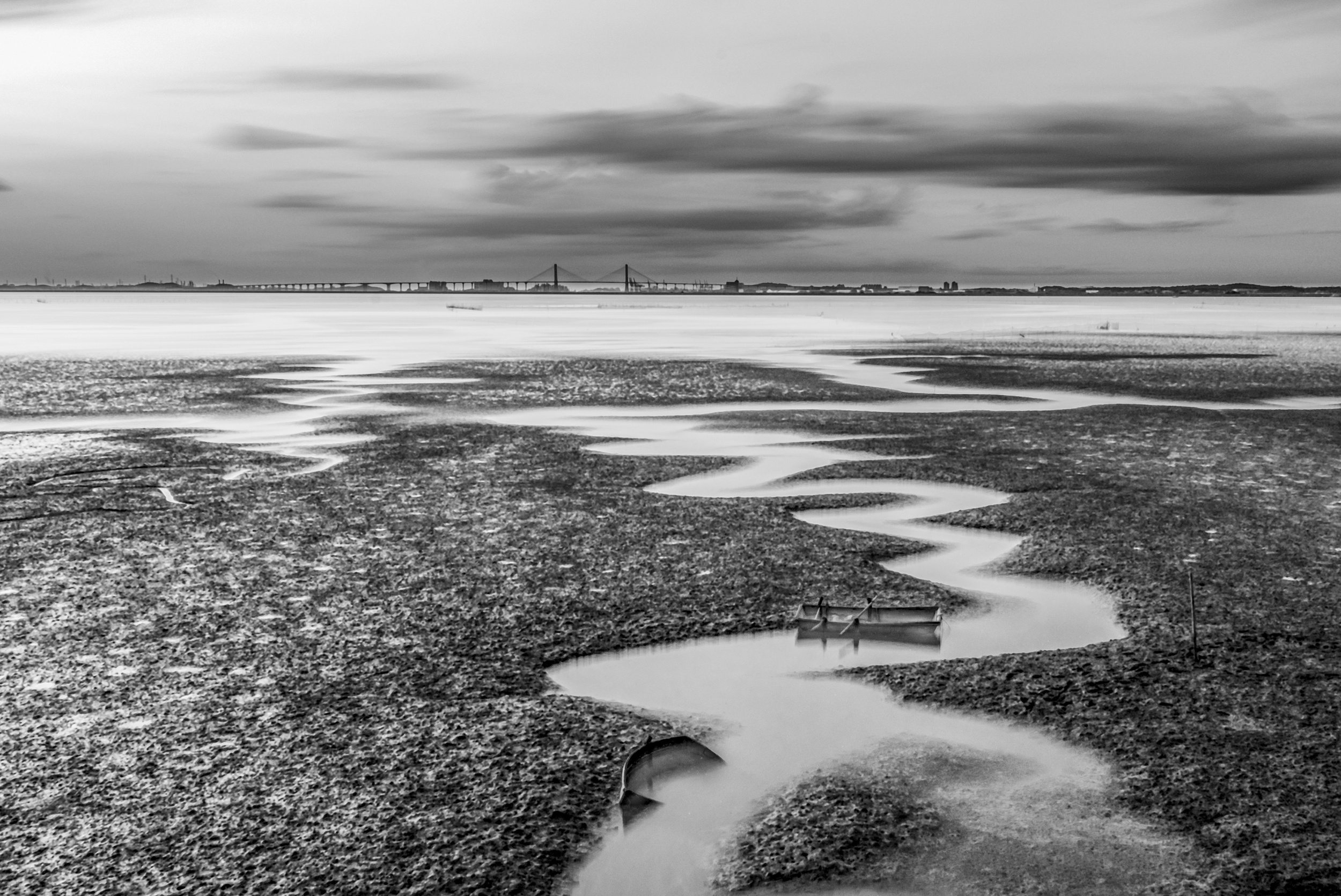
Stack shot
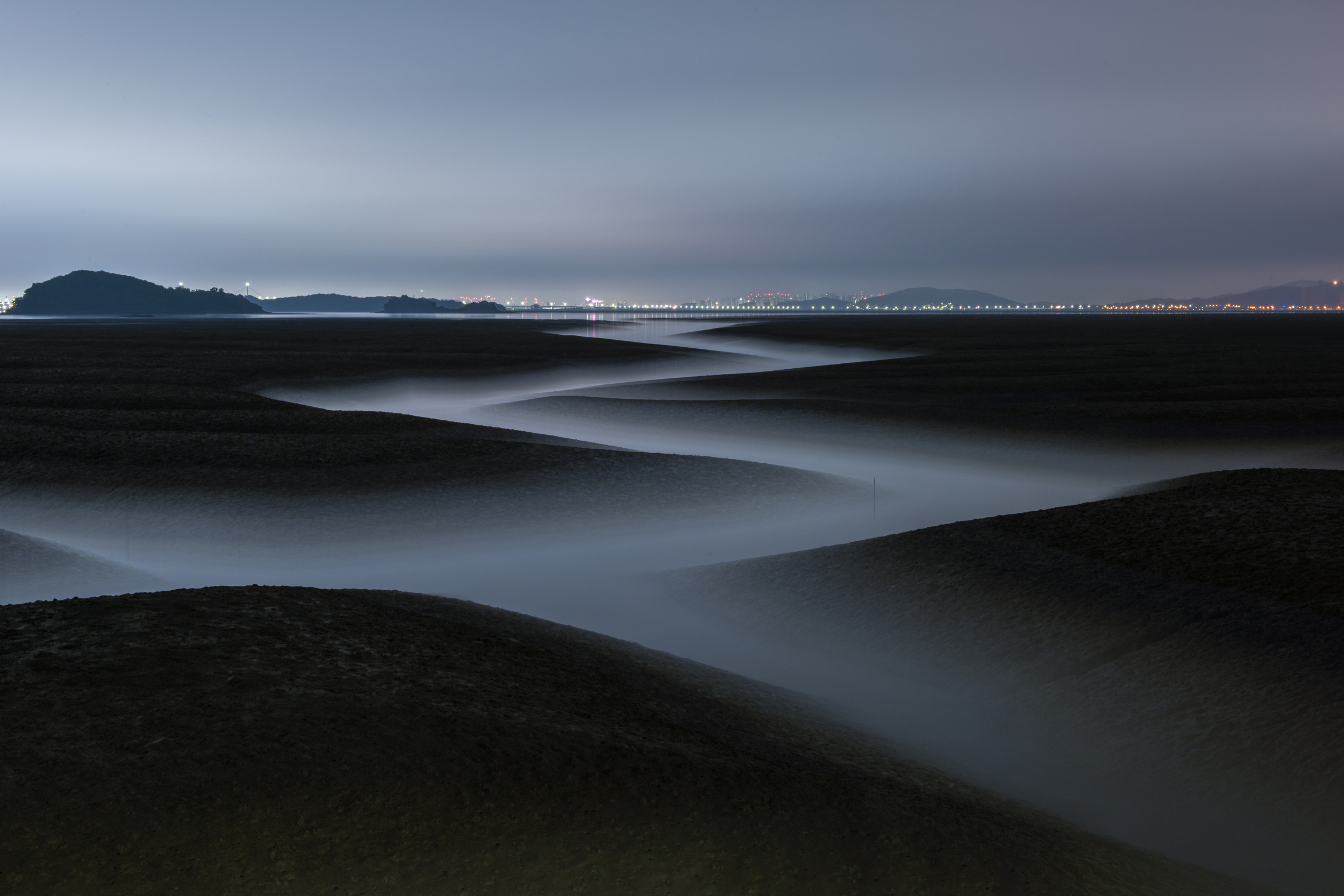
Long shot
Where do you look for inspiration, and what inspires you the most?
I am aesthetically stimulated by marine documentary photography and videos, as well as the portfolio exhibitions of world-class artists, which I view through various domestic and international online and offline media. However, the purest and most powerful inspiration comes from being on site, experiencing the power of nature first-hand as I walk along the nearby sea bed at low tide and sketch the landscape.
Many people believe that gear is unimportant if you're passionate about photography.
Could you please tell us what equipment you use, such as your camera, lenses, lighting and tripod?
I have always trusted the Nikon system for its rich gradations and exceptional low-noise sensor performance. My core gear currently consists of a Nikon DSLR and Z mirrorless camera body, standard and telephoto zoom lenses, a DJI drone, a heavy-duty tripod and a stone bag to withstand harsh sea winds, and a magnetic ND filter system. However, when it comes to long-exposure fine art photography, I believe that an artist's ability to capture the essence of their subject and their creativity in post-processing to refine the raw image are far more important than the specifications or grades of the equipment used.
Who are your favourite photographers or mentors, and how has their work influenced you?
The extremely restrained, minimalist, black-and-white, long-exposure techniques of the world-renowned photographer Michael Kenna awakened in me a sophisticated 'aesthetics of the void', revealing the essence through visual emptiness. Furthermore, the tonal reproduction of Sebastião Salgado, a master of documentary photography who uses weighty black-and-white gradations to express the grand narratives of Mother Nature and the Anthropocene landscape, has served as my ultimate mentor during my monochrome post-processing work.
As this interview is coming to an end, could you tell us about your photographic vision in general, and any projects you would like to be involved in?
My vision for photography is to capture the transient landscape and elevate it into an ideal, beautiful aesthetic by breathing in the 'passage of time' and the breath of nature. Furthermore, I believe that if we cherish every moment of our lives, they will eventually form a beautiful memory.
In the future, I would like to participate in exhibitions or projects that document the passage of time or minimalism. To this end, I am preparing collections categorised by various subjects found in the sea, such as mudflats, nets, rocks, abandoned ships, sea roads, structures and aquatic plants.
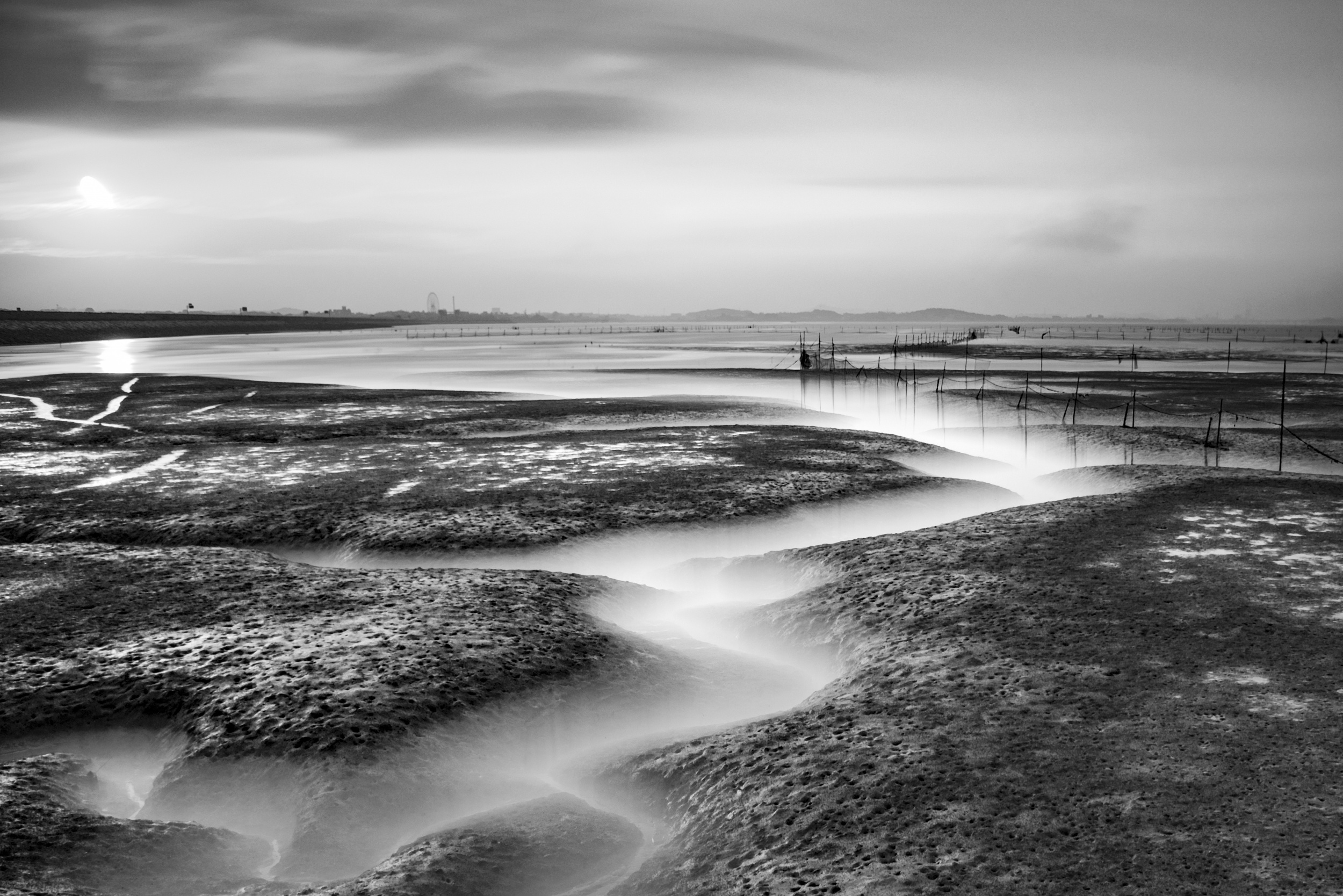
Gaetbol mudflats
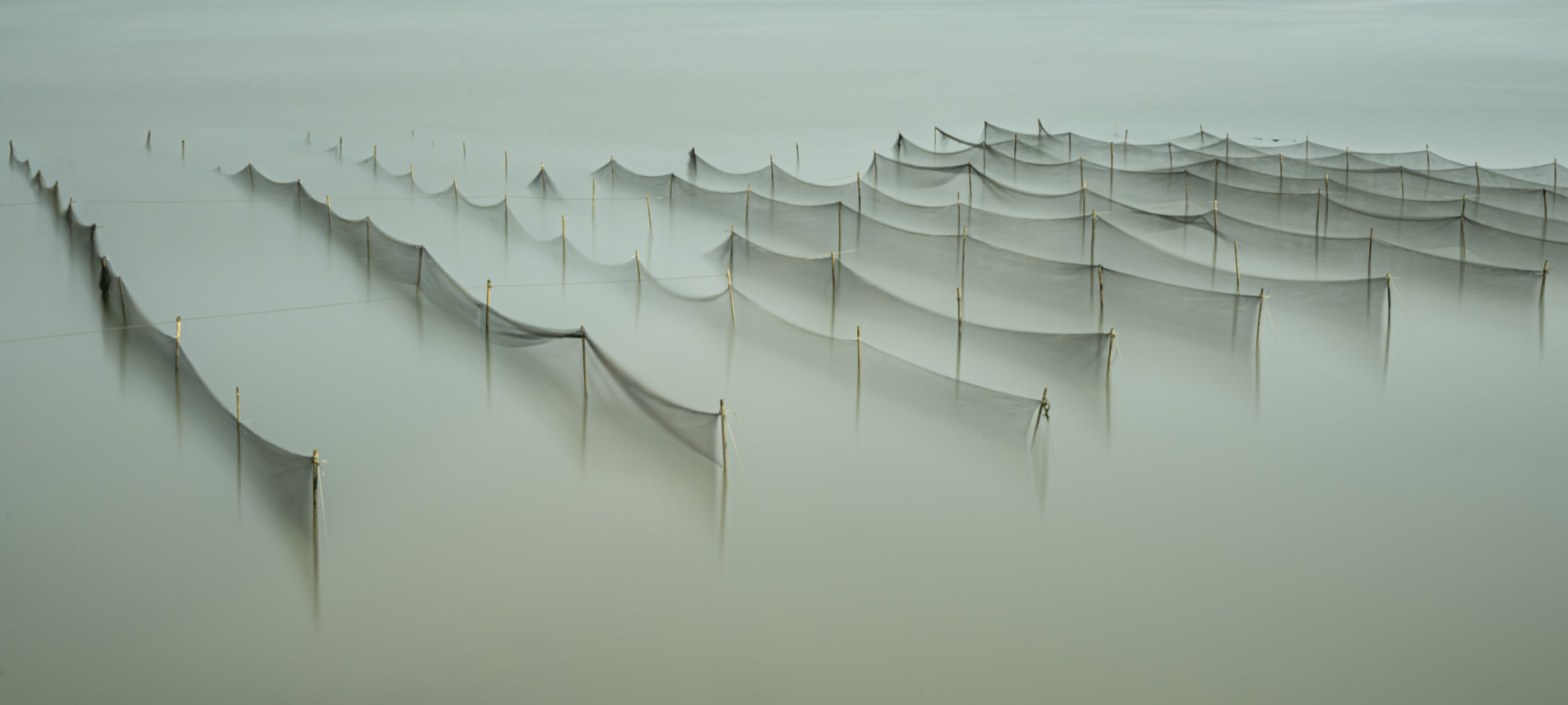
Net
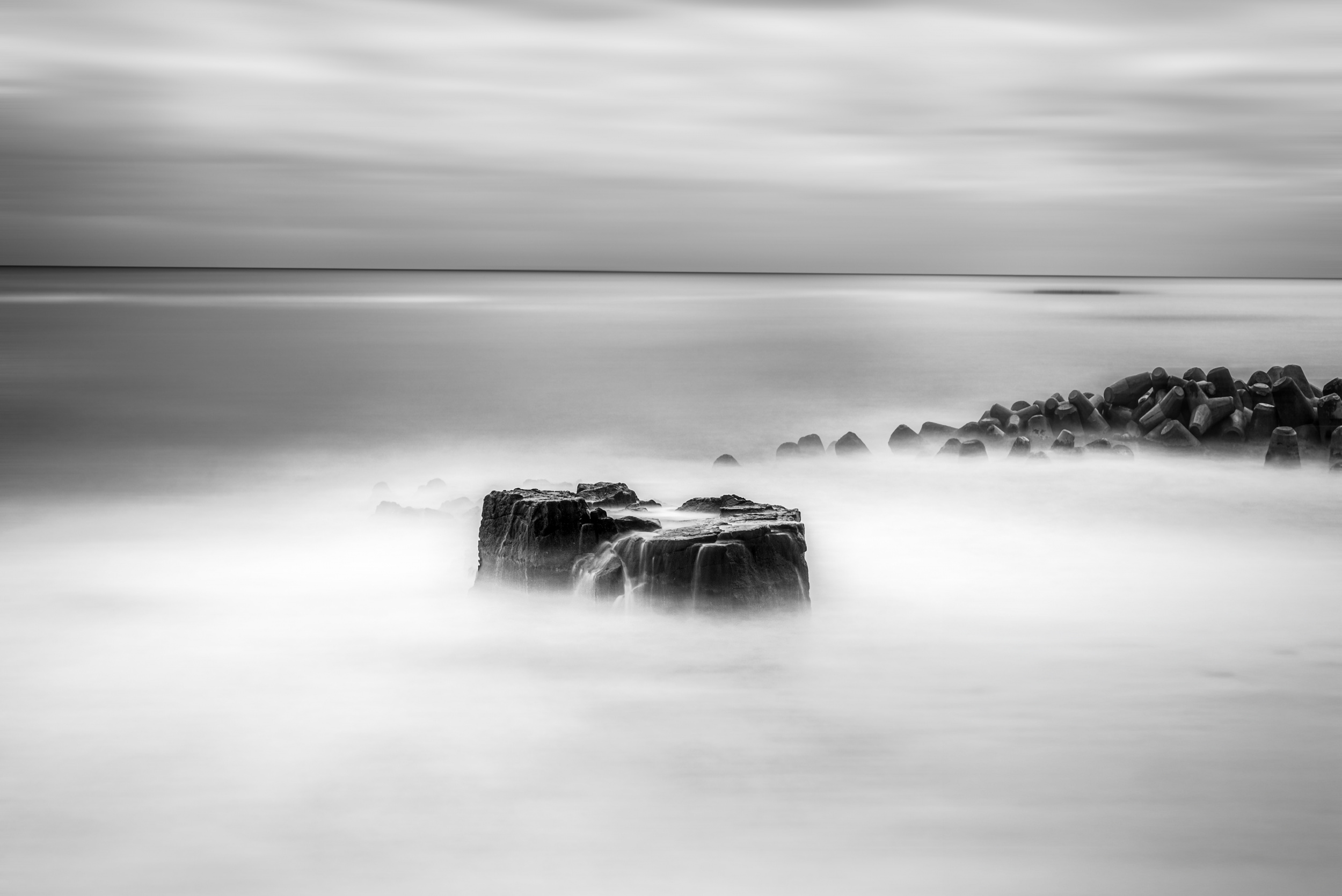
Rock
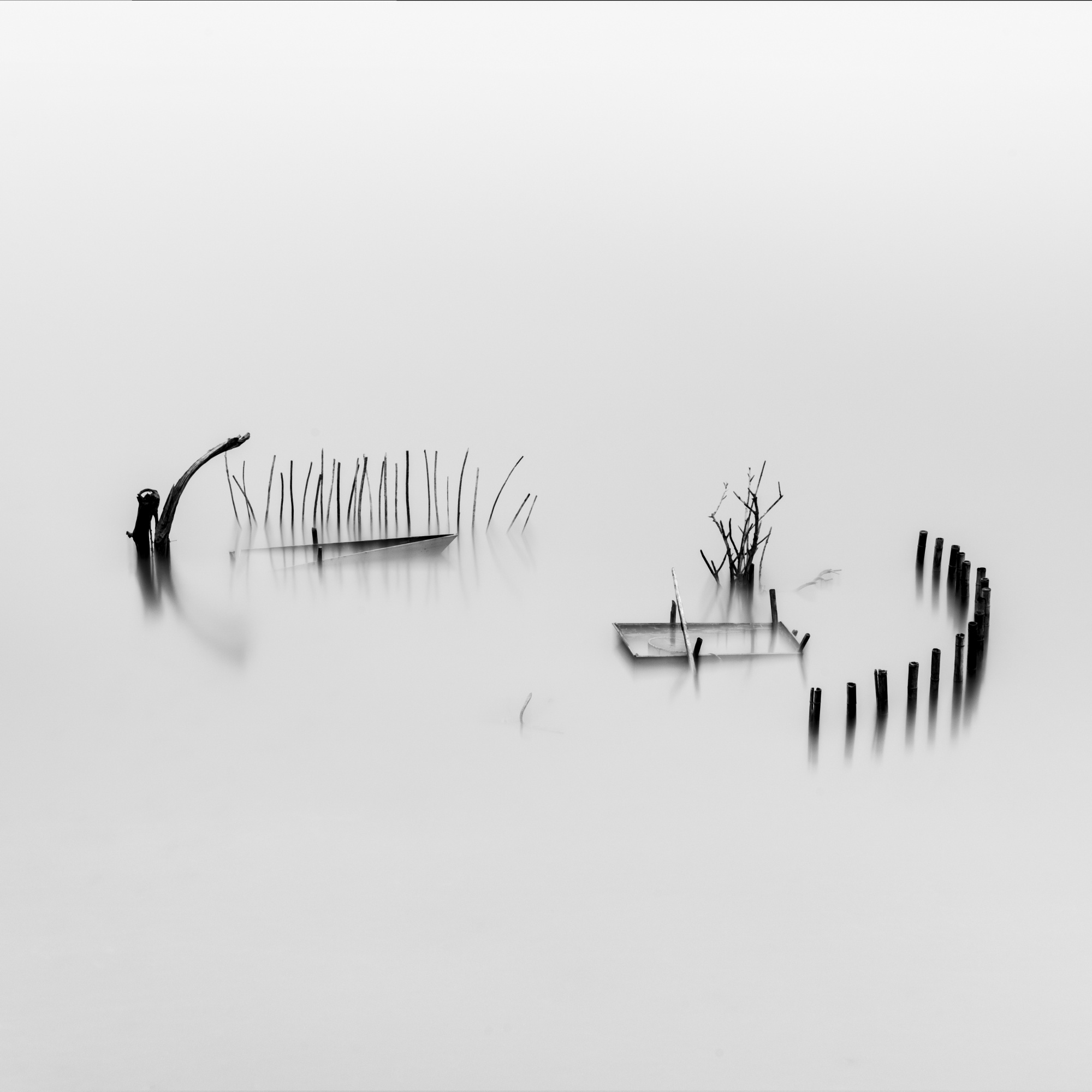
Abandoned ship
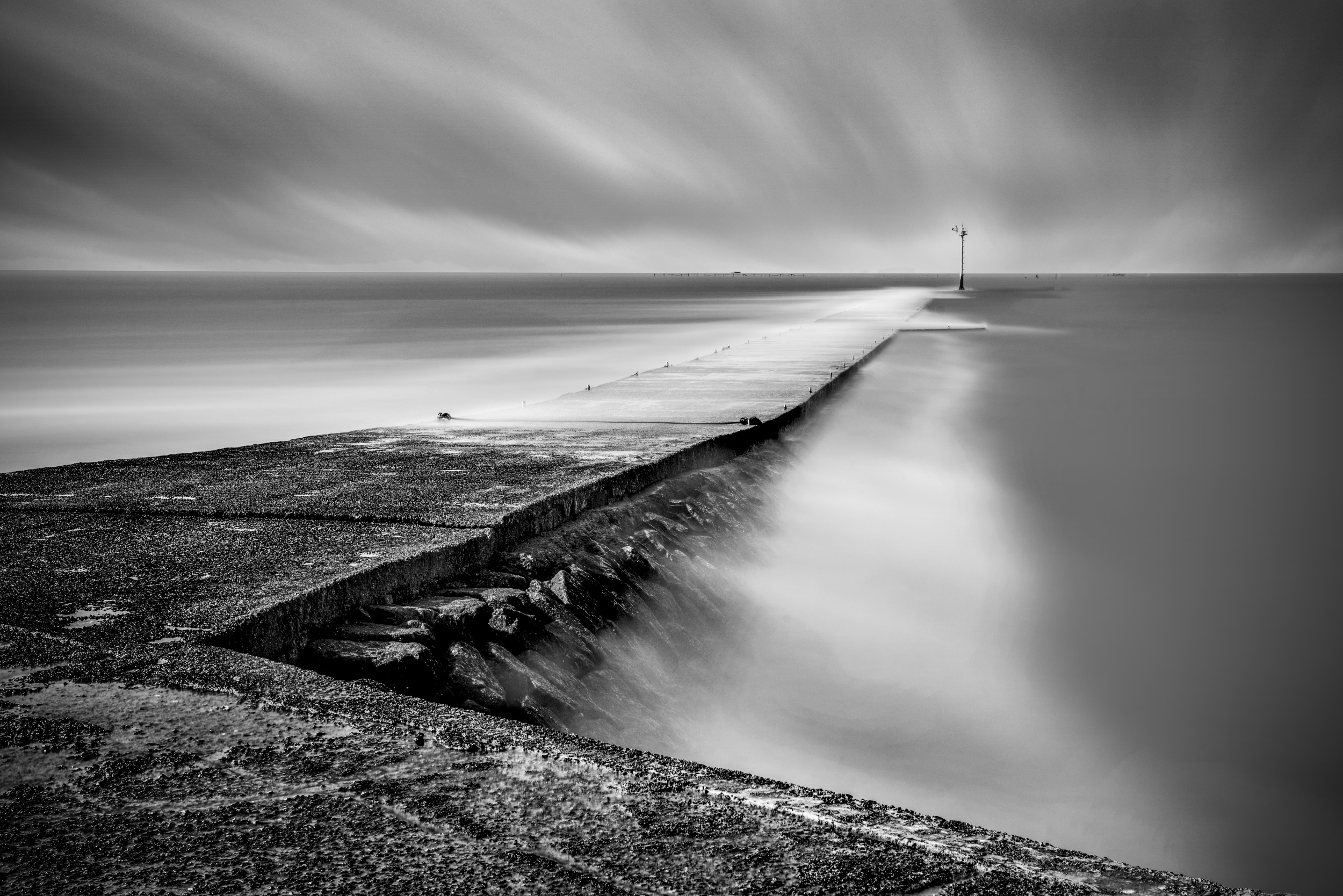
Sea road
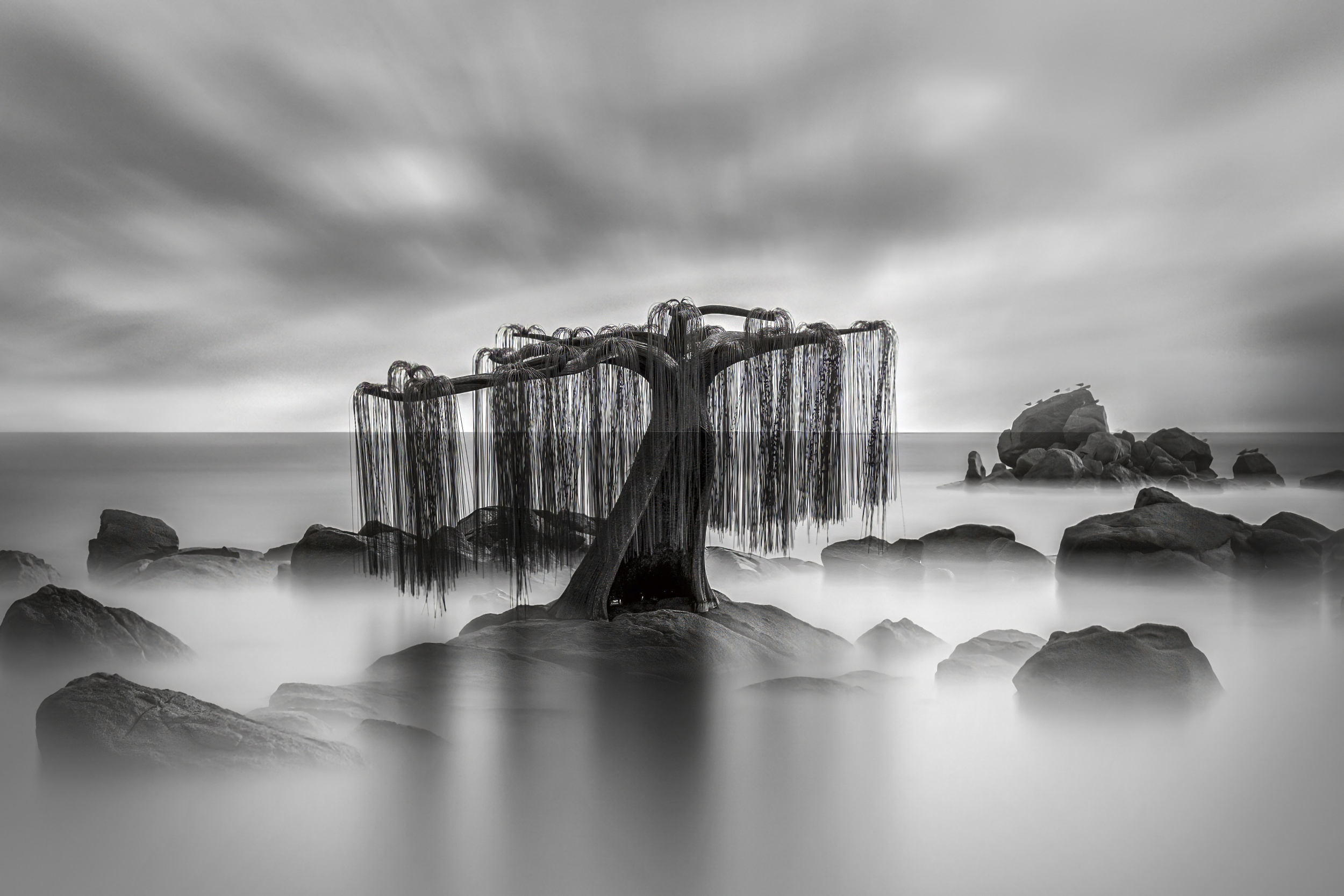
Structure
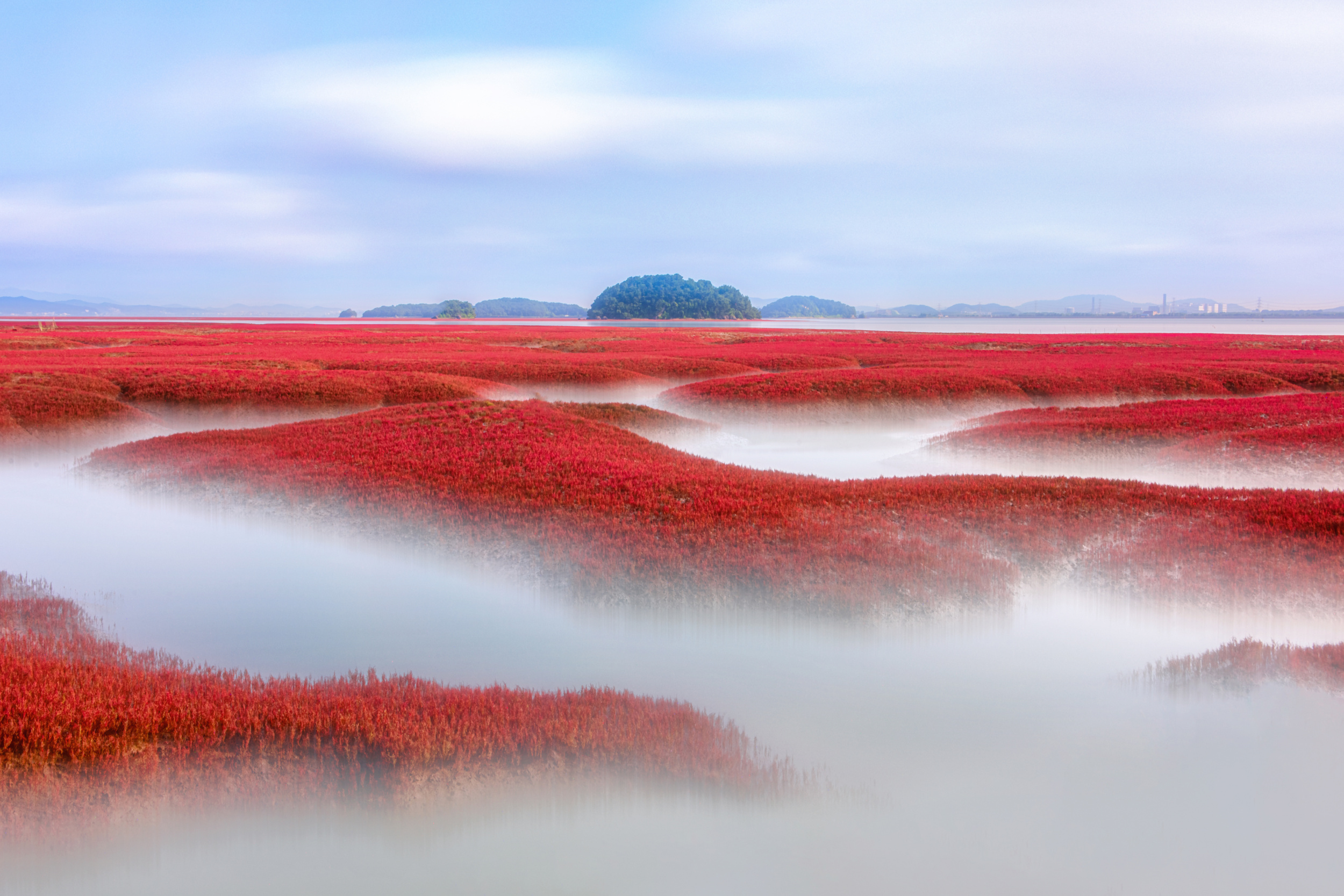
Aquatic plant(Suaeda Japonica)
Is there anything else you would like to add? What are your thoughts on using 1X to showcase your work?
Although I have only recently joined 1x, I am sincerely grateful and deeply honoured to have been granted the monumental opportunity of a magazine interview. Encountering the 1x Magazine and the breathtaking works of world-class artists has broadened my artistic vision and horizons immensely. 1x boasts an exceptionally rich diversity across its magazine features and genres, offering endless inspiration.
The unique, rigorous and objective curation system is particularly invaluable, serving as a sophisticated guide that teaches artists how to strike a delicate balance between subjective self-satisfaction and the universal aesthetic preferences of the public. This system is a powerful lighthouse for me, constantly inspiring me to refine my existing works and relentlessly perfect my fine art.
If I may make one small suggestion, I hope that dedicated independent categories for 'Long Exposure' and 'Minimalism' will be established on the world’s most prestigious art photography platform, 1x. This would enable artists specialising in these genres to share their profound aesthetic vision with readers around the world.
Thank you so much for this most interesting interview, dear Yein.
I'll submit your small suggestion to the 1x management ;-)
Portfolio :
https://yeintree.myportfolio.com/
Yein's net series by IPA Fine Art Minimalism reached number one.
https://www.photoawards.com/social/zoom.php?eid=8-1722620880-26
His mudflat photographs (published on 1x) were mentioned with honour.
https://minimalistphotographyawards.com/2026/08/25/tidal_flat-gun-mok-lee/
https://monovisionsawards.com/winners-gallery/monovisions-awards-2026/show/12665
|
 | Gary Duan PRO Beautiful images, especially the minimalist pieces. The stillness creates the power, and carries a dreamy, nostalgic feeling that lingers with you for long time. Congratulations, Yein! Thanks Yvette for this great interview. |
 | yein PRO Dear Gary Duan, for your beautiful words and thoughtful comment. I’m truly happy that the quietness and dreamy atmosphere of my images touched you.
I hope we can continue to connect through photography.
Best regards, Yein |
 | Imi Koetz PRO Breathtaking works, Yein, excellent editing and interview by Yvette !! Congratulations both of you !! |
| yein PRO Dear Imi Koetz, I truly appreciate your kind words.
I hope we can continue to connect through photography.
Best regards, Yein |
 | Heike Willers PRO Thank you for showing your beautiful and impessive art, Yein! And thank you for this interview, dear Yvette! |
 | Yvette Depaepe CREW Thanks for your appreciation, Heike ... |
| yein PRO Dear Heike Willers, I truly appreciate your kind words.
I hope we can continue to connect through photography.
Best regards, Yein |
| | yein PRO Dear Yvette,
Thank you sincerely for inviting me to the 1x Magazine interview. I am deeply grateful for the opportunity to share my photographic journey and thoughts with the 1x community. Your invitation continues to make this a truly meaningful experience for me.
Best regards, Yein |
| Yvette Depaepe CREW It is all my pleasure, dear Yein ... And I love the way you presented your answers, interrupted by some poetry. It feels good that you enjoy, mdf. |
 | Thank you for your impressive art |
| yein PRO Dear Jorge Ribeiro Lume, I truly appreciate your kind words.
I hope we can continue to connect through photography.
Best regards, Yein |
 | Awesome images! Congrats |
| yein PRO Dear Patrick Compagnucci, I truly appreciate your kind words.
I hope we can continue to connect through photography.
Best regards, Yein |
 | X-FlyingKN PRO Huge congrats to mdf Yein ! Your art works are so impressive and fascinating, and many thanks Yvette as always ! |
| yein PRO Dear X-FlyingKN, I truly appreciate your kind words.
I hope we can continue to connect through photography.
Best regards, Yein |
| Yvette Depaepe CREW You know how much I love to present our members to the community, Ken ;-) |
 | Makoto Inaba PRO Dear artist=Yein, Mr. Lee, I would like to offer my heartfelt congratulations on the feature of your many wonderful works in this magazine. I am also delighted not only to be able to appreciate your delicate and beautiful works here, but also to gain an insight into your philosophy regarding landscape photography. I look forward to seeing more of your breathtaking works in the future.
I would also like to express my gratitude to Yvette for introducing such a wonderful artist here. |
| yein PRO Dear Makoto Inaba, I truly appreciate your kind words. I am especially touched that you took the time to read about my photographic philosophy and creative process. It means a great deal to me that you connected with the quiet beauty and passage of time I try to express through my work. I sincerely hope to share more images with you in the future.
I hope we can continue to connect through photography.
Best regards, Yein |
| Yvette Depaepe CREW All my pleasure to put Yein in the spotlight, dear Makoto ... |
 | Wanghan Li PRO Excellent works! So beautiful and inspiring! |
| yein PRO Dear Wanghan Li, I truly appreciate your kind words.
I hope we can continue to connect through photography.
Best regards, Yein |
 | Eiji Yamamoto PRO Dear Yein, thank you so much for the wonderful and inspiring interview with great photos! Dear Yvette, thank you so much, as always! |
| yein PRO Dear Eiji Yamamoto, I truly appreciate your kind words.
I hope we can continue to connect through photography.
Best regards, Yein |
| Yvette Depaepe CREW Many thanks for your appreciation, dear Eiji ... |
 | Elizabeth Allen CREW Congratulations, Yein, on this well-deserved article showcasing your impressive body of work and allowing us to read about your outlook and processes. Your images are superb and so inspiring. Thanks as always to Yvette. |
| yein PRO Dear Elizabeth Allen, I truly appreciate your kind words. Your thoughtful words about my body of work, my vision and my process mean a great deal to me. I am deeply grateful that you took the time to explore the story behind the images and understand the ideas I try to express through my photography.
I hope we can continue to connect and share through photography often.
Best regards, Yein |
| Yvette Depaepe CREW Thanks for your neverlasting appreciation, dear Elizabeth! |
 | Larry Deng APA PRO Beautiful landscape collection. Congratulations to Yein. Thank you dear Yvette for the superb interview. |
| yein PRO Dear Larry Deng, I truly appreciate your kind words.
I hope we can continue to connect through photography.
Best regards, Yein |
| Yvette Depaepe CREW Thank you, Larry ... It gives me so much satisfaction to present our members through these interviews. |
 | Angelika Vogel PRO Quiet, intense glimpses into the natural world-amazing compositions, sometimes pared down to the bare essentials. These are impressive photos that one never tires of looking at! Congratulations to Jain on these beautiful images, and a big thank you to Yvette for this excellent portfolio! |
| yein PRO Dear Angelika Vogel, I truly appreciate your kind words. I am deeply touched by your beautiful description of my work. I have always hoped that the simplicity, silence and traces of time within the landscape could speak quietly to the viewer. Knowing that you felt this atmosphere through my images is truly meaningful to me.
I hope we can continue to connect and share through photography often.
Best regards, Yein |
| Yvette Depaepe CREW My pleasure, dear Angelika ... |
 | DonnaHom APA PRO Beautiful landscape collection. Congratulations to Yein. Thank you editors for the superb interview. |
| yein PRO Dear DonnaHom, I truly appreciate your kind words.
I hope we can continue to connect through photography.
Best regards, Yein |
| Yvette Depaepe CREW My pleasure to present our members in the magazine, dear Donna! |
 | I have long followed your work, dear Yein, and am delighted to have the opportunity to get to know it in greater detail now. I greatly appreciate your distinctive style and high level of professionalism. Gorgeous art images! Congratulations! Thank you very much to Yvette! |
| yein PRO Dear Svetlana Povarova Ree, I truly appreciate your kind words. I am especially grateful to hear that you have followed my work for a long time and that the interview gave you a deeper insight into my photographic journey and philosophy. Your appreciation of my distinctive style and dedication is truly encouraging. I hope my future work will continue to bring you moments of beauty and quiet inspiration.
I hope we can continue to connect through photography.
Best regards, Yein |
| Yvette Depaepe CREW Thanks for your appreciation, Svetlana! |
by Editor Jane Lyons
Edited and published by Yvette Depaepe, the 11th of September 2026
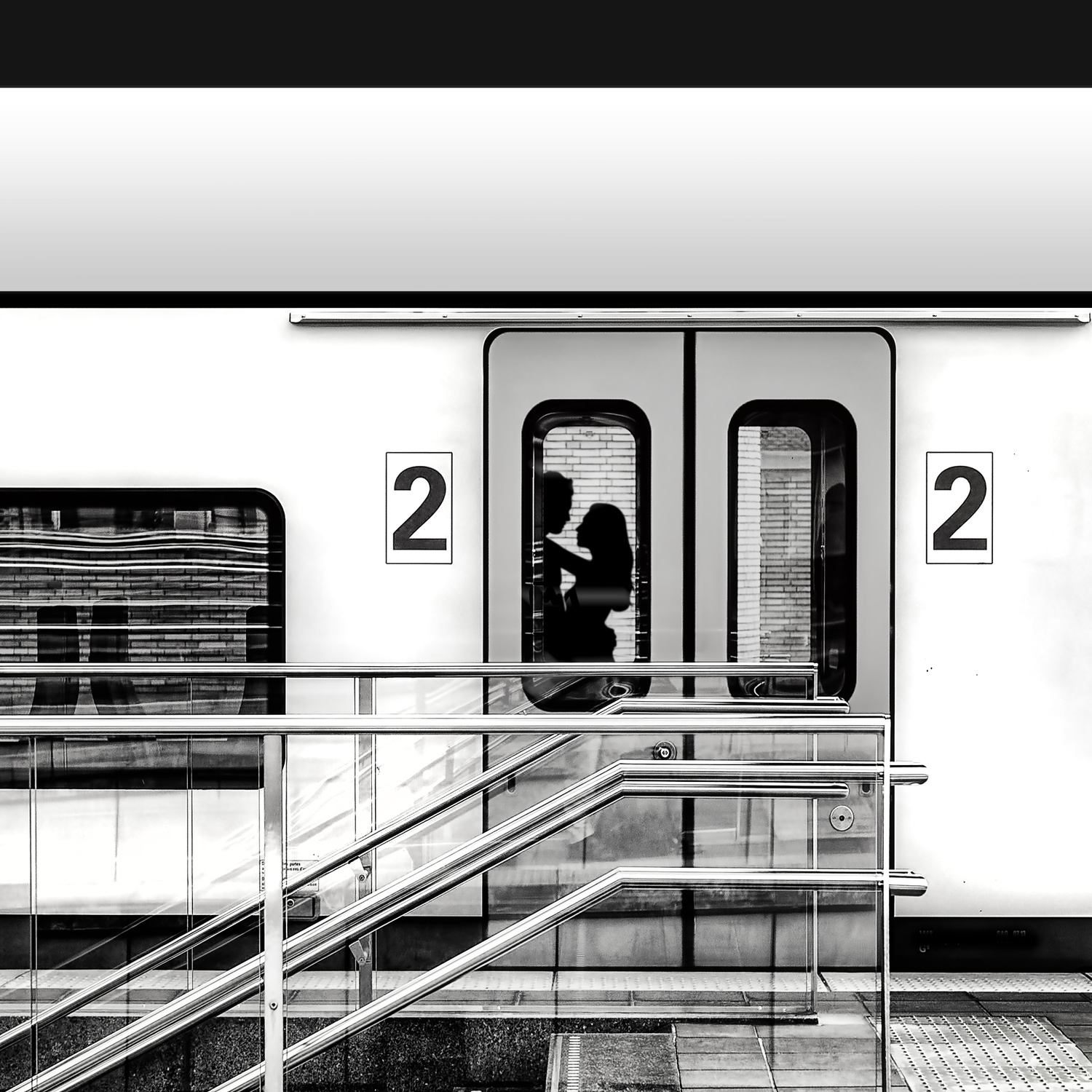
“le depart” by Piet Flour
As photographers, we are often taught to use odd numbers, especially number three, in a compositional technique known as the Rule of Odds. This has much to do with the way the eye moves. The brain naturally looks for relationships and tends to pair objects. With two objects, the eye can move back and forth between them, but with an odd number—particularly three—the gaze is encouraged to travel through the frame.
Two objects can compete for attention, creating tension or a deliberate split in focus. Add a third element, however, and the balance changes: one element may become dominant, supported by the other two. Three points can also form an invisible triangle within the composition, drawing the eye around the frame and creating a sense of depth and movement. Even numbers often feel more stable or symmetrical, whereas odd numbers can feel less resolved and more organic.
Sometimes rules are meant to be broken.
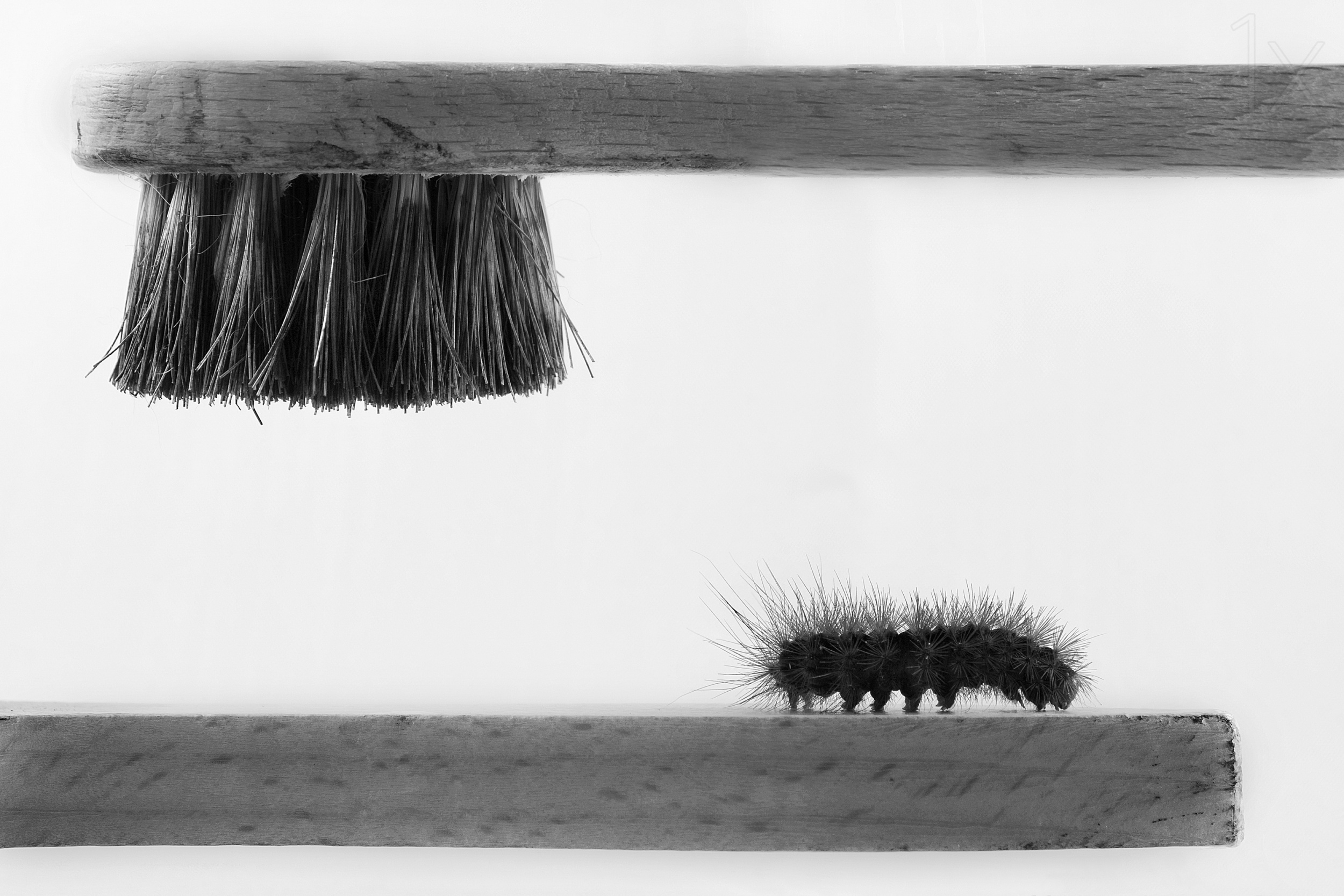
“…dear friend” by Stefano Mallus
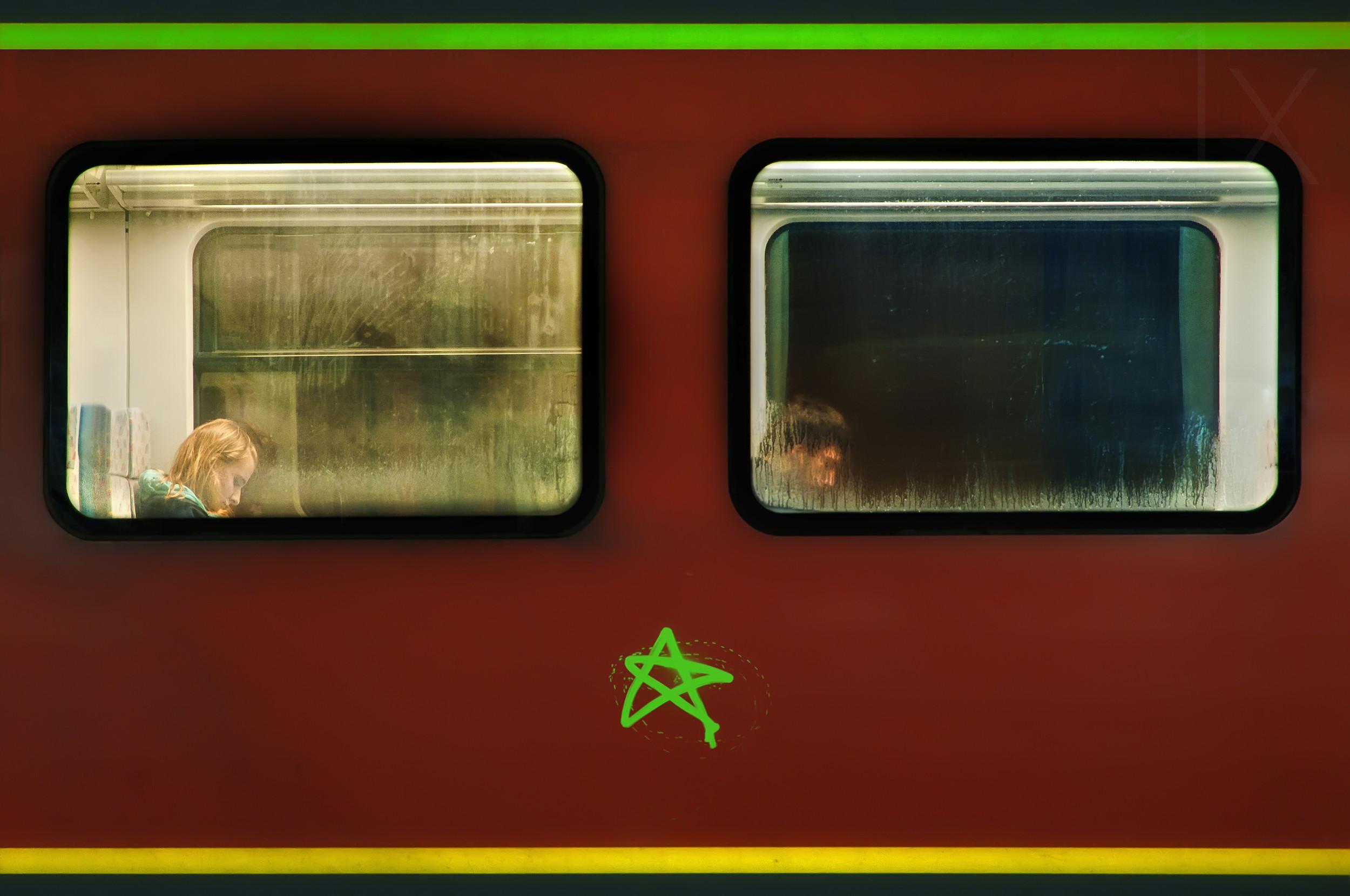
“two stories” by Samir Pajic
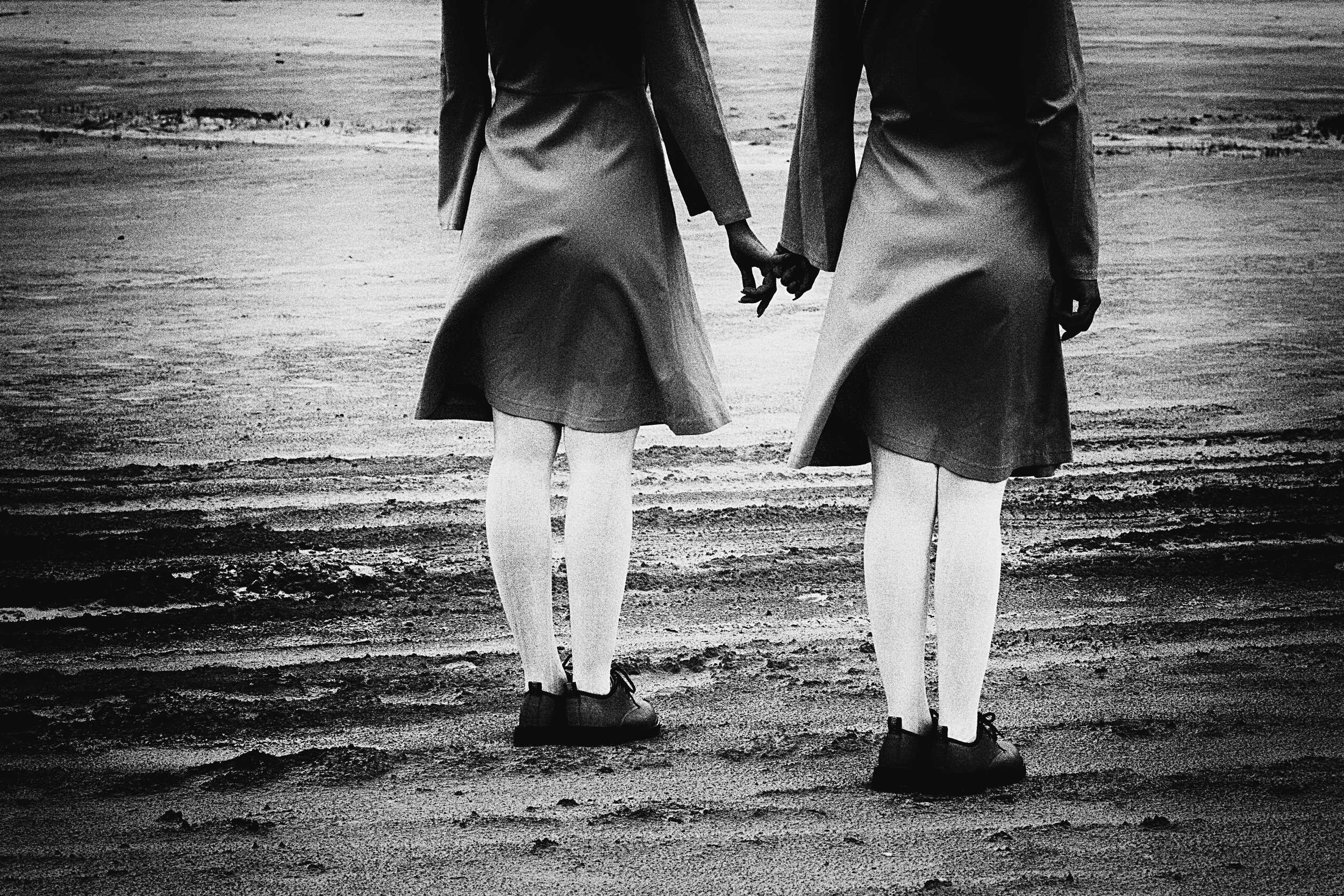
“Fiction” by Bogdan Bousca
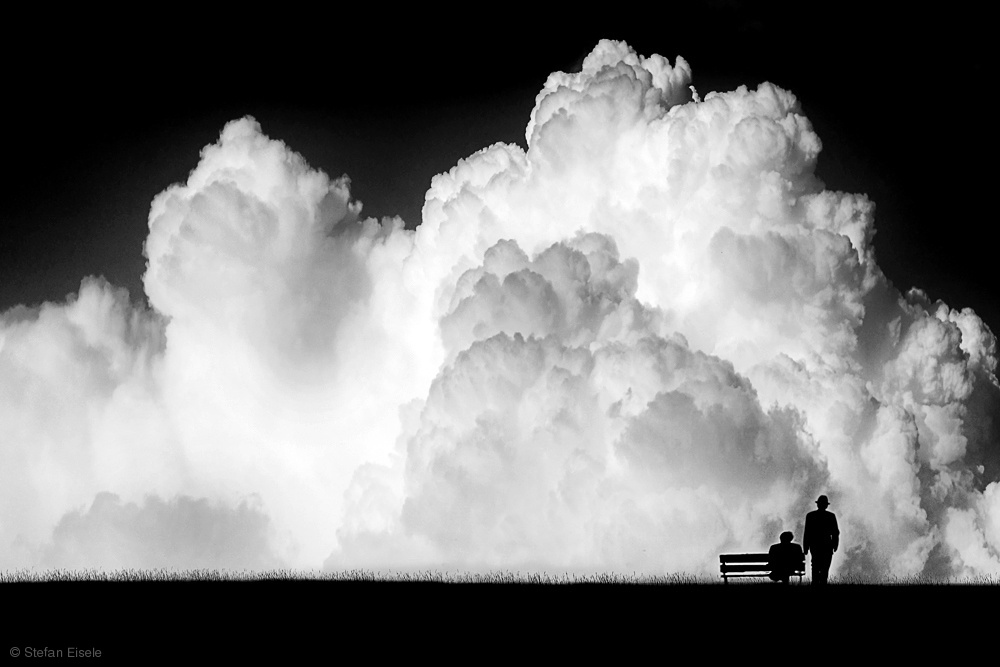
“Waiting for the Storm” by Stefan Eisele
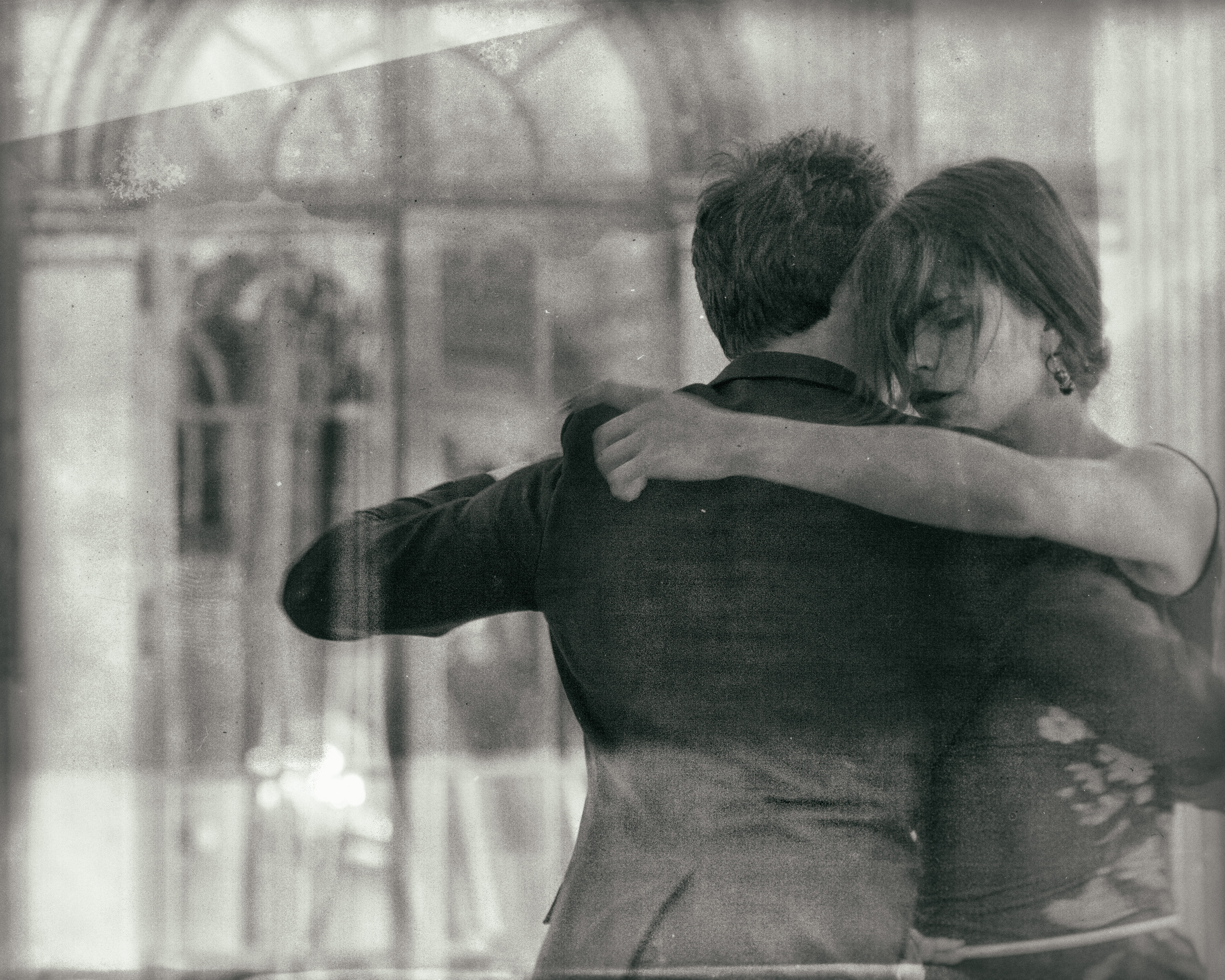
“Melancholia” by Michelle Degryse
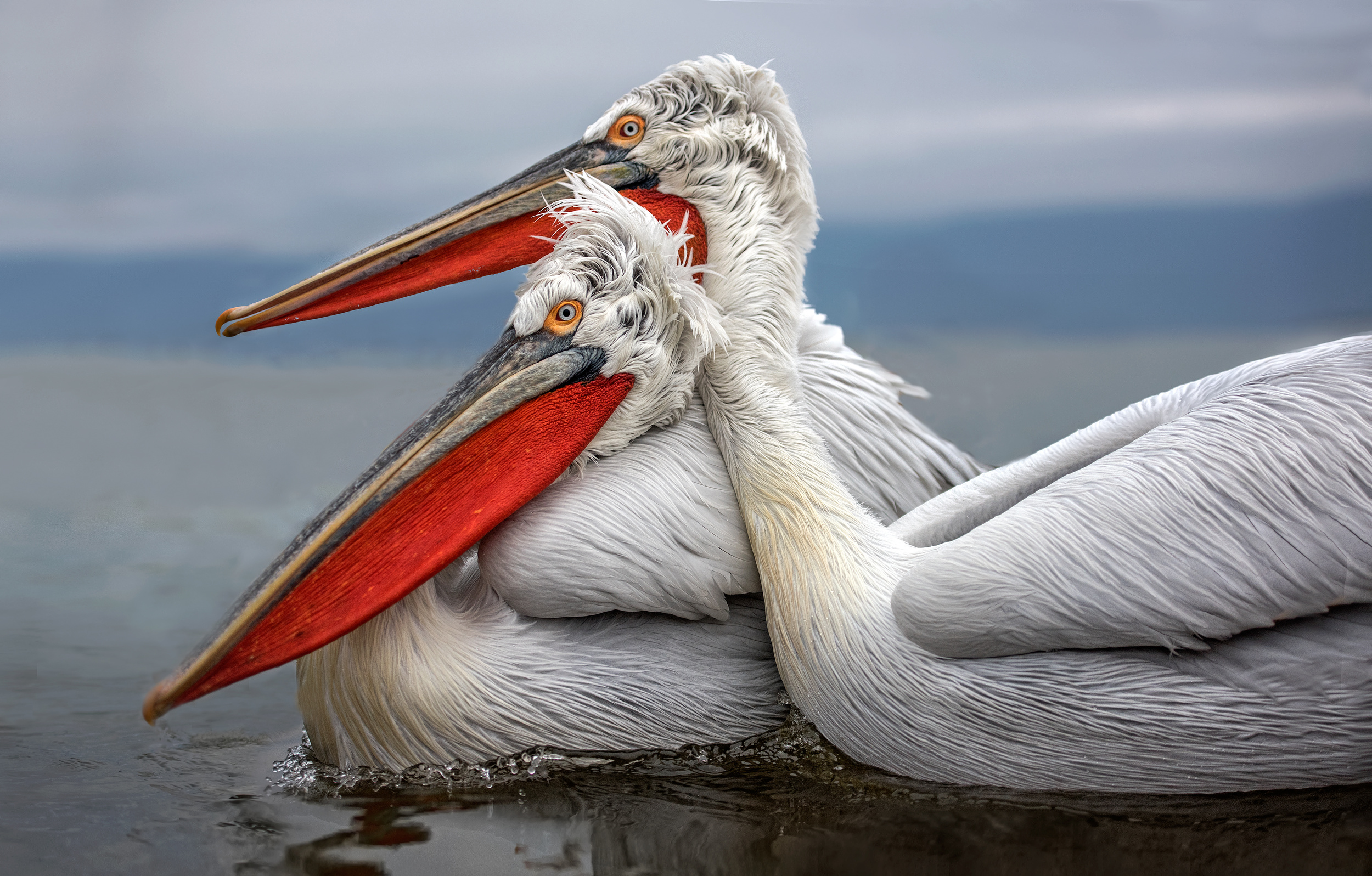
“Dalmatian Pelicans” by Xavier Ortega
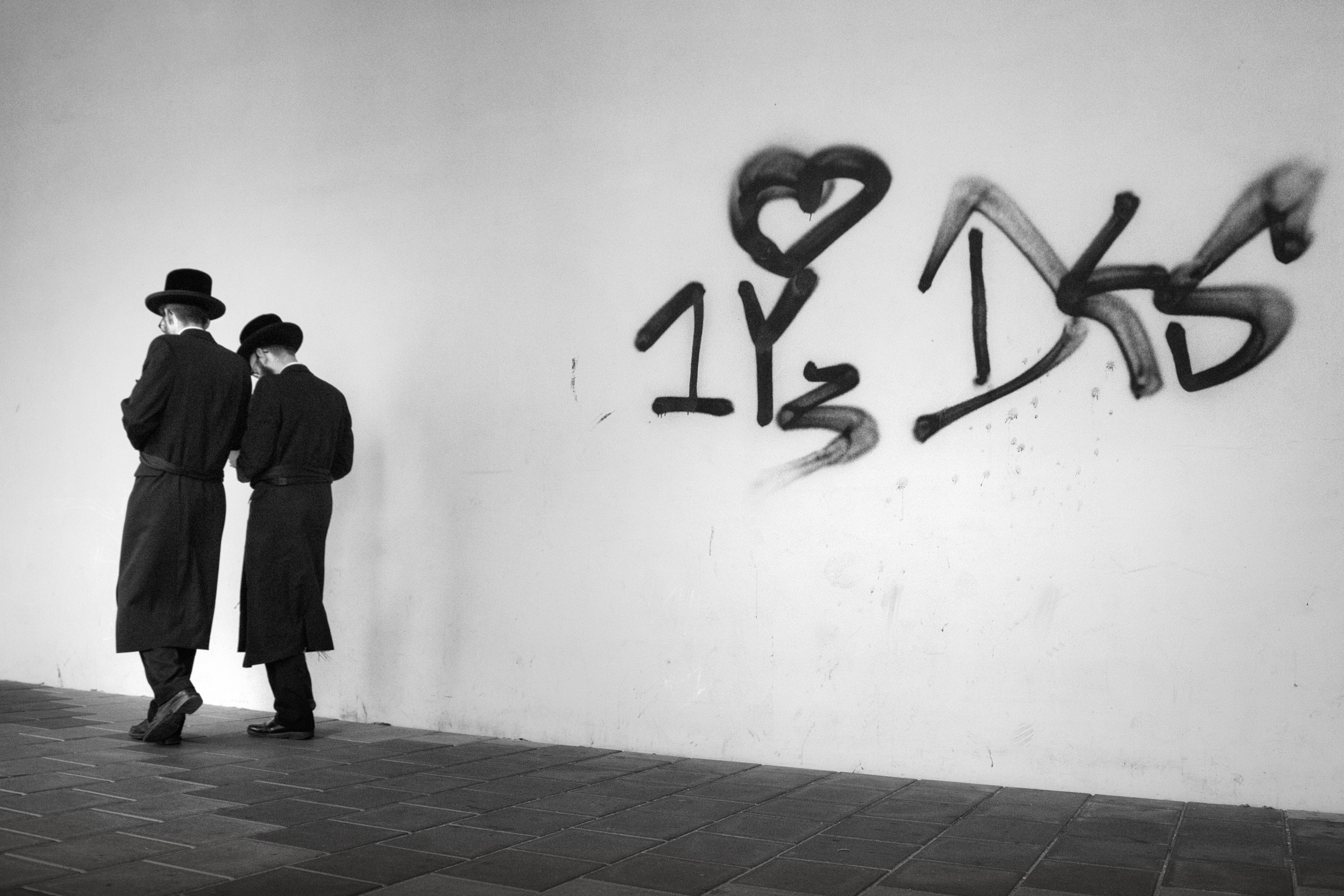
“Words remain unspoken” by Marc Apers
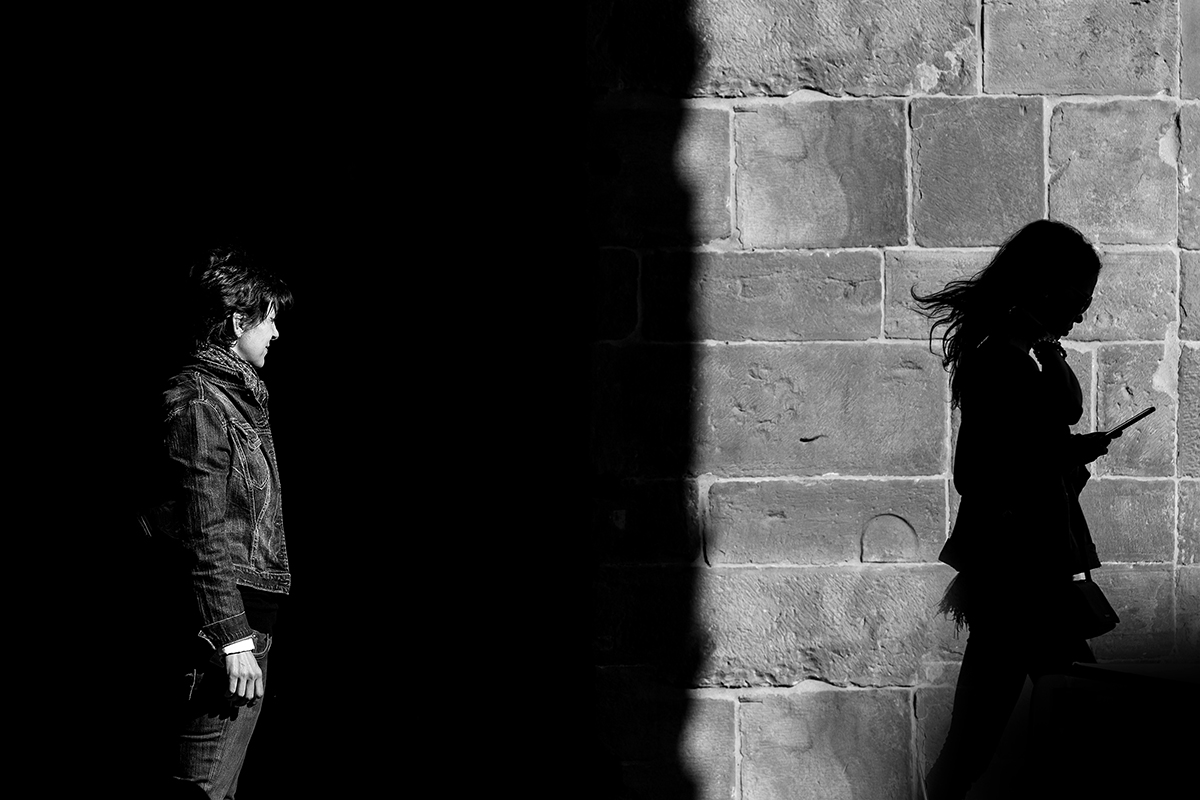
“+” by Roberto Marini
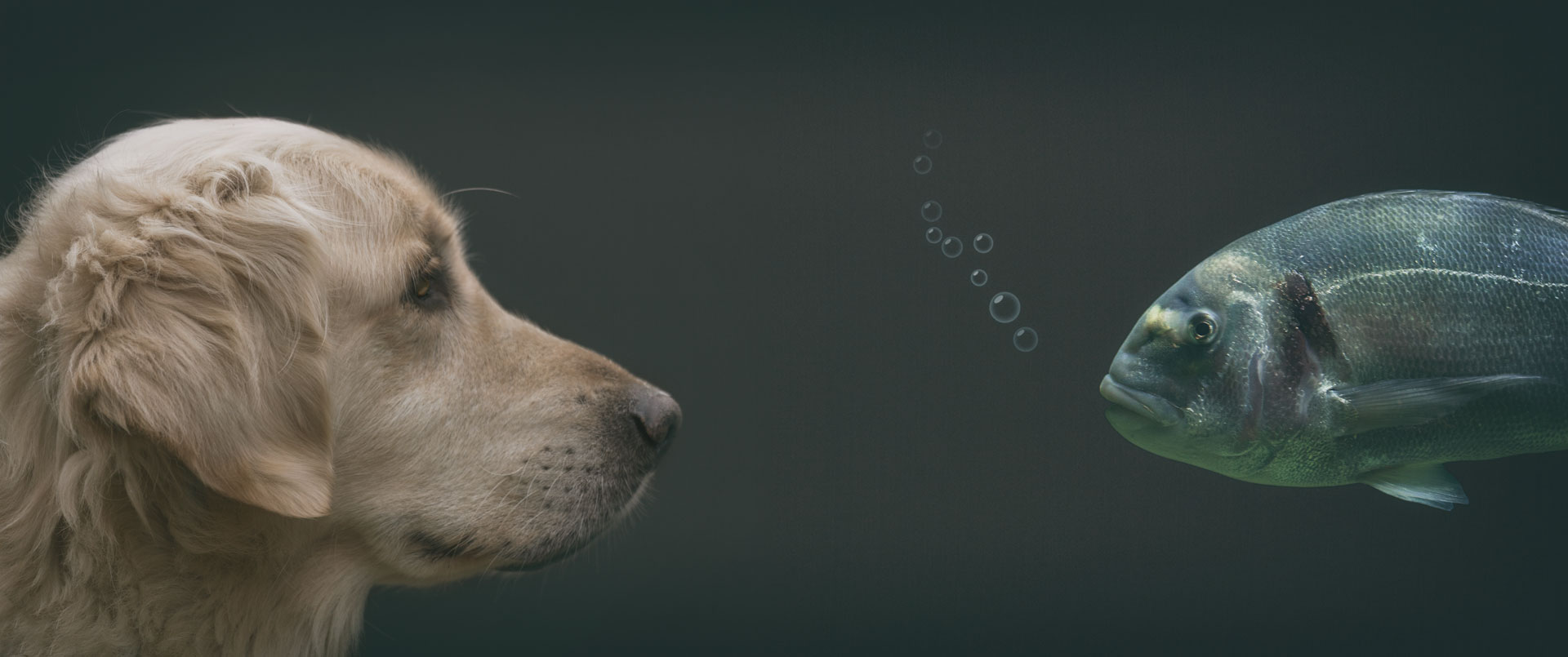
“Communication” by Uschi Hermann
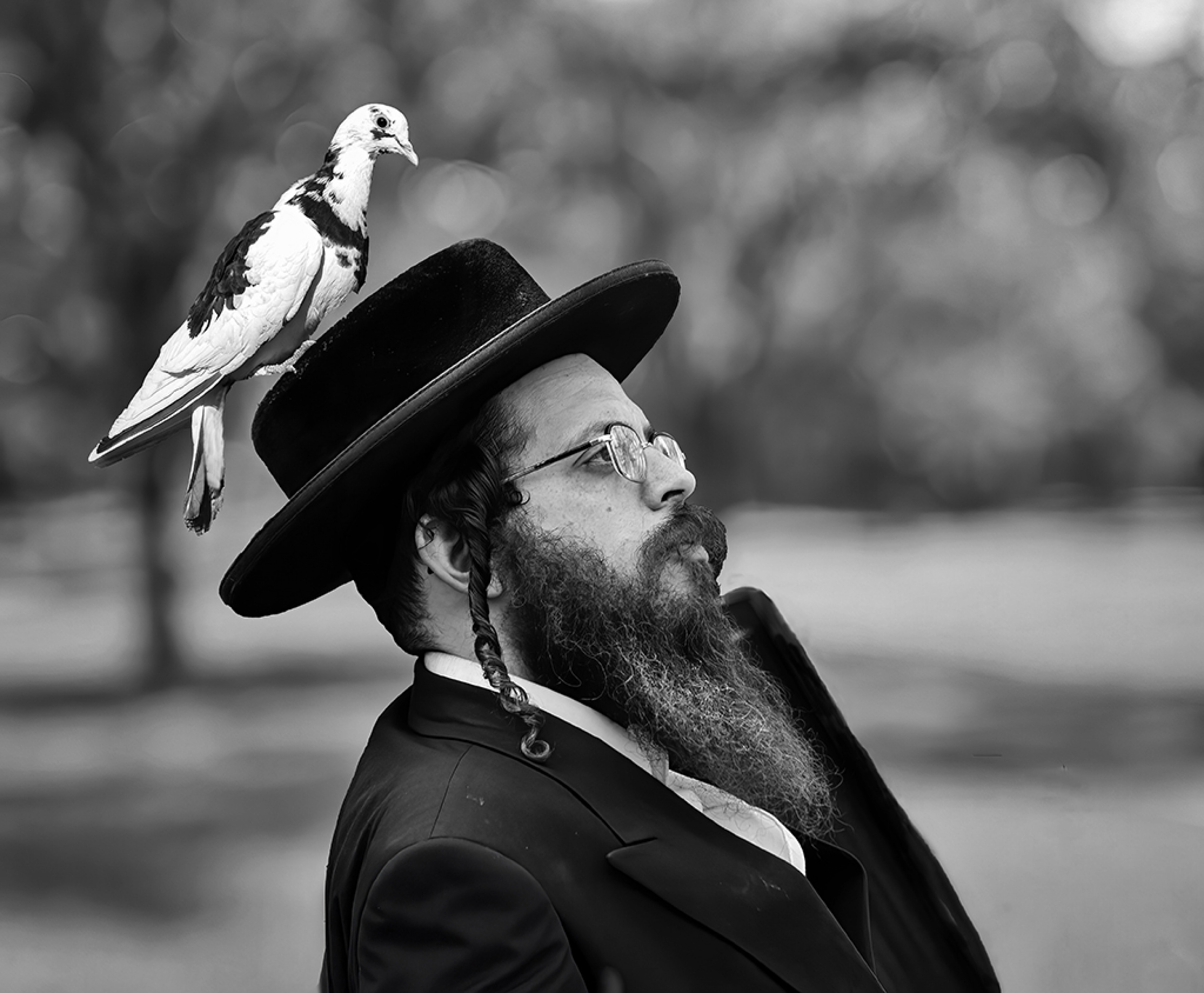
“Divine Intervention” by Jane Lyons
Pairing subjects that are different or completely unrelated can create visual interest by starting an unexpected conversation within the frame. When two dissimilar objects are placed side by side, we begin to see each one differently. Contrasting textures, exaggerated differences in size and scale, or unlikely relationships can suggest metaphors and stories that neither subject could create alone.
At a time when familiar photographic pairings can easily become clichéd, unusual combinations have the power to surprise us. Examples include a dog and a fish, a candid shot of a rabbi and a pigeon, or a woman and a crow. The more improbable the relationship, the more intrigued we are. Two seemingly unrelated subjects can suddenly give us something new to look at and tell us a story we hadn't expected.
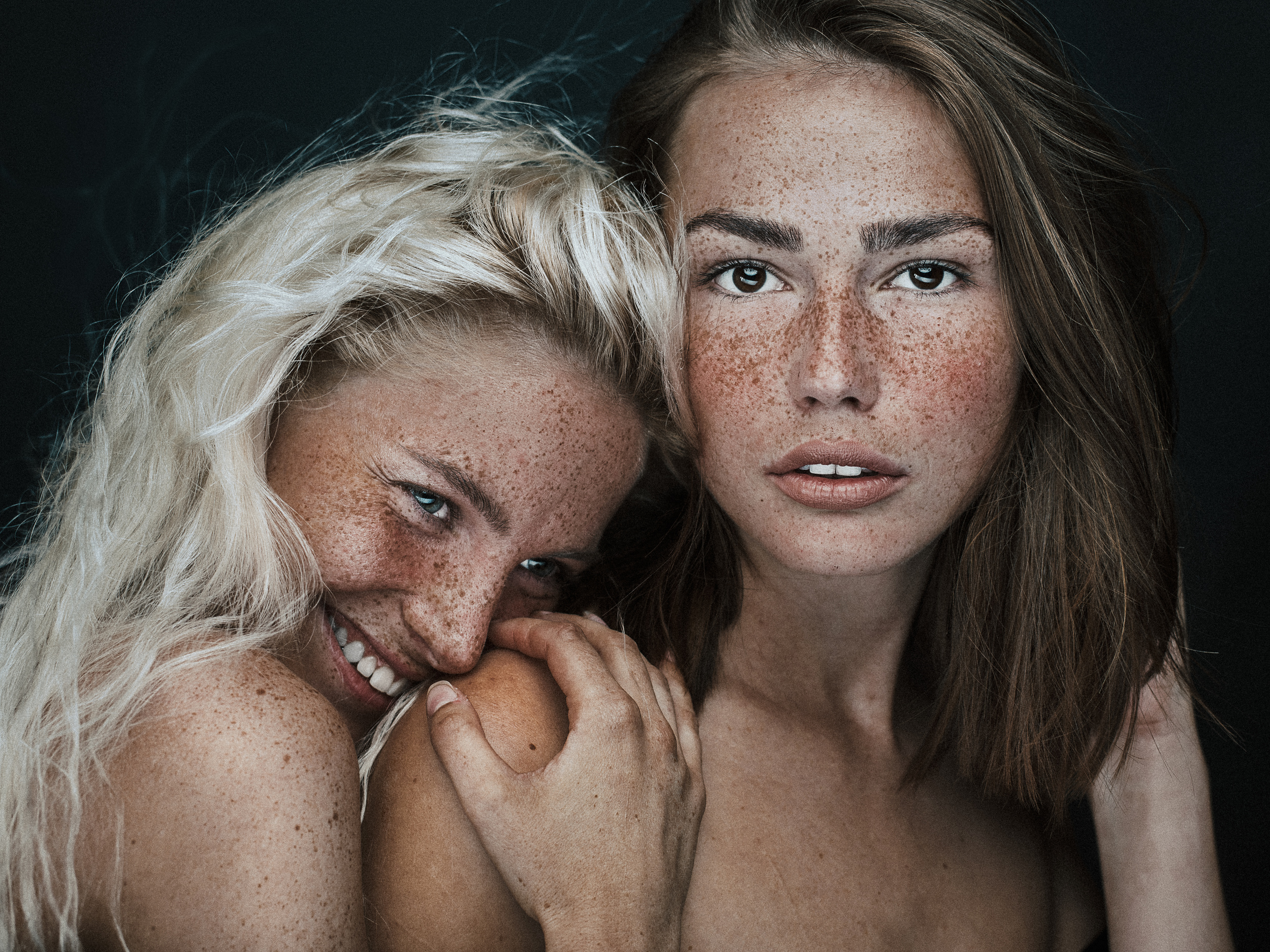
“Freckles beauty” by Martin Krystynek QEP
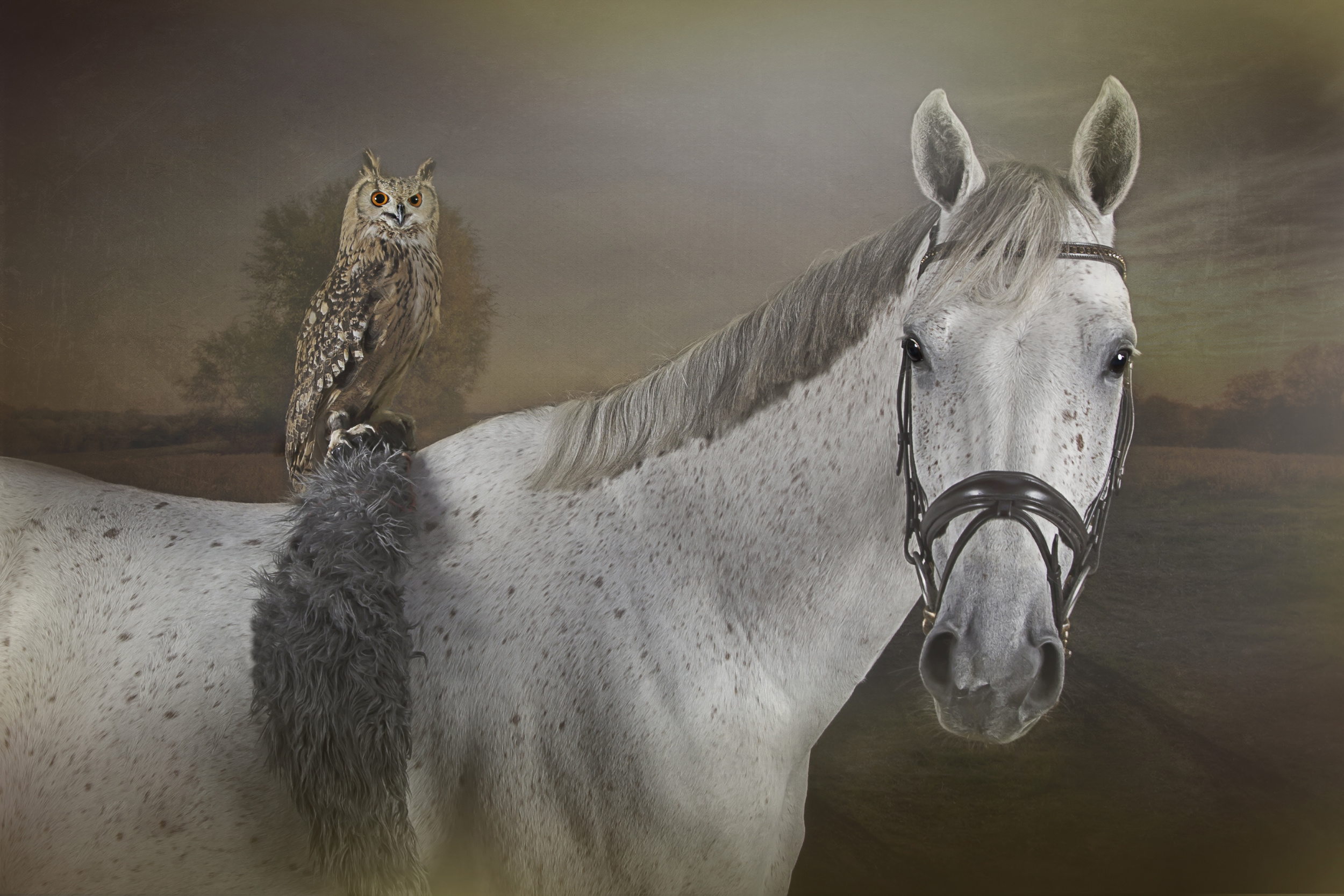
“best friends” by Carola Kayen-Mouthaan
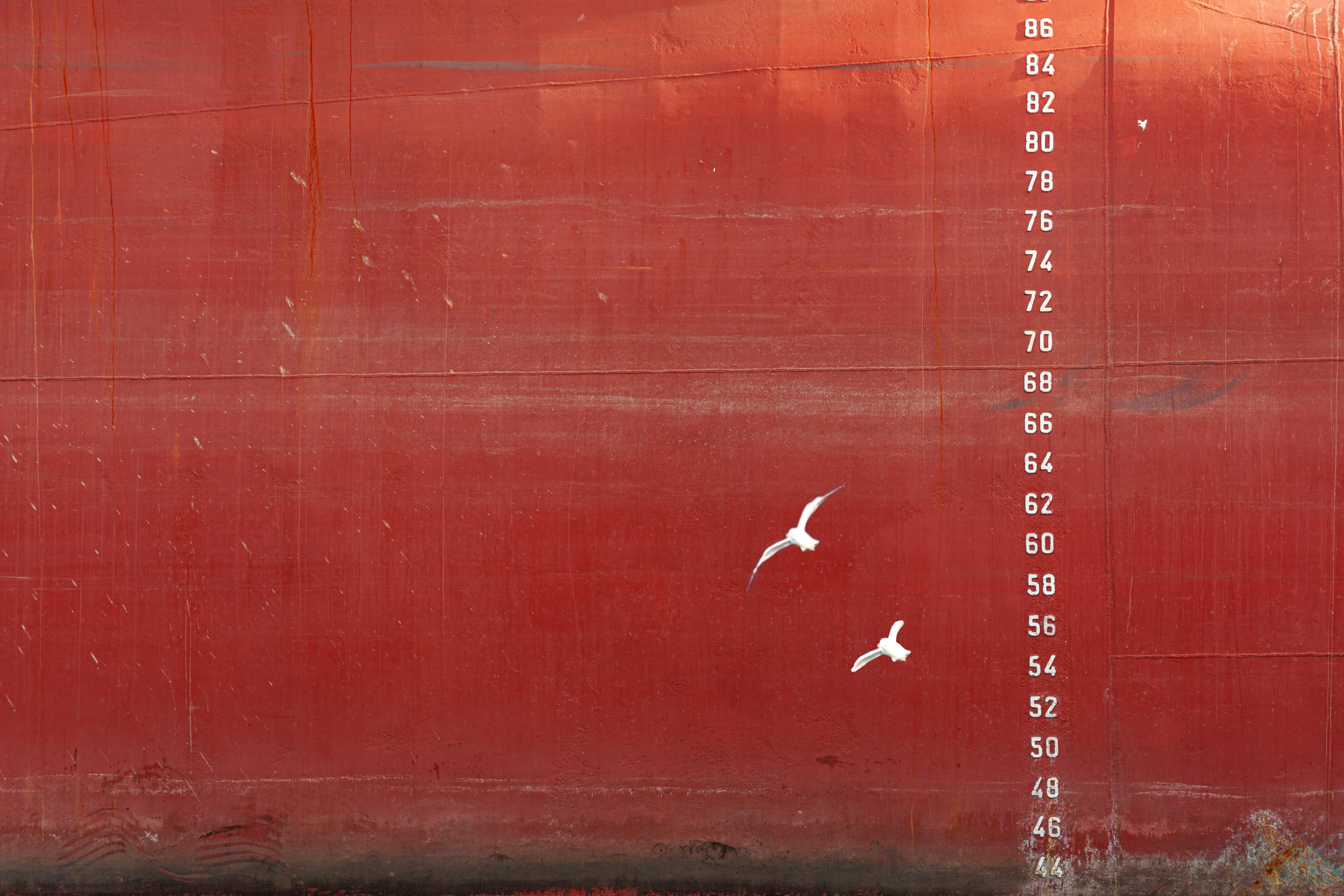
“Two birds” by Ramiz Sahin
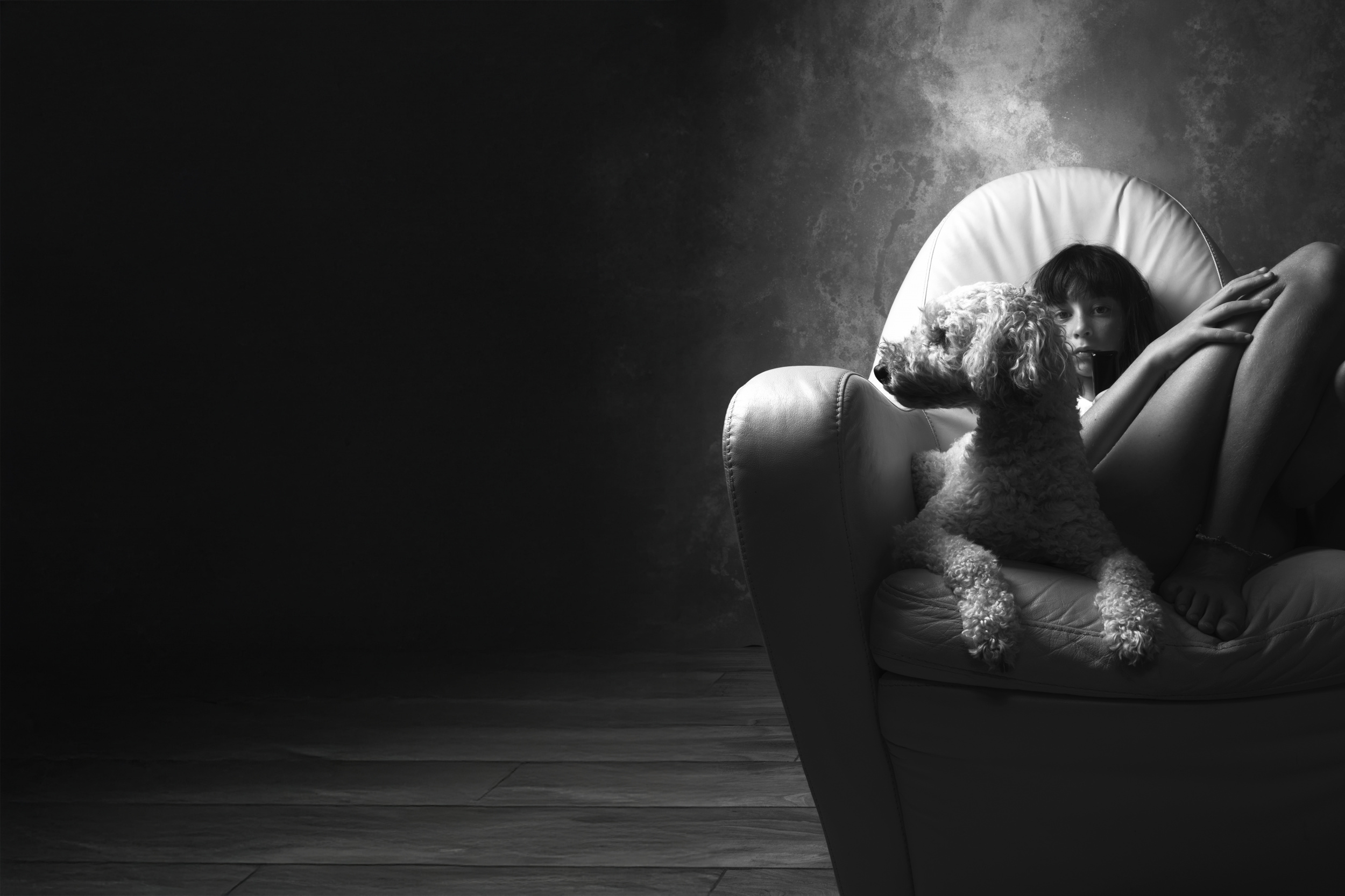
“Sisters” by Leonardo Bandinelli
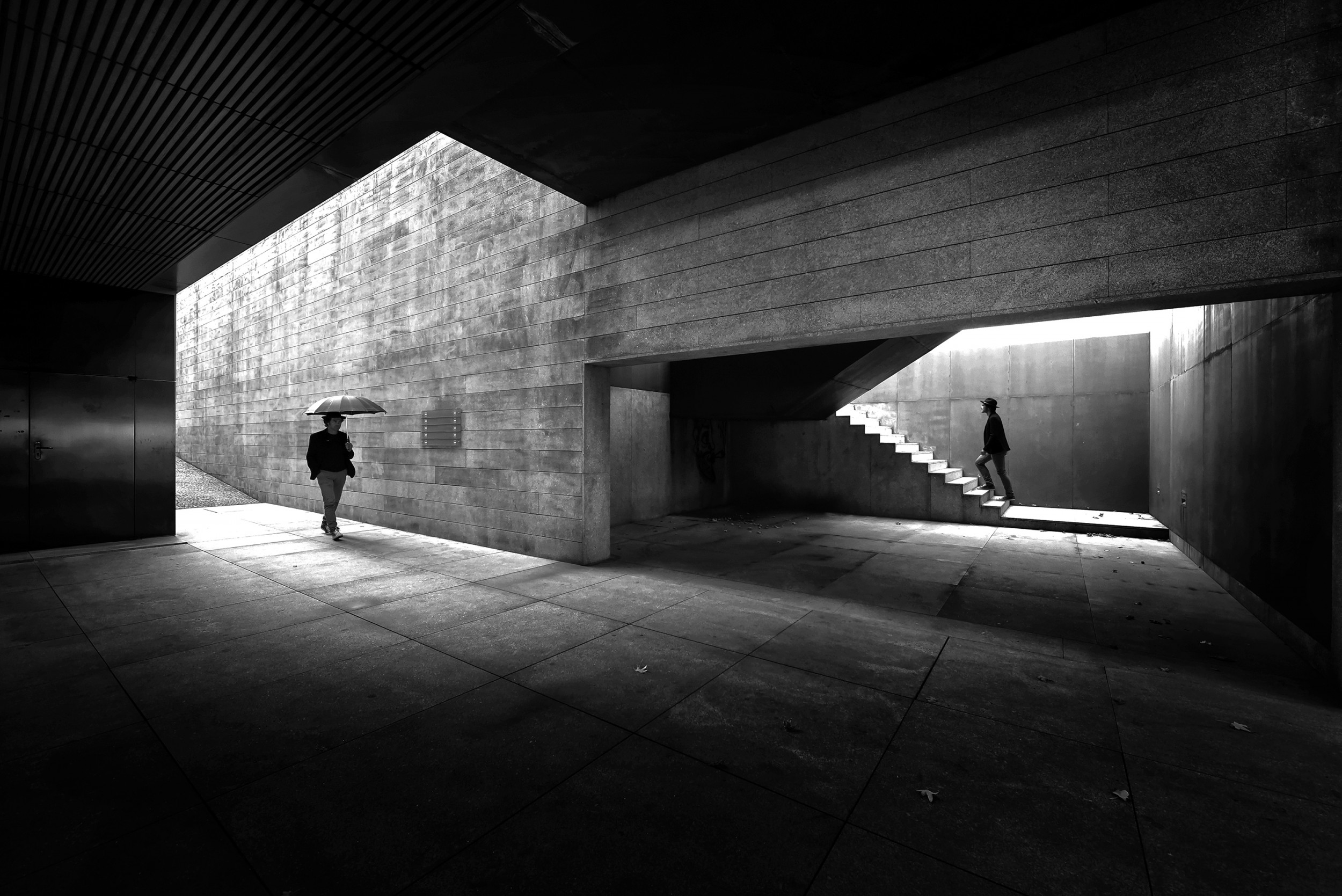
“I love you as only one loves once” by Jorge Pimenta
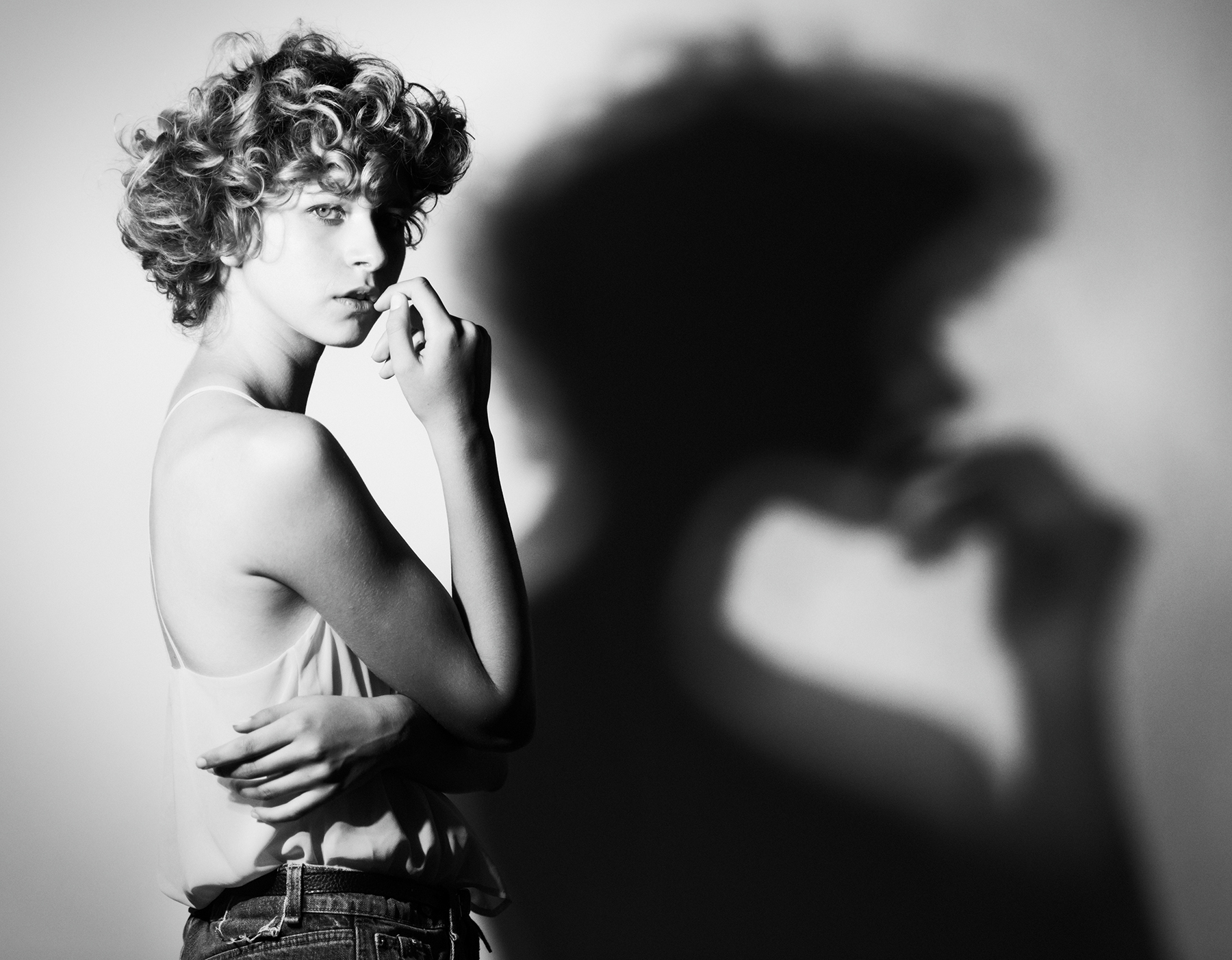
“Veronica” by Leonardo Santoro
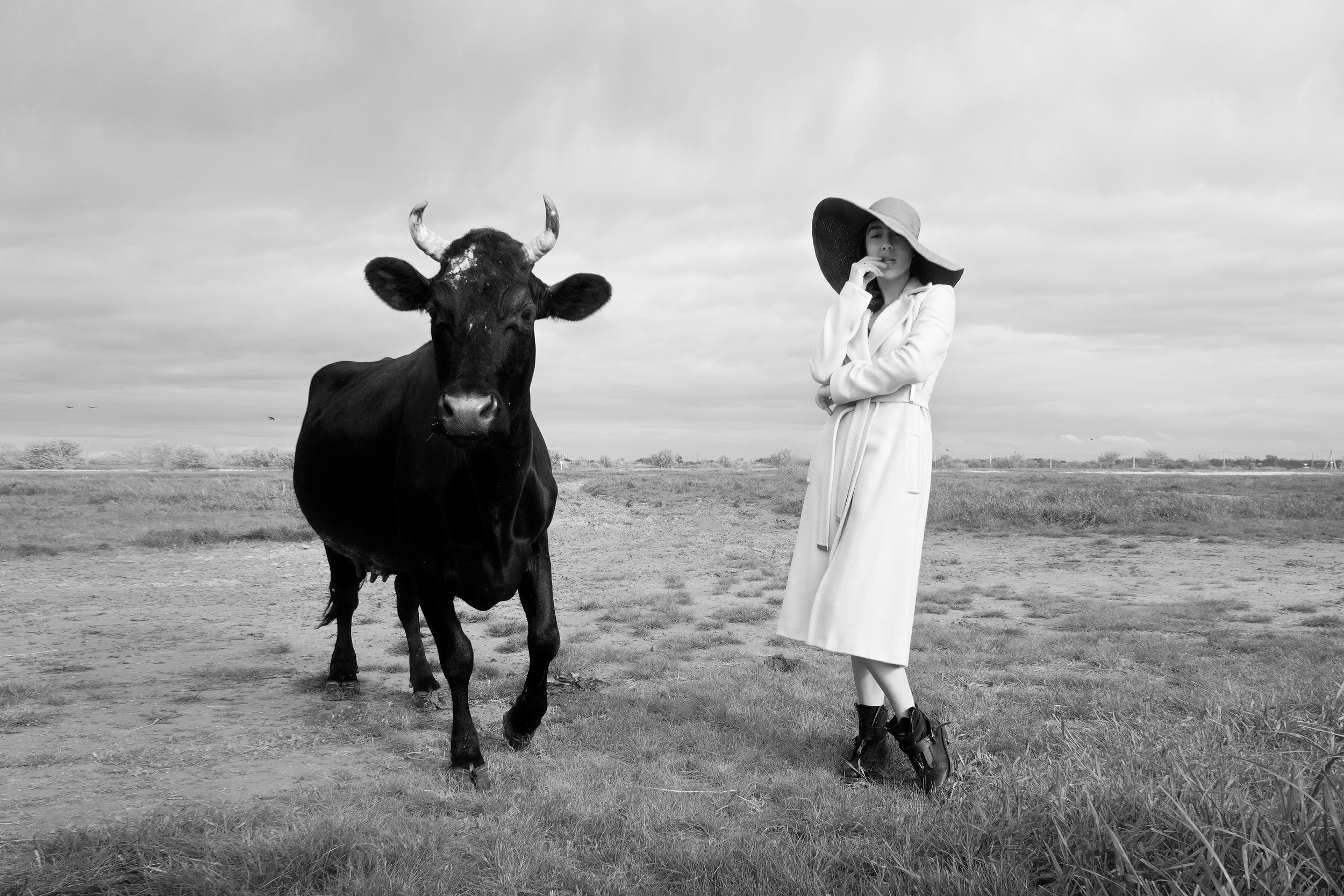
“Portrait bw Cow and Girl” by Mikhail Potapov
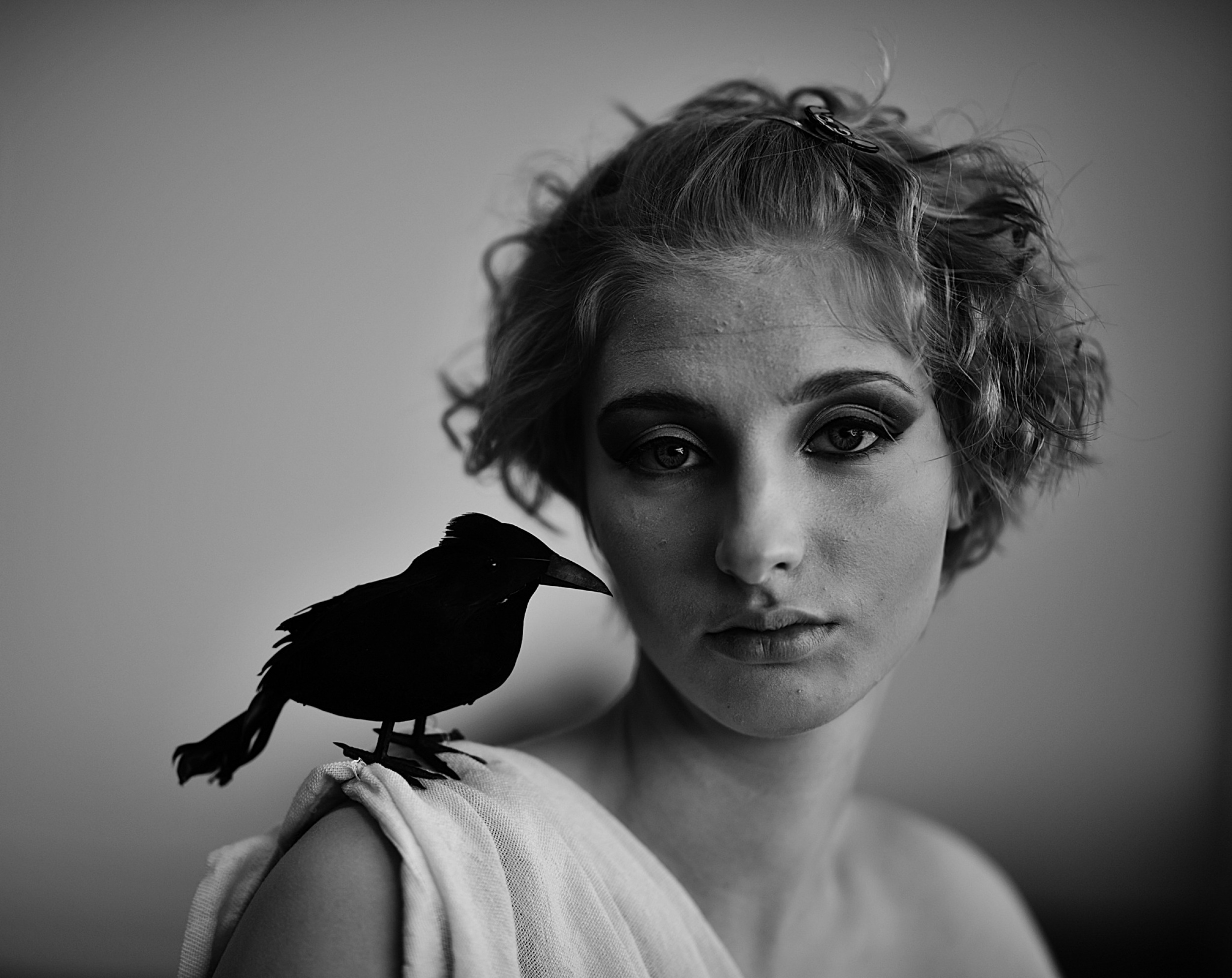
“Two of Us” by David Novak
Perhaps two is never just two. Looking through these photographs, I noticed how often a third element quietly enters the composition. This could be an object, a shadow, a patch of colour, a gesture, or a shape in the background.
In Two Stories, for example, the star on the train joins the two windows to create a triangle. While the photograph may depict a pair, something else is often at play within the frame, stabilizing, disturbing or leading the eye from one subject to another. Perhaps the power of two comes, in part, from the presence of an almost invisible third... or not.
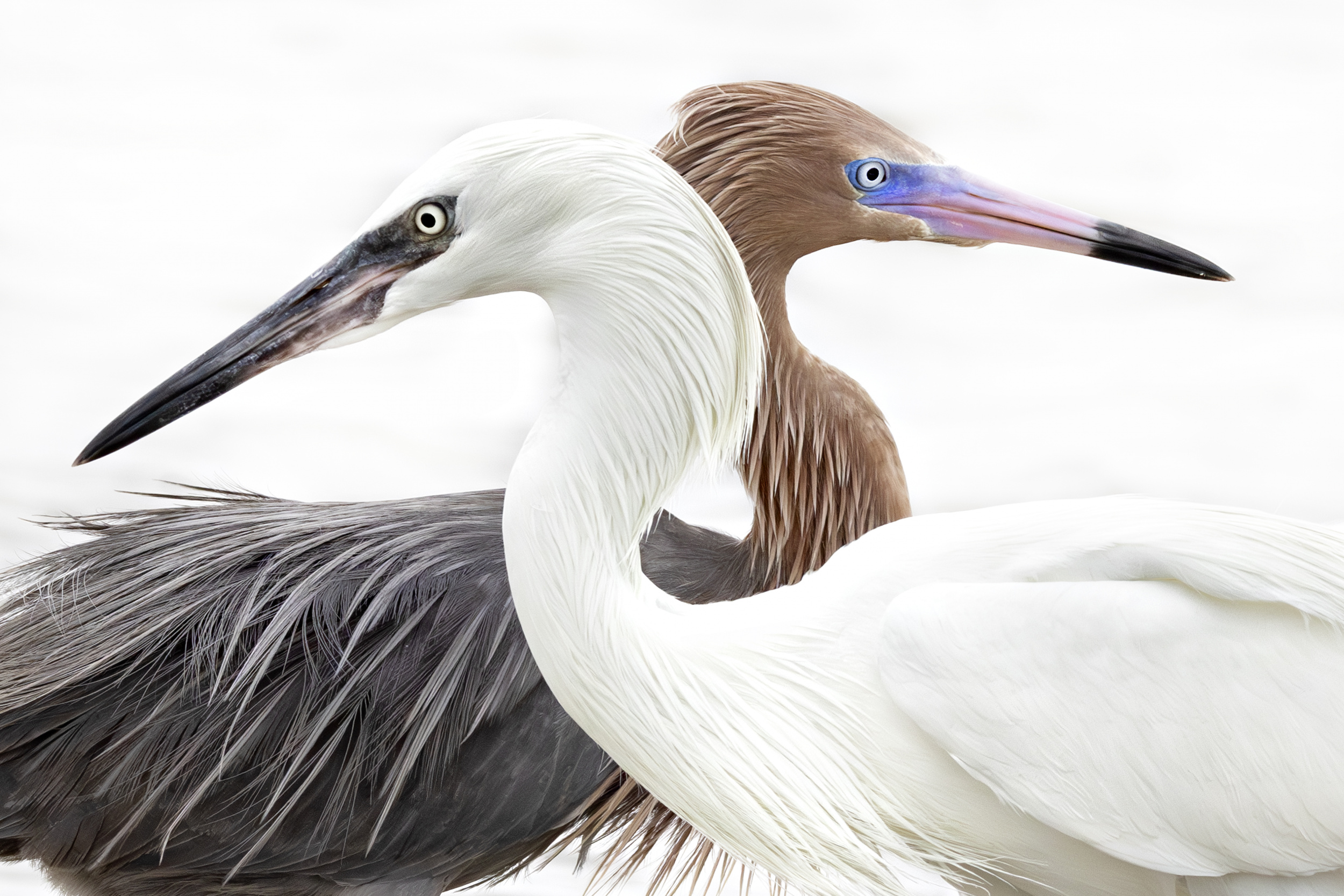
“Mates” by Linda D Lester
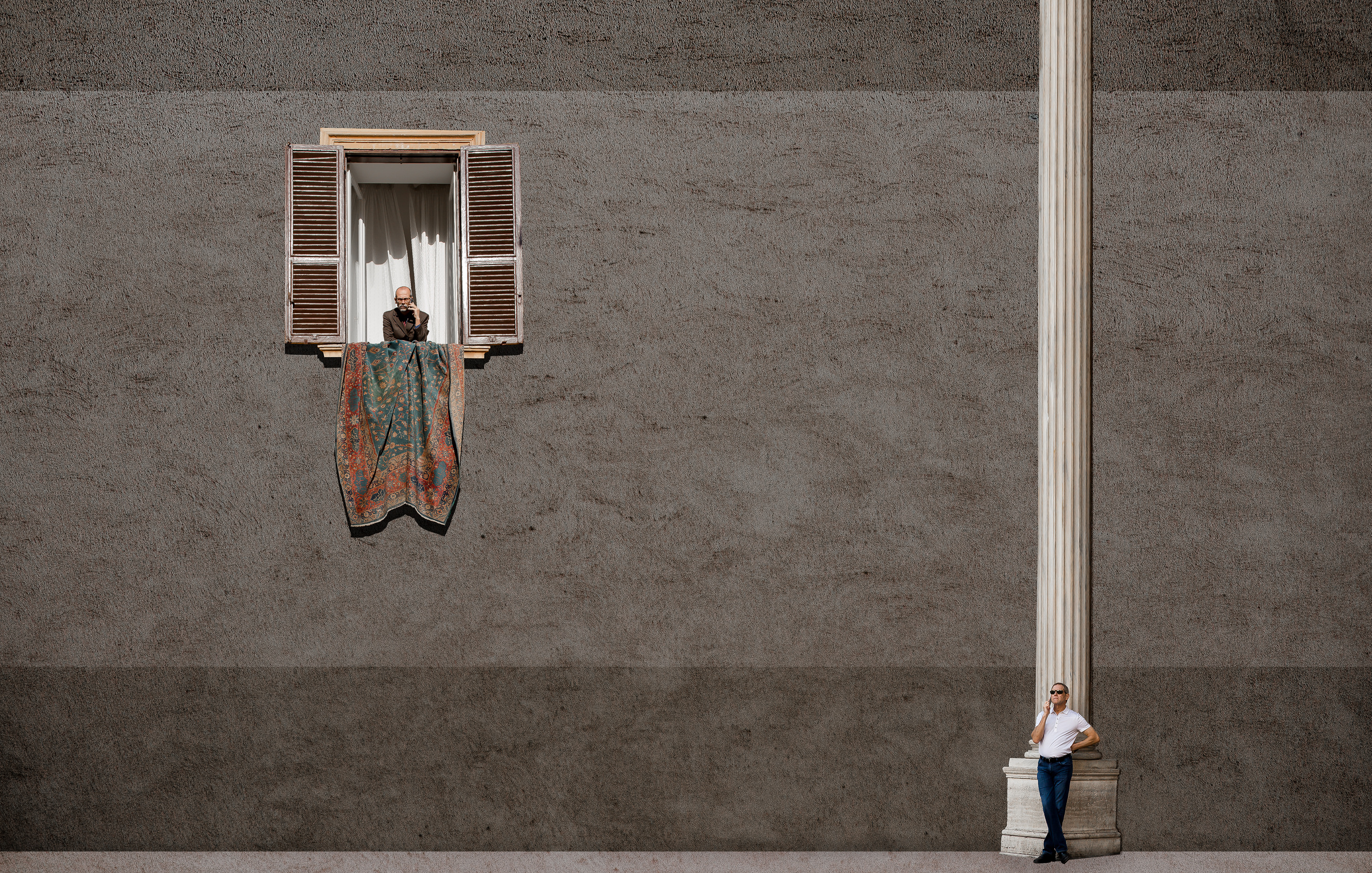
“Maybe they talk together” by Inge Schuster
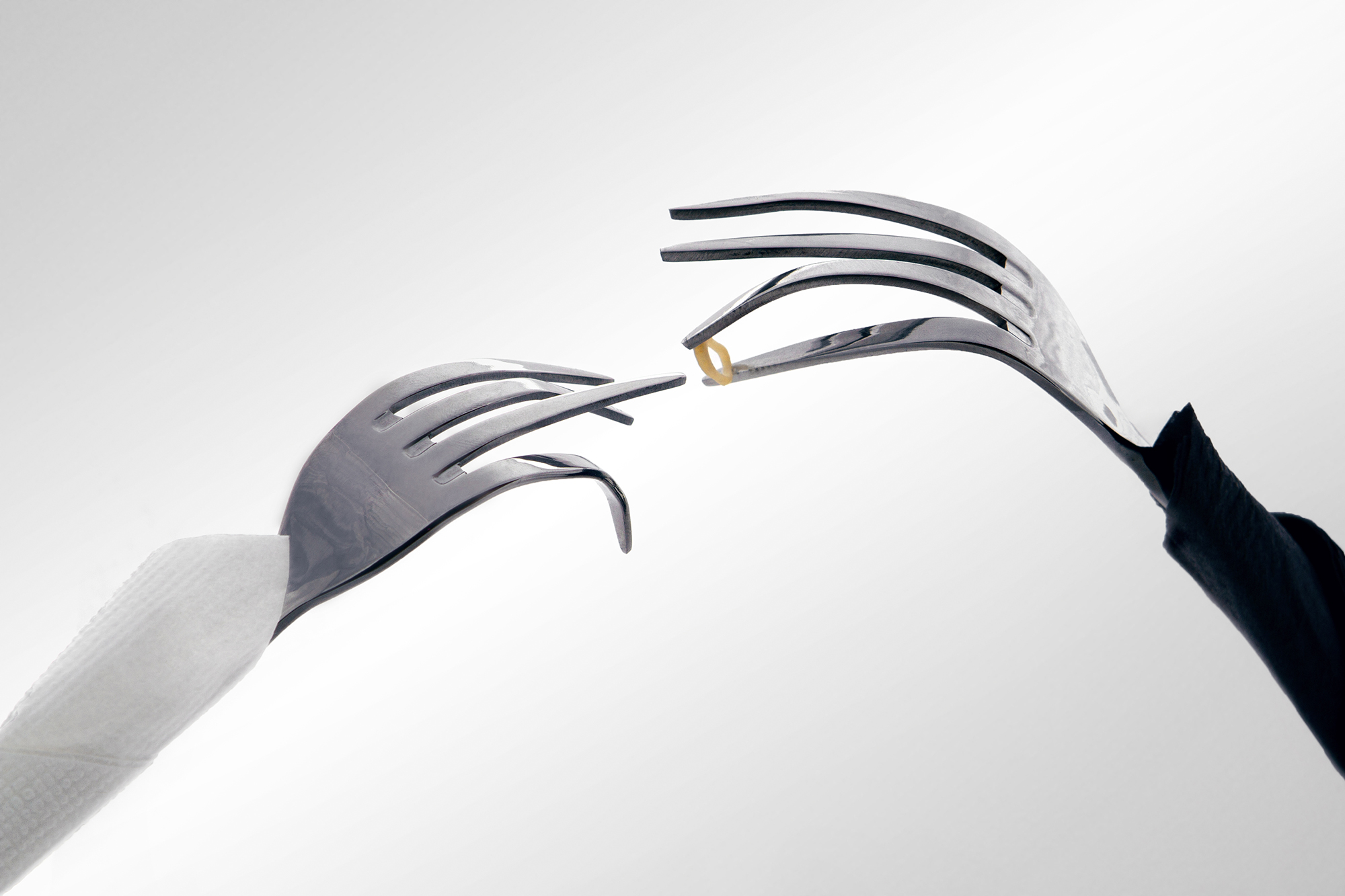
“Will You ….” by Golubeva Nataly
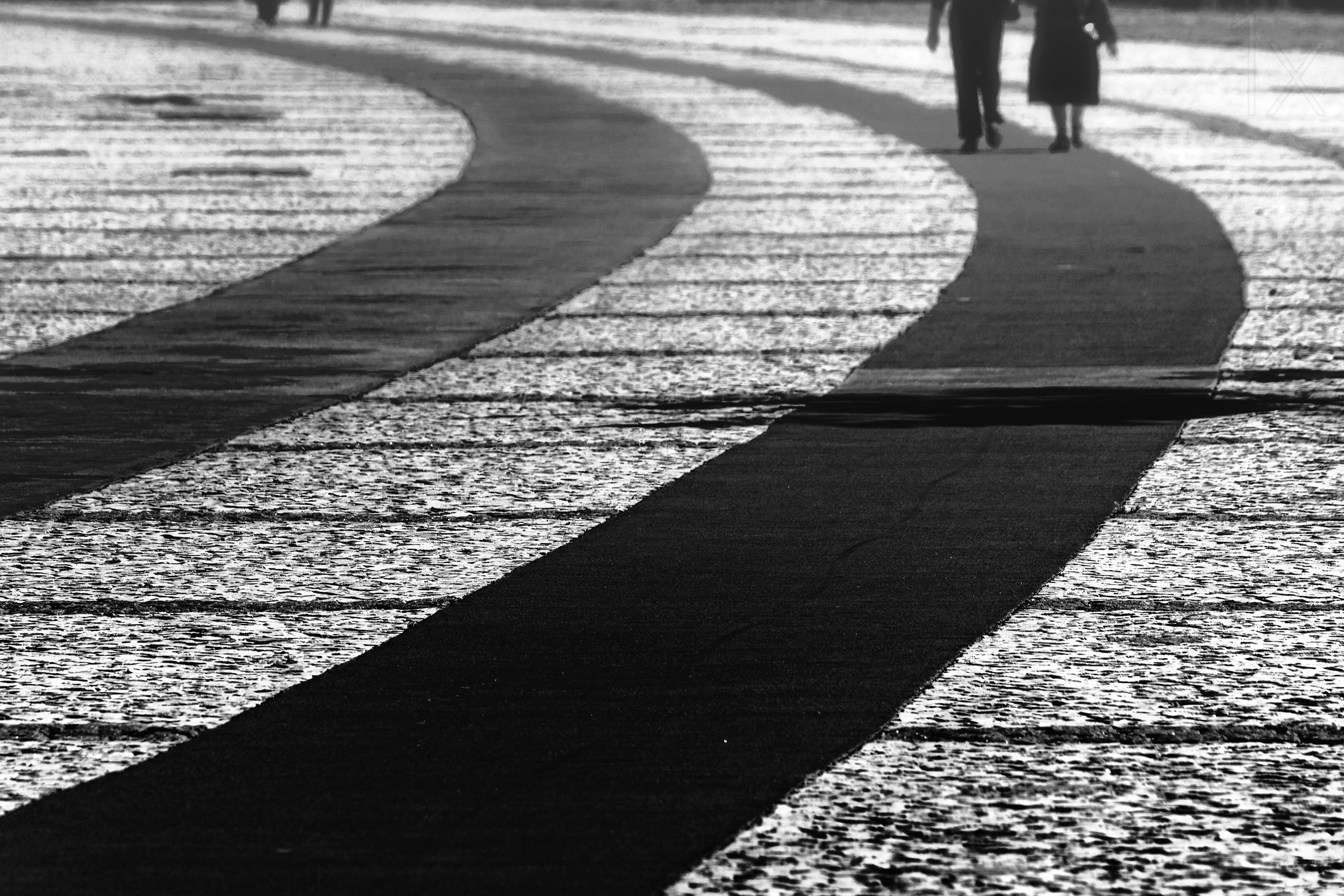
“The Past Recedes” by laura mexia
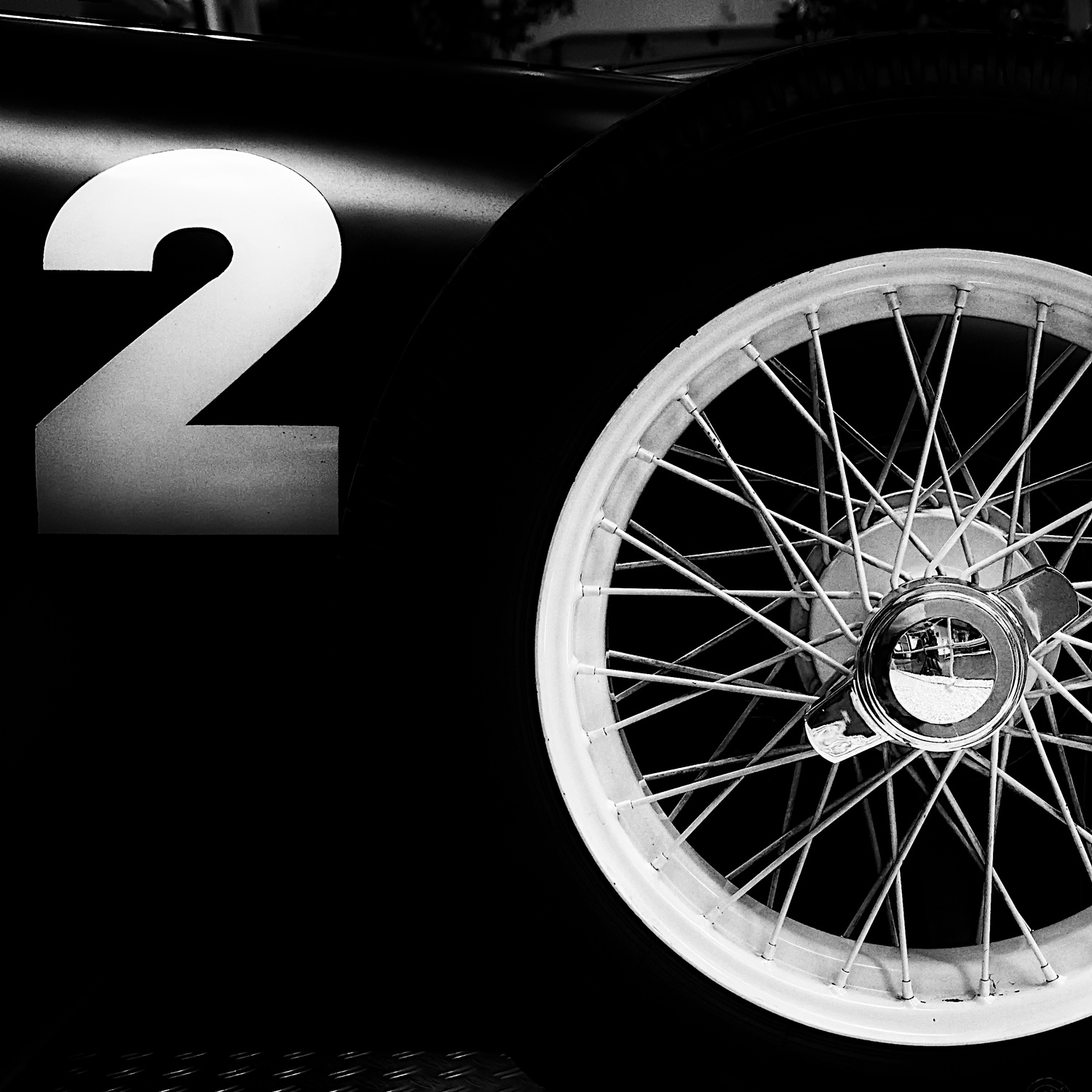
“2” Roland Weber
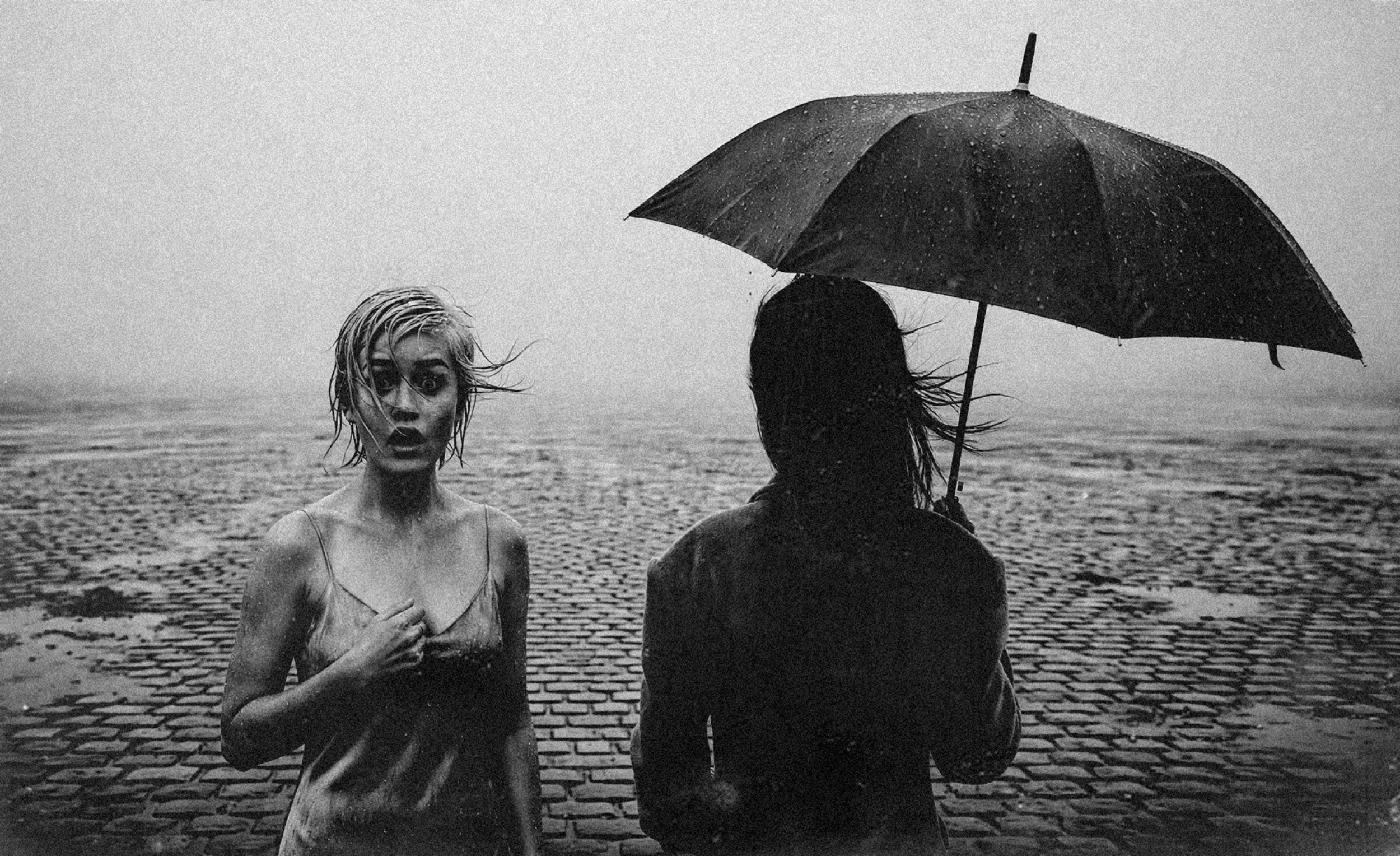
“Rain” by Agniribe
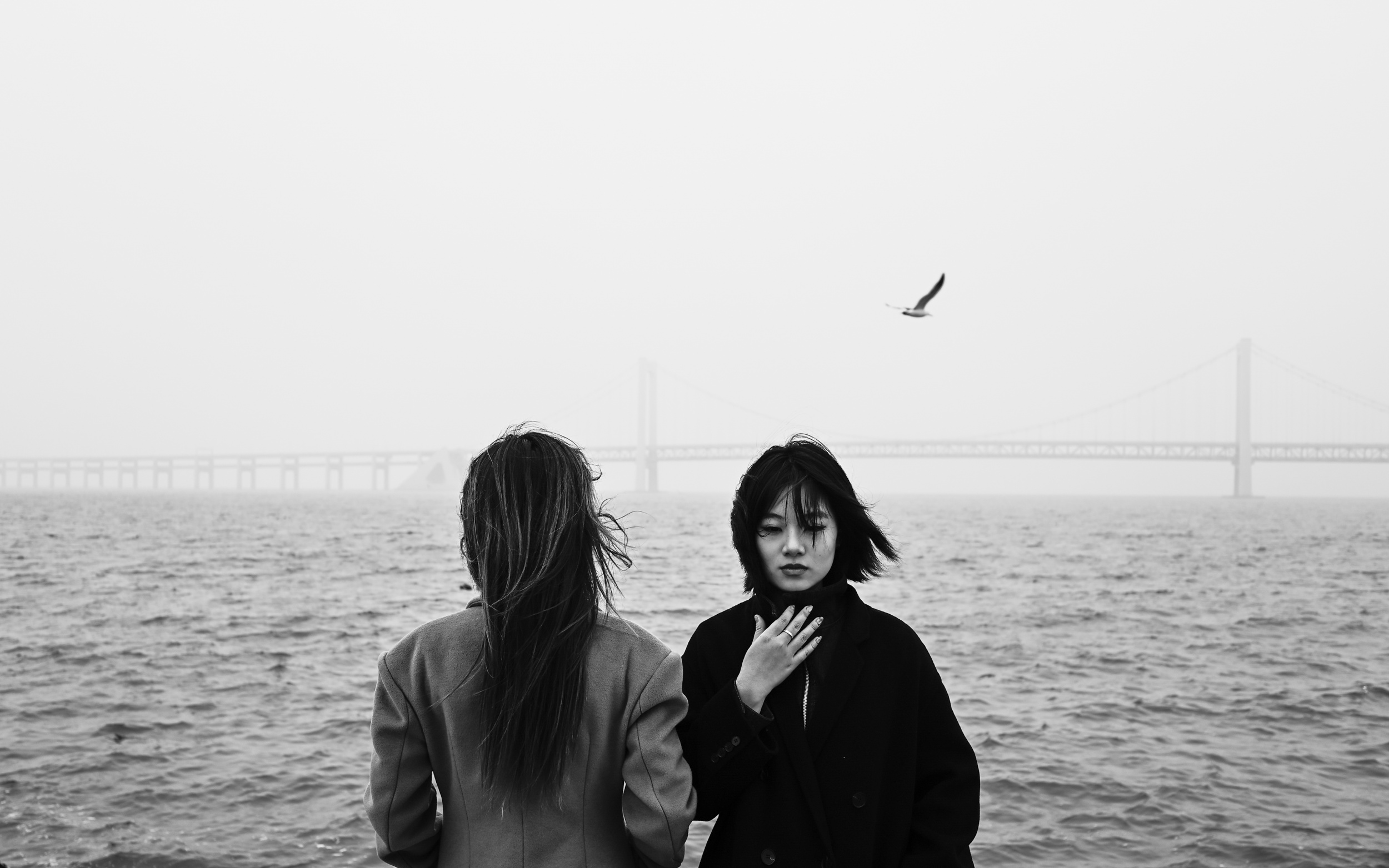
“Two women” by Parole Kim
|
 | A truly beautiful project, deeply moving and inspiring. I am honored that one of my photographs was selected to be part of it. My sincere thanks to the authors and the entire 1X community for the dedication, care and love they put into creating and publishing articles that continue to move and inspire us. |
 | Jo Chaney PRO Very insightful article supported by superb images concerning 2 subjects. Kudos to Jane and Yvette and all the contributors for some amazing work! |
| Yvette Depaepe CREW Thank you, dear Jo ♥ |
| | DonnaHom APA PRO May creative director dead and great theme. Congratulations for all authors and thank you editors |
| Yvette Depaepe CREW Thanks dear Donna ... |
 | Phil Green PRO Jane ...Quite Brilliant! Each image portrays a story with two actors! Congrats for a very creative set of images! Cheers |
 | Paula Iliescu PRO A wonderful selection of beautiful frames. Thank you, Jane Lyons and Yvette Depaepe, for sharing such an inspiring collection. I particularly enjoyed the way you explore the relationship between two subjects and that almost invisible third element that can quietly enter the frame — a shadow, a gesture, a shape, a colour — and subtly change the whole balance of the image. A fascinating reminder that sometimes the most interesting stories are created not by what we deliberately place in the frame, but by what unexpectedly appears between things. |
| Jane Lyons CREW Thank you very much Paula, we appreciate your comment. |
 | Ralf Stelander FOUNDER Great theme and selection Jane! |
| Jane Lyons CREW Hi Ralf, thanks ! |
 | Chris Hamilton PRO Great subject and idea generation may look a 2's and 3's differently now, some great ideas here. |
| Jane Lyons CREW Thanks very much Chris. So glad you found it interesting. |
| | yein PRO Thank you for conveying the difference between two and three accurately. I am deeply impressed. My thanks go to Jane and Yvette! |
| Jane Lyons CREW Thank you, Yein |
 | An incredibly beautiful series of striking photographs. I am deeply impressed. My thanks go to Jane and Yvette! |
| Jane Lyons CREW Thank you for taking the time to comment, Robert. It's appreciated. |
| Yvette Depaepe CREW Thanks a lot for your appreciation, Robert! |
 | Sokol Priftaj PRO Wonderful article and photos |
| Jane Lyons CREW Thank you, Sokol |
| | Exquisite art images with beautiful expression and interesting symbolism! Fantastic article! Thank you very much to Jane and Yvette! |
| Jane Lyons CREW Thanks for taking the time to comment, Svetlana. It's appreciated. |
| Yvette Depaepe CREW Many thanks for your appreciation, Svetlana ... |
| | Angelika Vogel PRO So wonderful, original, impressive compositions! Congratulations all on the great artists and thank you so much for Jane and Yvette! |
| Jane Lyons CREW Angelika, thank you for your comment. |
| Yvette Depaepe CREW Ladies on the top, Angelika ... but the men in the team also are indispensable and essential too ;-) Together we're only go for the best! |
 | Roland Weber PRO It is amazing to see how different the expression of "two" is compared to the previous article "the power of one".
You entirely got me with the photos and the text.
Really breathtaking, and my greatest thanks for this article.
Wonderful, Yvette and Jane. |
| Jane Lyons CREW Roland, thank you for taking the time to comment. It's appreciated. |
| Yvette Depaepe CREW All credits go to Jane, Roland ... And... look out, there is a power of three coming up ;-) |
| | Jay Satriani PRO Exquisite works, rich in artistic power and narrative depth. Each frame conveys its own message and interpretation—a remarkable selection by true artists. My sincere regards and appreciation to you all. Thank you, Jane, and my old friend Yvette. You have done a wonderful job presenting the beauty of the universe through your art. 🤍 |
| Jane Lyons CREW I really appreciate your nice comments, Jay |
| Yvette Depaepe CREW Thank you, my dear long time good friend Jay ... so glad you're back in town ;-) |
 | Cicek Kiral CREW Thanks a lot for assembling these inspiring images ... I admire the editorial team in presenting us with different and interesting themes...Thank you dear Yvette and Jane |
| Jane Lyons CREW Thanks for taking the time to comment, Cicek |
| Yvette Depaepe CREW So nice to hear, dear Cicek ...Diversity is important for a good running magazine ;-) |
 | A magnificent selection. Thanks for sharing it. Best regards |
| Jane Lyons CREW Thank you for your comment, Montserrat |
by Editor Michel Romaggi in collaboration with the author Hadi Malijani
Edited and published by Yvette Depaepe, the 9th of September 2026
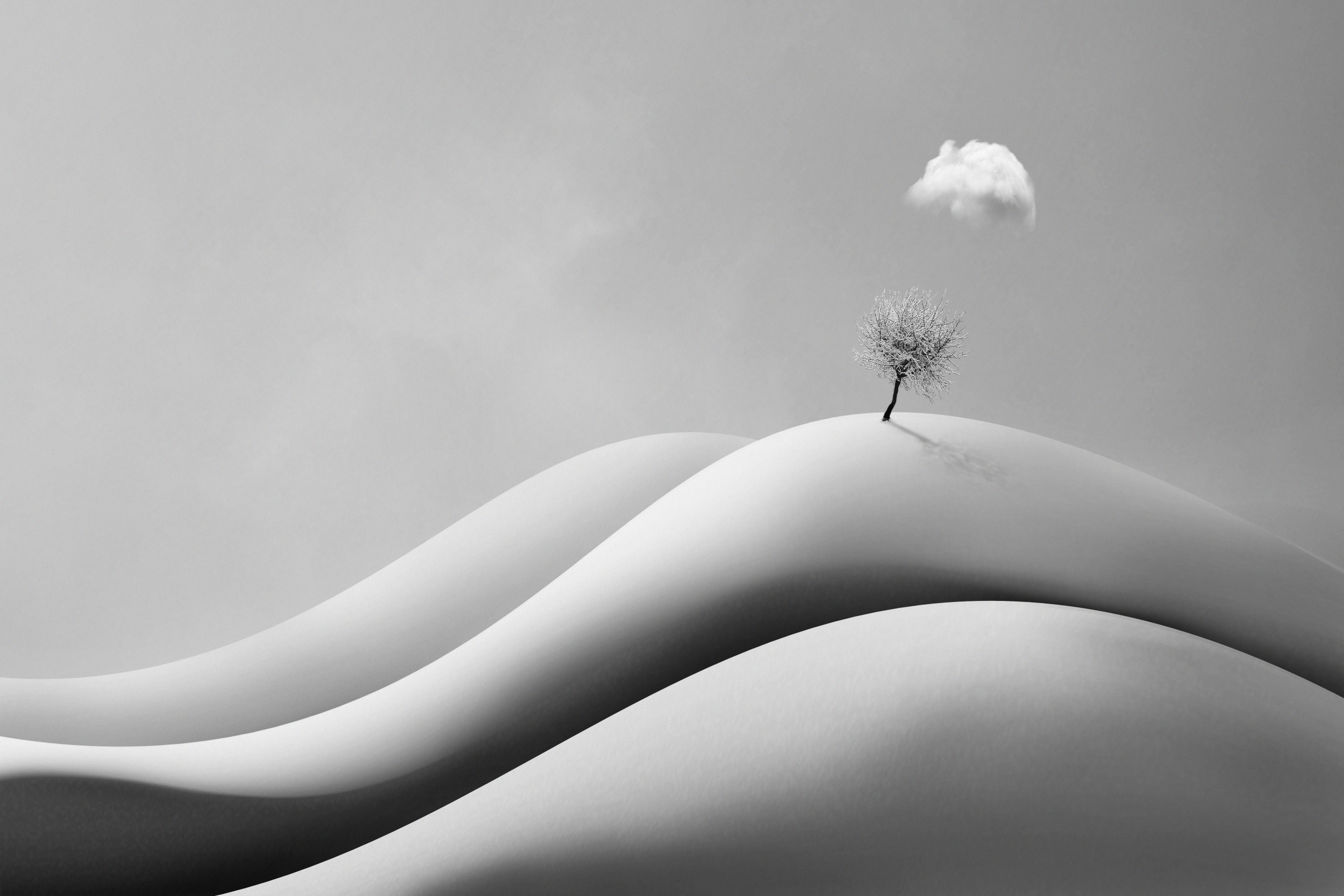
‘Quiet’
Could you describe the different steps involved in creating « Quiet » for us, please?
Before starting the composition, I prepare all the photographic elements that will appear in the final image. This includes the tree, the cloud and any textures or other components that have been photographed separately. Having these elements ready from the outset enables me to concentrate fully on composition, lighting, and visual balance as the image gradually takes shape.
Although 'Quiet' appears simple at first, it evolved through a careful process of shaping, refining and balancing each element individually. Every adjustment — from the curves of the landscape to the direction of the light — was made with the intention of creating a calm and contemplative atmosphere.
DESIGNING THE FIRST HILL
The landscape starts with a basic white rectangular shape, which forms the basis of the first hill.
Using the 'Free Transform' → 'Warp' tool, I gradually reshape the rectangle into a smooth, organic curve. Rather than aiming for perfect symmetry, I make small adjustments until the silhouette feels natural and balanced. At this stage, I focus entirely on the flow of the curve since these lines establish the visual rhythm of the entire composition.
Although I have already added the background gradient at this point, matching the direction of the light across the hills, I keep it hidden during these early steps. This allows me to focus purely on the shape and construction of each hill, free from the distraction of the surrounding sky. I activate the gradient again once the hills are complete.
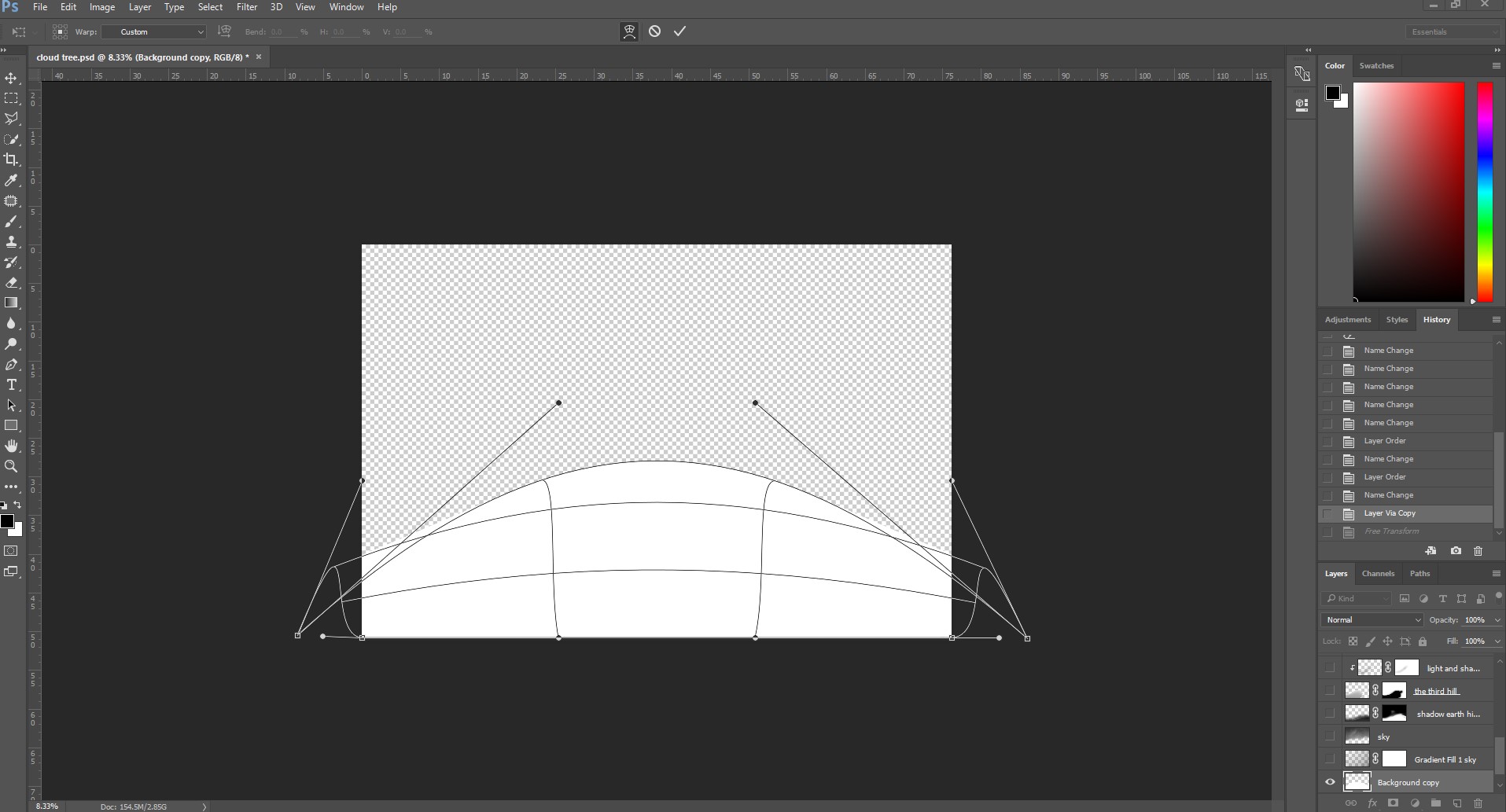
Shaping the first hill with Warp Transform.
CREATING SOFT VOLUME
Once the hill has taken its final shape, I use the Satin layer style to add depth. Instead of relying on dramatic lighting, I adjust the effect until the highlights and shadows create a subtle sense of volume.
The aim is to make the surface appear gently illuminated while maintaining the serene atmosphere that characterizes the image. This soft treatment then becomes the visual language for every subsequent hill.
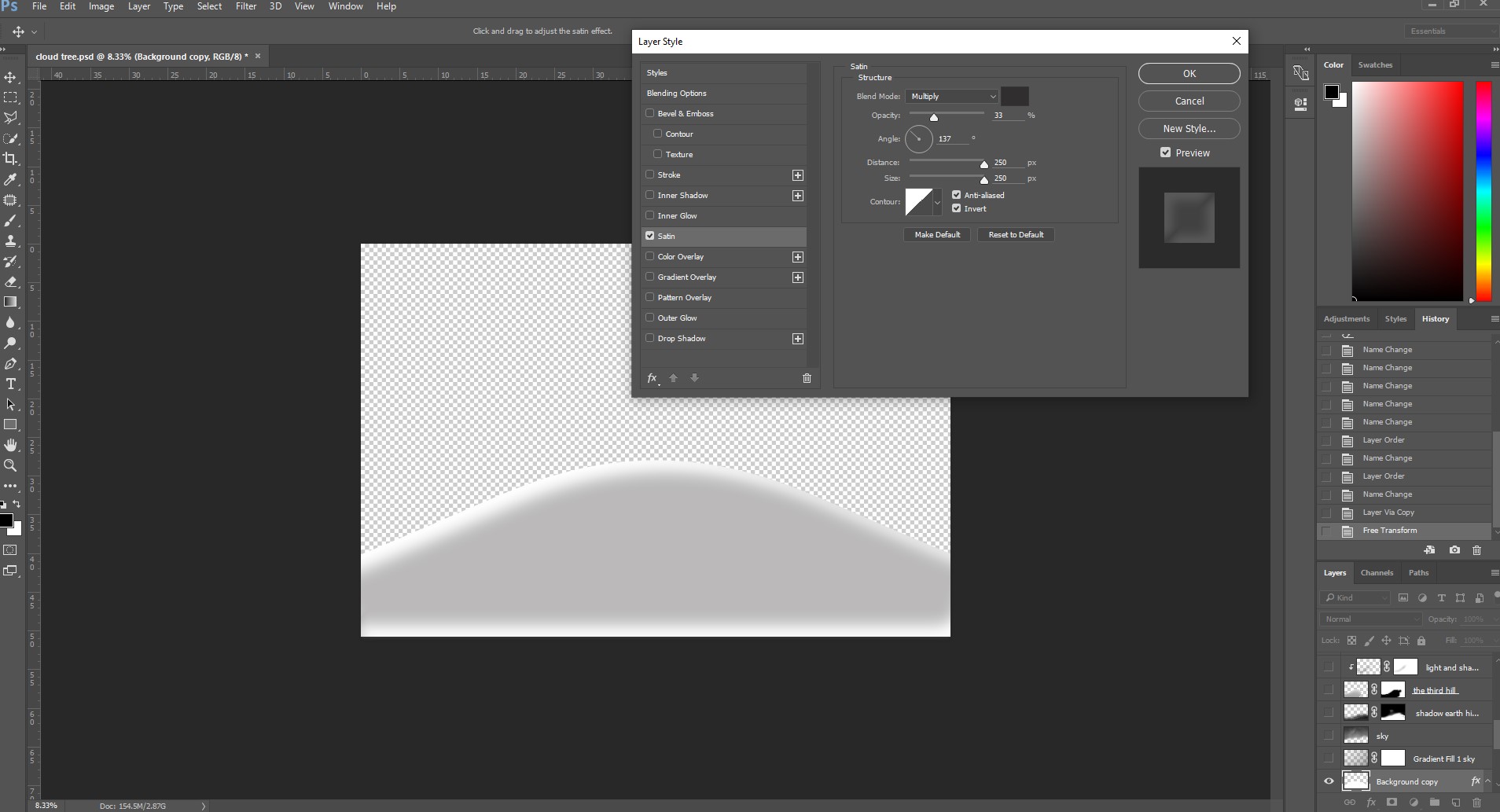
Using a subtle Satin effect to create gentle volume.
REFINING THE COMPOSITION
Once the hill is complete, I use Free Transform to position and scale it within the scene. Working with the hill against a transparent background enables me to refine its placement without any distractions.
At this stage, I assess how the curve interacts with the surrounding negative space, making minor adjustments until the composition feels balanced.
Sometimes the smallest adjustment can make the greatest difference. Shifting a hill by only a few pixels can completely alter the visual balance of the composition. At this stage, I rely on both my intuition and my technical judgement to refine the relationships between the elements until the scene feels quiet, balanced and complete.
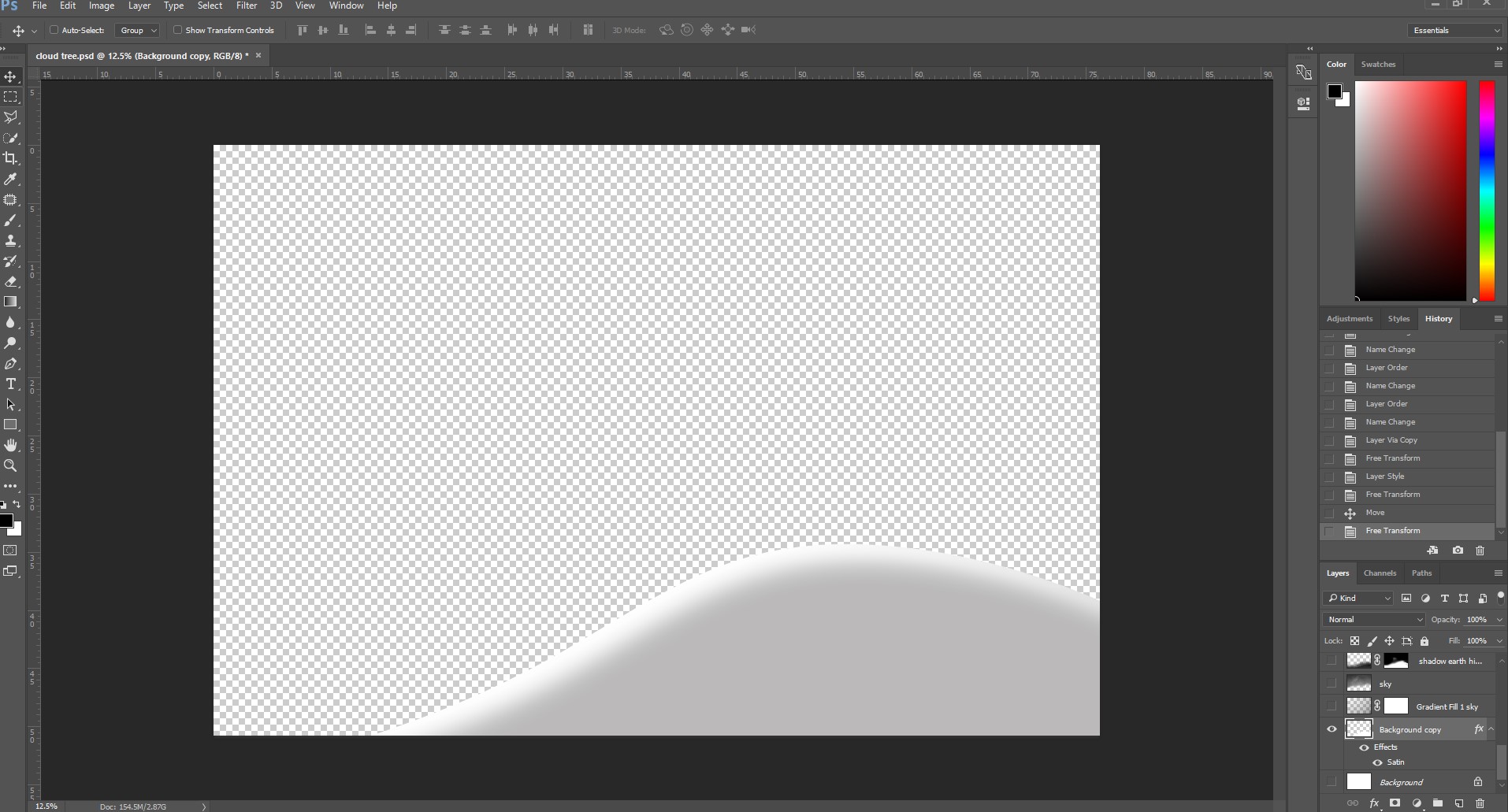
Positioning the first hill within the composition.
BUILDING THE LANDSCAPE
Additional hills are created using the same process, but each one is reshaped individually rather than being duplicated. This gives each curve its own character yet still maintains visual harmony across the landscape.
The overlapping shapes add depth and establish a gentle visual rhythm that naturally directs the viewer's gaze across the image.
At this stage, a soft gradient background is introduced to help separate the landscape from the sky and establish the quiet atmosphere of the final composition.
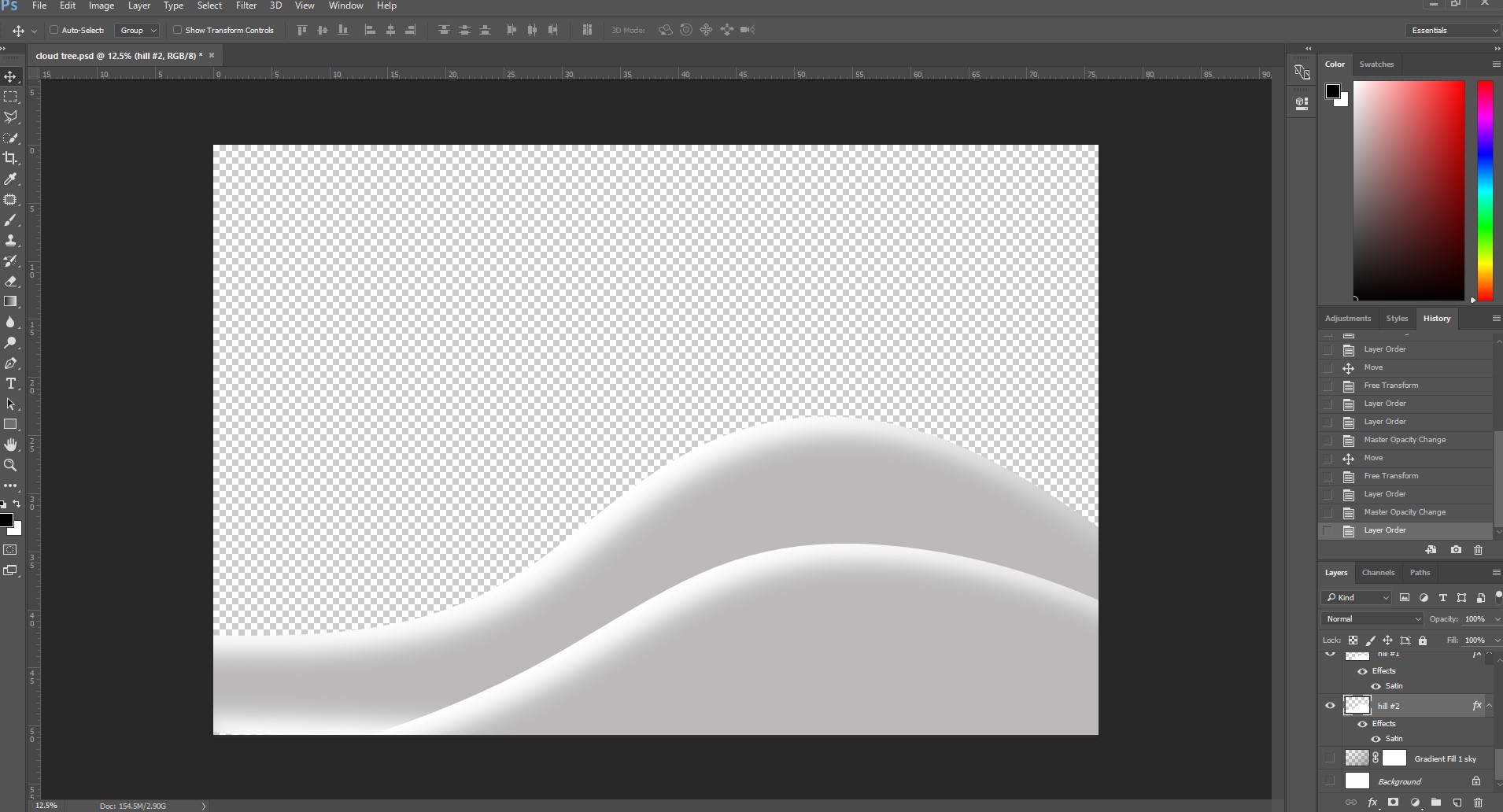
Building depth by layering individually shaped hills.
EVALUATION BALANCE
Now that the sky is visible again, I carefully examine the spacing, contrast and tonal balance of the hills in relation to one another.
At this stage, it's more about refining relationships than adding new elements. Even small adjustments to position or proportion can have a significant impact on the overall effect. of harmony.
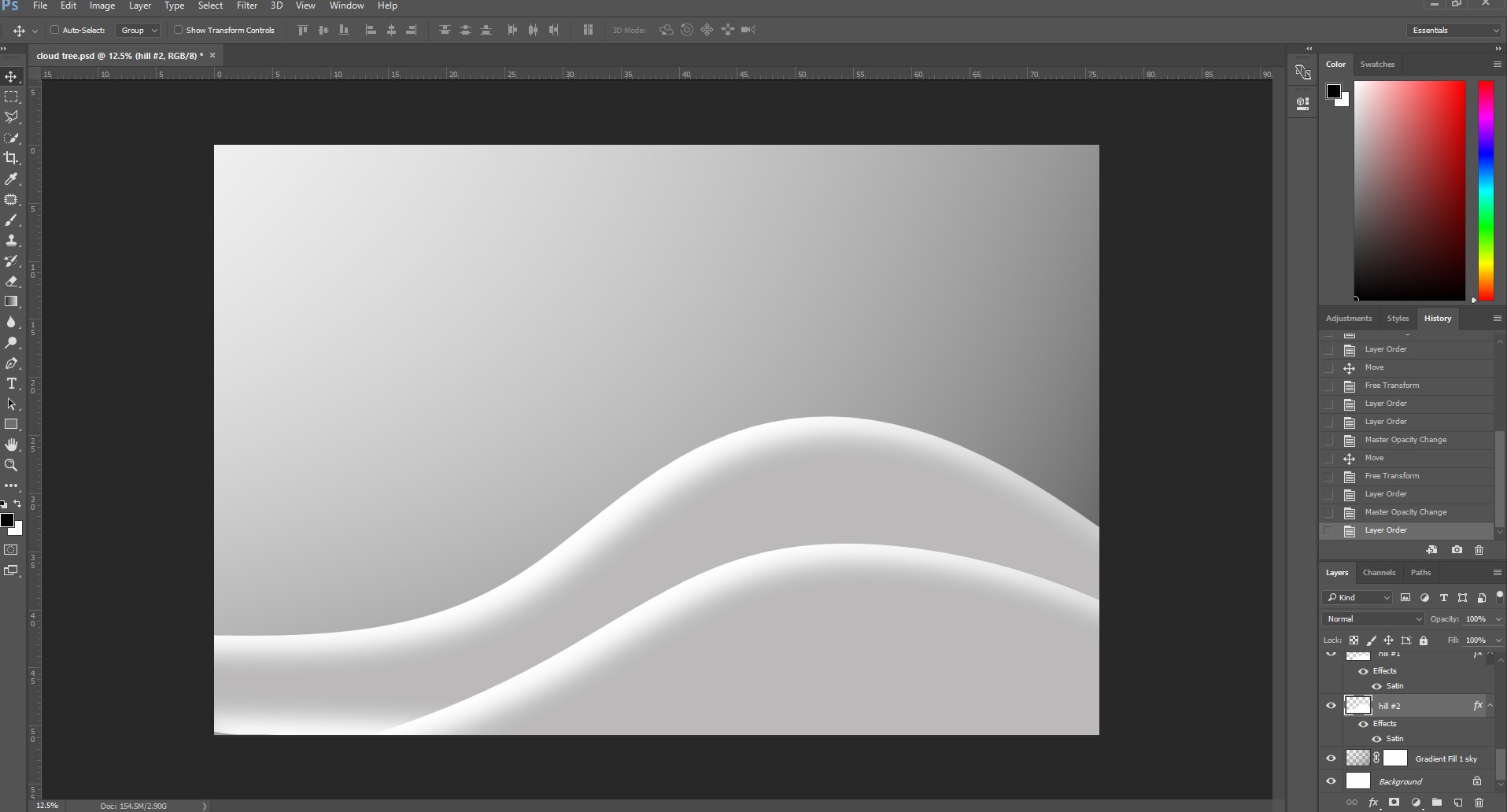
Reviewing the composition before introducing new elements.
REFINING THE SHADOWS
Although the satin effect initially creates the sense of volume, this is only the starting point. I manually paint additional shadows where needed using a soft brush tool on a separate layer. This enables me to create more natural-looking tonal transitions and strengthen the illusion of depth without making the lighting appear artificial.
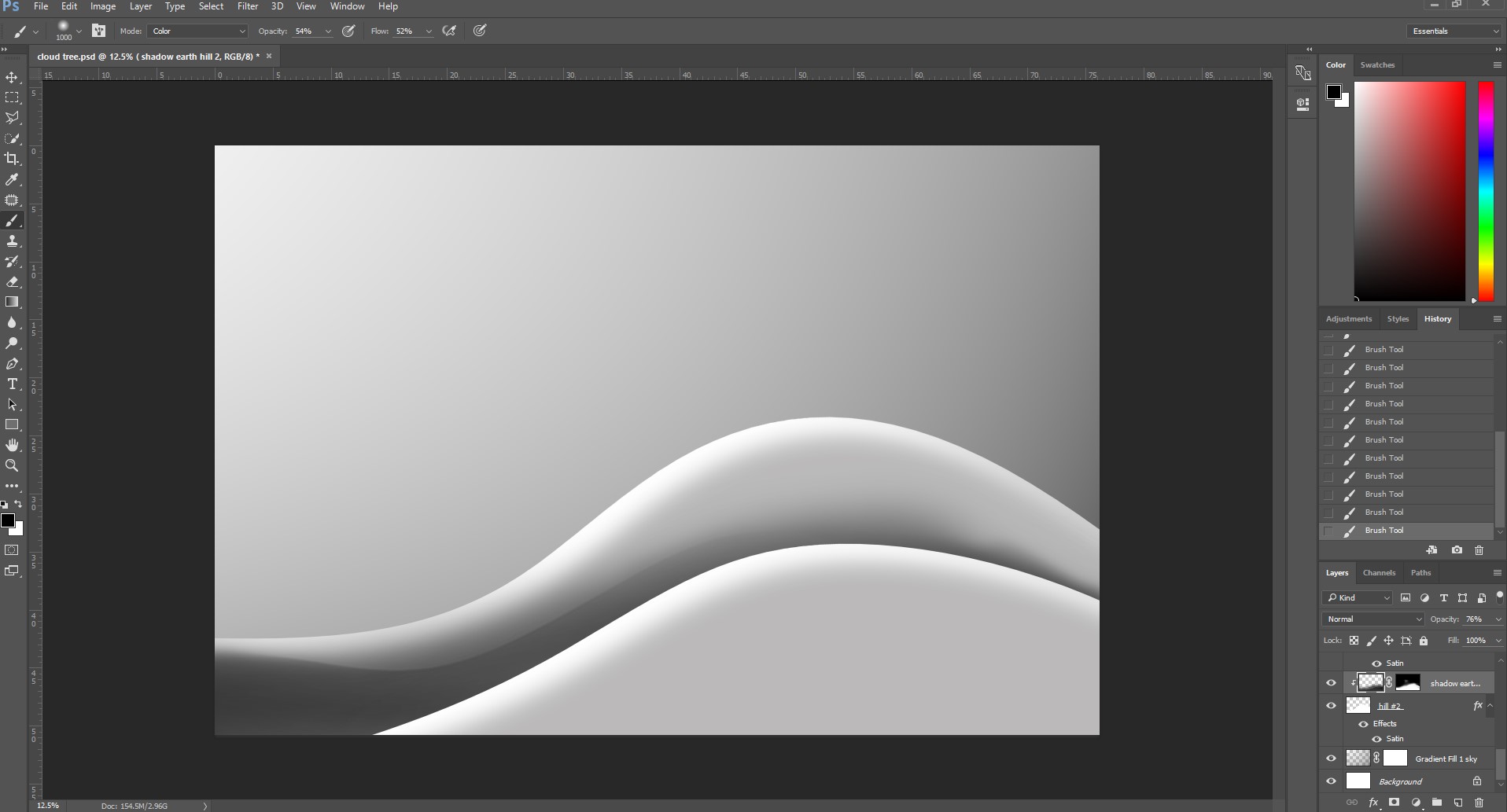
Enhancing depth with hand-painted shadows.
Once the hand-painted shadows are complete, I make the final adjustments to the lighting and tonal transitions across the landscape. At this stage, I also add subtle ground details to introduce natural textures without compromising the minimalist aesthetic.
These adjustments unify all the hills and establish a consistent sense of depth and light throughout the scene. Once the lighting, shadows and ground details are balanced, the composition is ready for the final stage: adding the tree, cloud and their shadows.
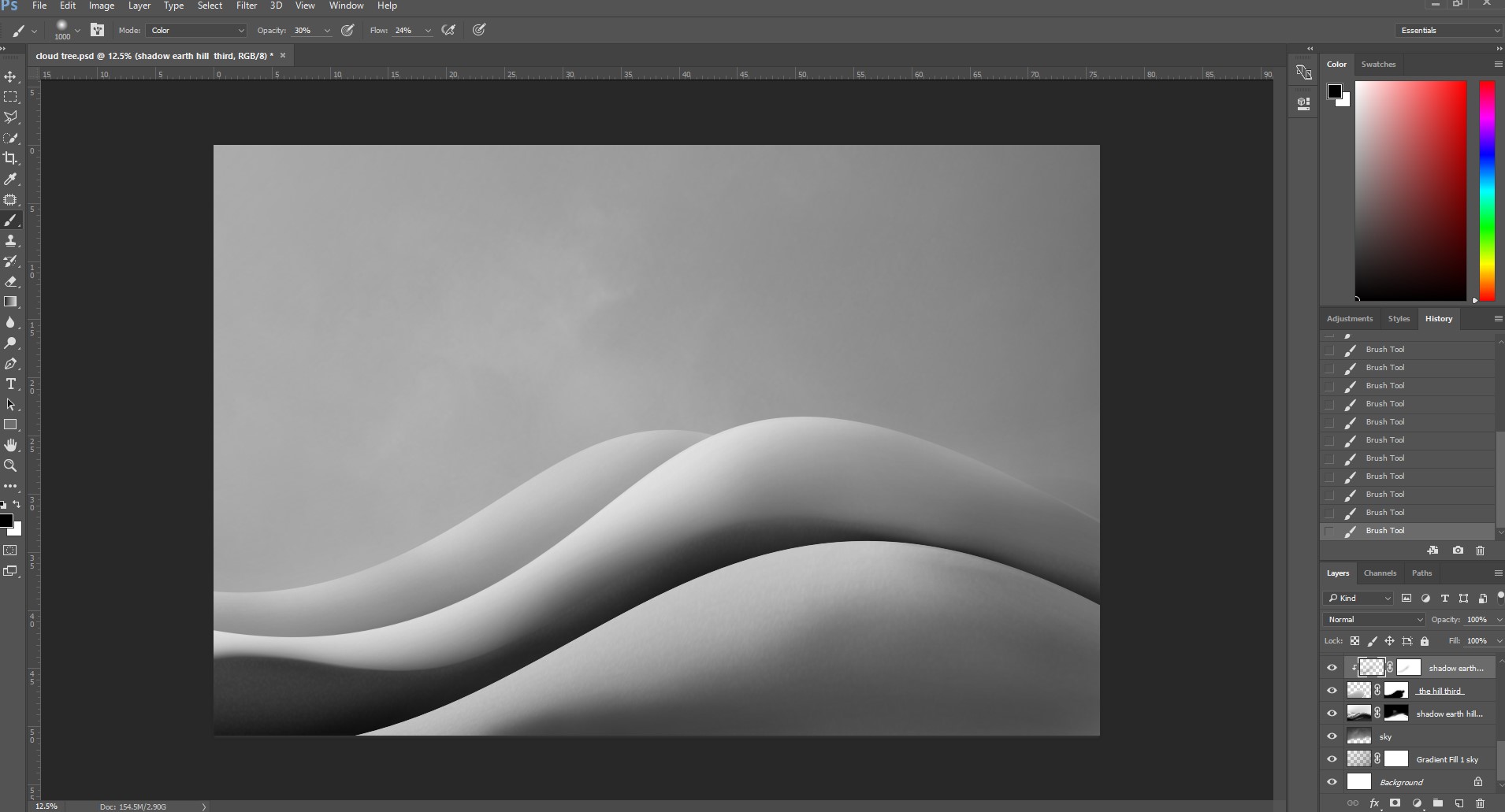
Finalizing the lighting, shadows, and ground details before adding the main photographic elements.
COMPLETING THE SCENE
Once the landscape is finished, I blend a ground texture that I have previously photographed into the hills to add a subtle organic quality, all the while preserving the minimalist aesthetic. Finally, I add the tree, the cloud and their shadows to the composition. Each element has been photographed separately and positioned carefully so that the direction and quality of the light remains consistent throughout the image. The final stage involves making subtle tonal adjustments and refining the image carefully to ensure that every element works together to communicate the quiet, contemplative atmosphere I envisioned.
Adding the final photographic elements and refining the atmosphere.
You usually create minimalist compositions. What led you to choose this style of expression?
I have always found minimalist compositions challenging. Creating an image that is both simple and emotionally powerful demands maturity and precision. In my view, minimalism demands creativity and a distinctive worldview.
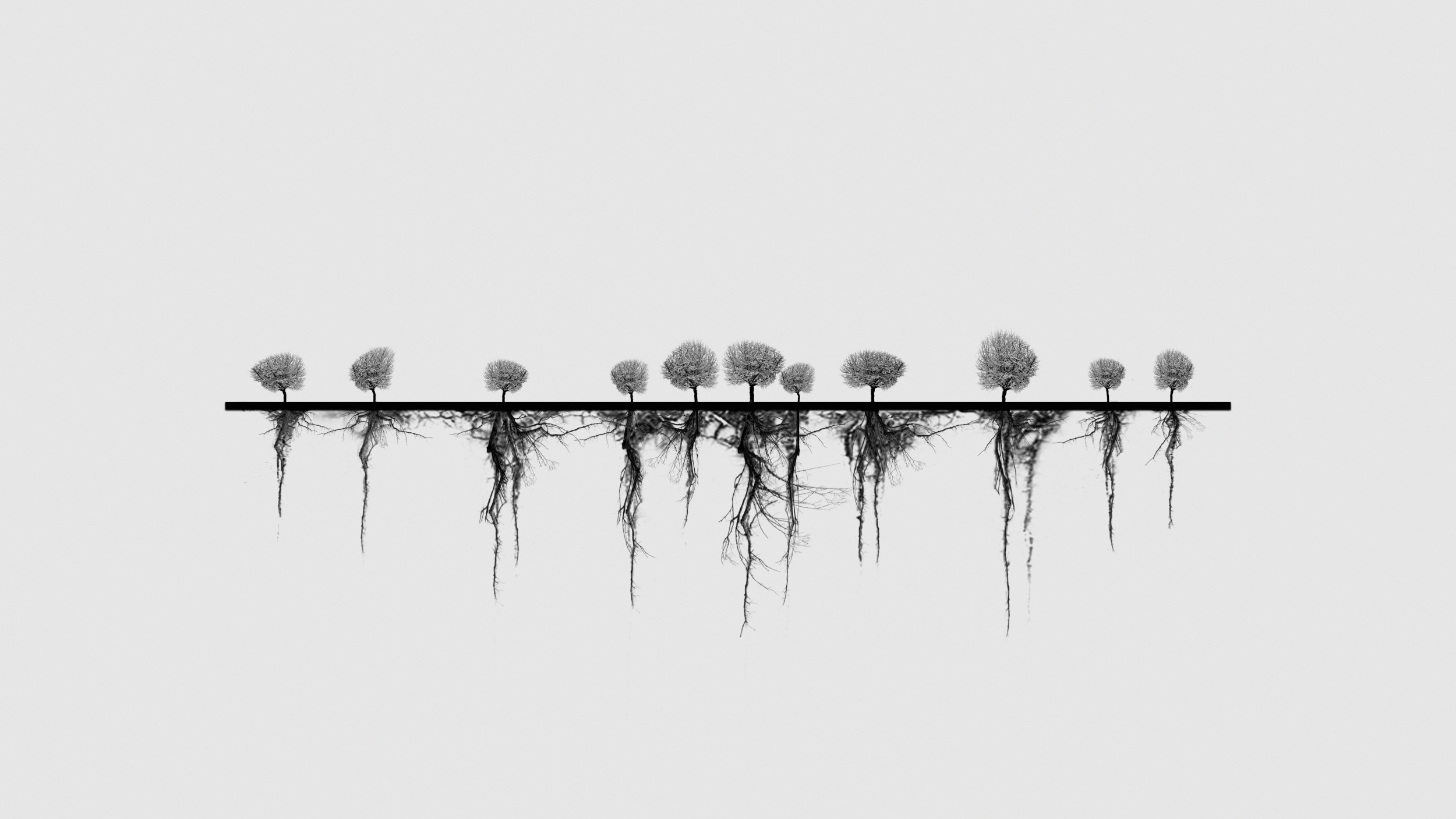
‘Continuity’
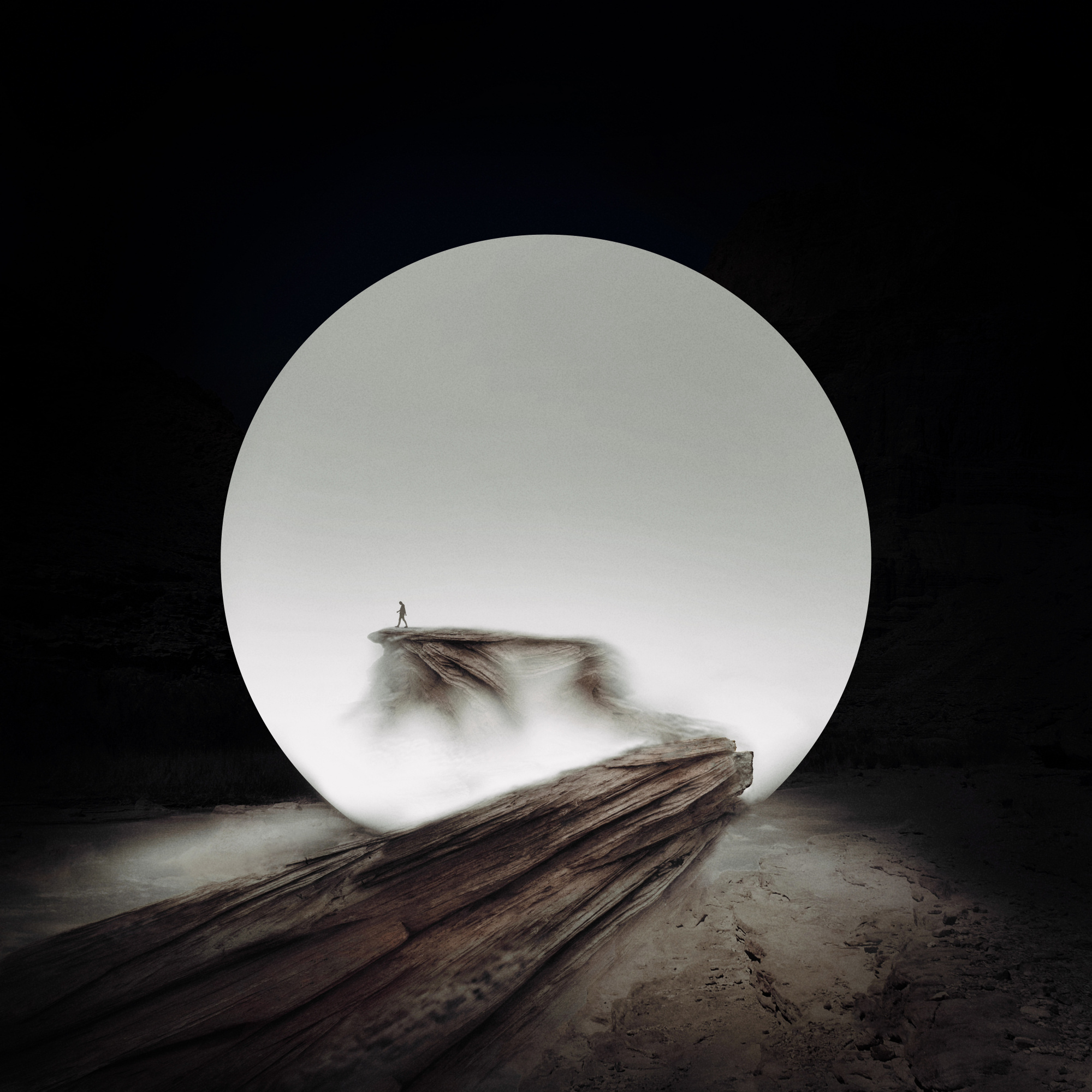
‘Passing’
What is the deciding factor – colour or black and white?
The decision to present an image in colour or black and white is usually made at the start of the creative process. Depending on the message I want to convey, the mood I want to create and the simplicity I am aiming for, I often have a clear vision of the final colour palette before I start.
Having said that, there have been times when, after finishing a colour image, I have found myself equally drawn to its black-and-white version. These situations can be challenging because both versions can express the same idea in different yet equally compelling ways. As with every artist, I want to present the strongest possible version of my work, but ultimately, the final decision comes down to intuition — choosing the version that feels most authentic and right emotionally.
Most of the time, I start with a clear mental image of what I want to create. At the same time, I always remain open to unexpected creative changes during the process. I believe creativity should flow naturally and I never want to limit where it might lead.
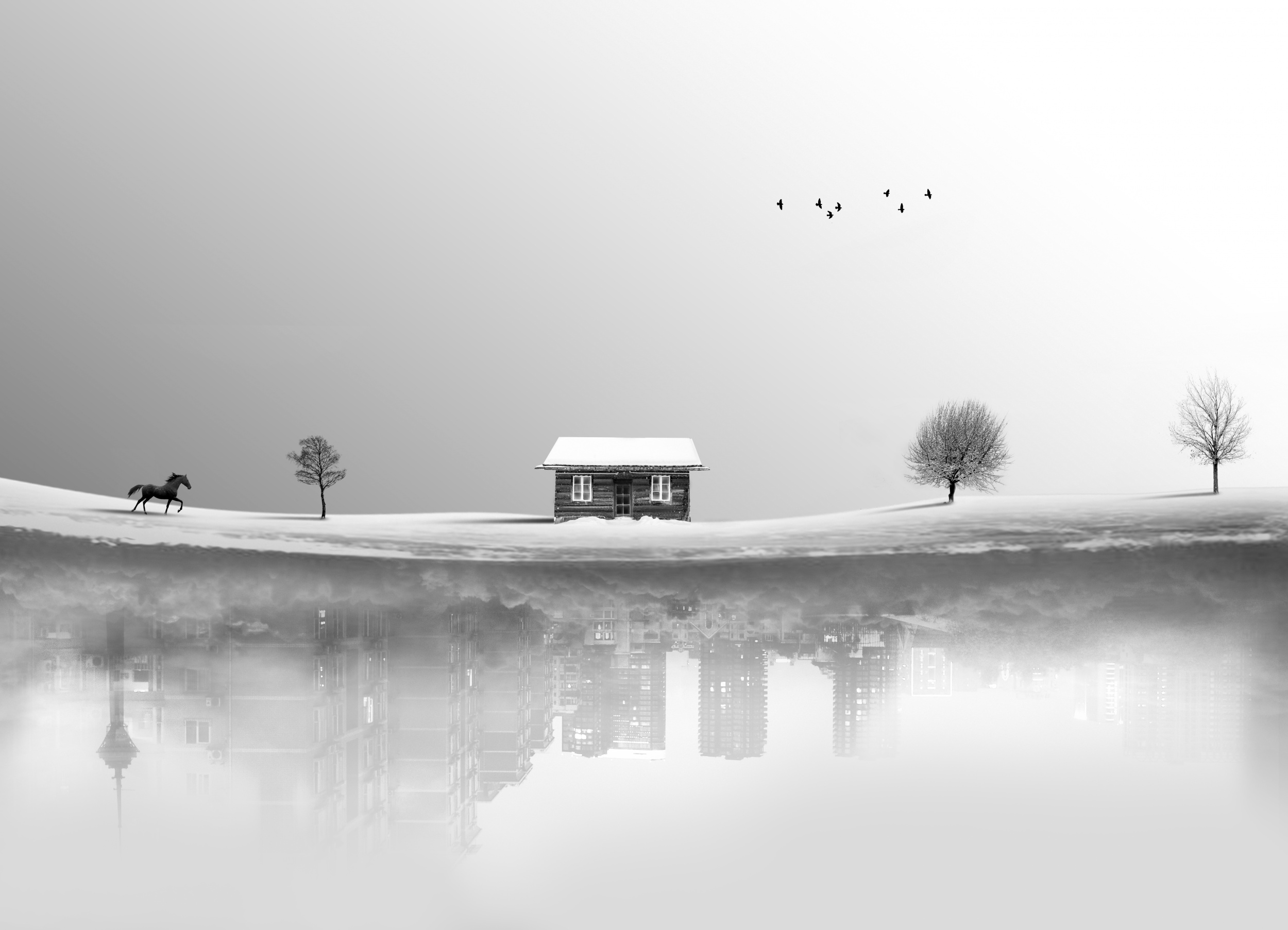
‘Endless beginning’
How do you know when a photograph is finished?
This is one of the most challenging stages of the creative process. I stop working on an image when I feel that I have added or removed everything necessary, and that every element has a purpose and the image can communicate its meaning without words. At the same time, I never expect viewers to interpret my work exactly as I do. If an image encourages someone to pause, reflect or experience something personal, it has already fulfilled its purpose.
‘Home’
BIOGRAPHY
My name is Hadi Malijani. Although my family name is actually Malenjani, I am professionally known as Hadi Malijani. I was born in 1989 and began creating artworks in 2007, when I was eighteen. Of all the artistic paths I have explored, it is fine art and conceptual photography that have opened the door to an extraordinary world for me. It is a world in which I truly enjoy living — a creative space that continually inspires, challenges and helps me to grow, both as an artist and as a person. For me, photography is both a profession and a passion, so I no longer distinguish between work and a hobby. Photography is the main focus of my life — I earn my living through it, and I genuinely enjoy every part of the process. As well as fine art and conceptual photography, I work as a wedding photographer.
|
| | DonnaHom APA PRO Great step-by-step demonstration. I will follow this post process and try myself. Thank you for sharing your technics. |
| | DonnaHom APA PRO Great step-by-step demonstration. I will follow this post process and try myself. Thank you for sharing your technics. |
| | Wanghan Li PRO Excellent article which inspires! Thanks for sharing! |
 | Very inspiring... |
| | Angelika Vogel PRO A wonderful article and creative, impressive images! Thank you so very much as well dear Yvette and Michel! |
 | Susi PRO Thank you so much for sharing this tutorial, your work is always creative and inspiring. |
 | Yang Jiao PRO Amazing work! Thank you so much for sharing your creative editing process. It’s truly inspiring |
| | kombizz PRO Salaam Hadi jon, I congratulate your hard workings in the art of photography. |
| | Jane Lyons CREW Thank you Hadi and Michel for sharing this with us. |
| | Cicek Kiral CREW Impressive…Congratulations...
. |
| | Eiji Yamamoto PRO A truly wonderful article! Dear Hadi, thank you so much for sharing your techniques! It is very creative and inspiring! Thank you so much as well, dear Michel and dear Yvette! |
| | Roland Weber PRO Cool. Wonderfull, inspirative and outstanding pictures. Great ideas and visions. My congratulations, Hadi. |
 | Margaret Halaby PRO Wow. Wonderfully imaginative and creative. Thank you for sharing how you did this. |
| | Chris Hamilton PRO Great article promoting ideas for the viewers great insight to your processing talent. |
| | Jay Satriani PRO I’ve gained so much knowledge from this amazing article; I will continue to learn from great artists. Congratulations to Hadi—thank you for sharing your experience. Thanks also to Editor Michel and my dear old friend Yvette. Best regards to everyone. |
 | Filiberto Galli PRO The process is truly compelling and creative, a stimuli for personal inspiration. Outcome is fine and incredibly effective. Nonetheless, I still wonder whether this is still photography or, rather, brilliant illustration? |
| | yein PRO The artist’s post-processing technique based on conceptualization is impressive I feel like I’m seeing good inspiration |